How to Troubleshoot a Dead Kitchen Outlet Step by Step

Last Updated: November 14, 2026
Quick Summary
A dead kitchen outlet usually comes from a tripped GFCI, a tripped breaker, or a loose connection, not a failed outlet. Start by making sure no water is nearby and resetting any GFCI outlets, then check the breaker and test the outlet with a plug-in tester.
- Turn off the breaker before opening the outlet cover, and keep water away from the area.
- A single GFCI can cut power to several outlets downstream, so press RESET on every GFCI you can find.
- A plug-in tester with no lights points to breaker, GFCI, or connection faults, not the receptacle itself.
- Sparks, burning smells, or a hot outlet mean you should stop using it and call a licensed electrician right away.
Table of Contents
- Start With Safety: Shut Off Power and Unplug Appliances
- Check for a Tripped GFCI Outlet and Reset It
- Power Outlet Not Working but Breaker Not Tripped: What to Check Next
- Outlet Stopped Working but Other Outlets Do: Tracing the Circuit
- Common Dead Outlet Causes in Kitchens
- Testing the Outlet With a Plug-In Tester or Multimeter
- Warning Signs That Need an Electrician Right Away
- Booking Help for a Dead Kitchen Outlet
- Frequently Asked Questions
Start With Safety: Shut Off Power and Unplug Appliances
A dead kitchen outlet is frustrating, but the first step is always safety. Before you touch anything, make sure no water is near the outlet, and turn off the power to the circuit at the breaker panel if you plan to open the outlet cover. Many homeowners find that a little caution at the start saves time and prevents shocks.
Unplug anything you can reach from the outlet, including toasters, coffee makers, and small appliances on the counter. This gives you a clean test. If you plug in a lamp or phone charger afterward, you will know whether the outlet is actually delivering power.
Watch out: Never stick a metal object into a live receptacle, and never work on wiring while the breaker is on. Electrical shock can be serious even at household voltage.
Check for a Tripped GFCI Outlet and Reset It
Kitchen outlets near the sink are usually protected by a ground-fault circuit interrupter (GFCI). A GFCI cuts power when it detects current leaking to ground, which protects you from shock. When it trips, it can shut off that outlet and others wired downstream from it.
Look for a GFCI outlet in the kitchen, often near the sink or the countertop. Press the RESET button firmly. If you see a TEST button, press it first to confirm the device trips, then press RESET to restore power.
If the outlet will not reset, or trips again right away, do not keep pressing it. A repeated trip usually points to a fault in the appliance plugged in or in the wiring, and that needs attention. If the outlet keeps cutting out, find the cause of a breaker or ground fault that keeps tripping with a licensed electrician.
Power Outlet Not Working but Breaker Not Tripped: What to Check Next
A breaker that looks fine but an outlet that is dead is the most common kitchen electrical call, and it usually is not a failed breaker. Reset a tripped breaker safely by finding the right panel, flipping the switch correctly, and knowing when to stop. Work through this sequence in order, stopping when you find the fault.
1. Confirm the breaker is actually on. Open the panel and look at the breaker feeding the kitchen. A tripped breaker often sits in the middle, not fully OFF, so it can look on at a glance. Push it firmly to OFF, then back to ON.
2. Hunt down every GFCI that could be upstream. This is the step most people miss. Kitchen receptacles are frequently protected by a GFCI that is not the dead outlet itself, it may be the outlet next to the sink, an outlet on the other side of the kitchen, or even a GFCI in an adjacent room or a bathroom on the same circuit.
3. Rule out the obvious before you open anything. Plug a lamp or phone charger you know works into the dead outlet. Try the other half of a duplex receptacle, the two halves can fail independently. Check any wall switch that controls the outlet, since some kitchen receptacles are switched for counter lighting or disposal use. If a different appliance works, the outlet is fine and the original device is the problem.
4. Look for a failed receptacle or a loose connection at the outlet. With the breaker OFF and confirmed dead with a tester, remove the cover plate and inspect the receptacle. A common pattern is back-stabbed wires, the push-in connections on the back of the outlet, that have loosened under years of plugging and unplugging. Look for discolored wire, scorched insulation, or a loose screw terminal.
5. Trace upstream. If the dead outlet is downstream of another receptacle, the failure may be at the upstream device. Turn the breaker off, then check the connections at each outlet between the panel and the dead one. A loose neutral or hot wire at an upstream receptacle will kill everything after it.
Watch out: Do not remove a receptacle or touch wiring with the breaker on. Confirm power is off with a tester at the outlet before you put a screwdriver to it, and if you find scorched wire or a back-stabbed connection that is loose, have a licensed electrician evaluate the whole leg rather than just replacing the outlet.
Outlet Stopped Working but Other Outlets Do: Tracing the Circuit
When one outlet is dead and others still work, the outlet is likely on a different circuit or downstream from a GFCI. Trace the circuit by plugging a lamp into each outlet in the kitchen and noting which ones have power. Then turn the breaker off and see which outlets go dark.
Many kitchen circuits share outlets through a chain. If the dead outlet sits behind a GFCI or another receptacle that has failed, fixing the upstream device may bring it back. Write down which outlets lose power together so you have a clear map of the circuit.
Common Dead Outlet Causes in Kitchens
Kitchens put heavy demands on electrical circuits. Common causes include:
- Overloaded circuits: Running a microwave, toaster, and coffee maker on one circuit can trip the breaker or damage the outlet.
- Tripped GFCI outlets: Moisture near the sink or a faulty appliance can cut power.
- Loose connections: Wires can loosen over time, especially in outlets that get heavy use.
- Failed receptacles: Worn contacts inside an outlet can stop delivering power.
- Damaged wiring: Heat, rodents, or old wiring can break a connection.
A useful rule: if you see scorch marks, smell burning, or notice a warm outlet, stop using it and call a licensed electrician.
The article lists the usual reasons a kitchen outlet goes dead, each with a short explanation.
| Cause | What it does | Sign to watch for |
|---|---|---|
| Overloaded circuits | Trips breaker or damages outlet | Microwave, toaster and coffee maker on one circuit |
| Tripped GFCI outlets | Cuts power near sink | Moisture or faulty appliance |
| Loose connections | Wires loosen with use | Heavy outlet use over time |
| Failed receptacles | Worn contacts stop delivering power | Outlet stops delivering power |
| Damaged wiring | Breaks a connection | Heat, rodents or old wiring |
Testing the Outlet With a Plug-In Tester or Multimeter
Testing is where a dead-outlet call gets solved or misdiagnosed. A plug-in outlet tester is the right first tool for most homeowners. A multimeter gives more detail but requires more care. Here is how to read each one.
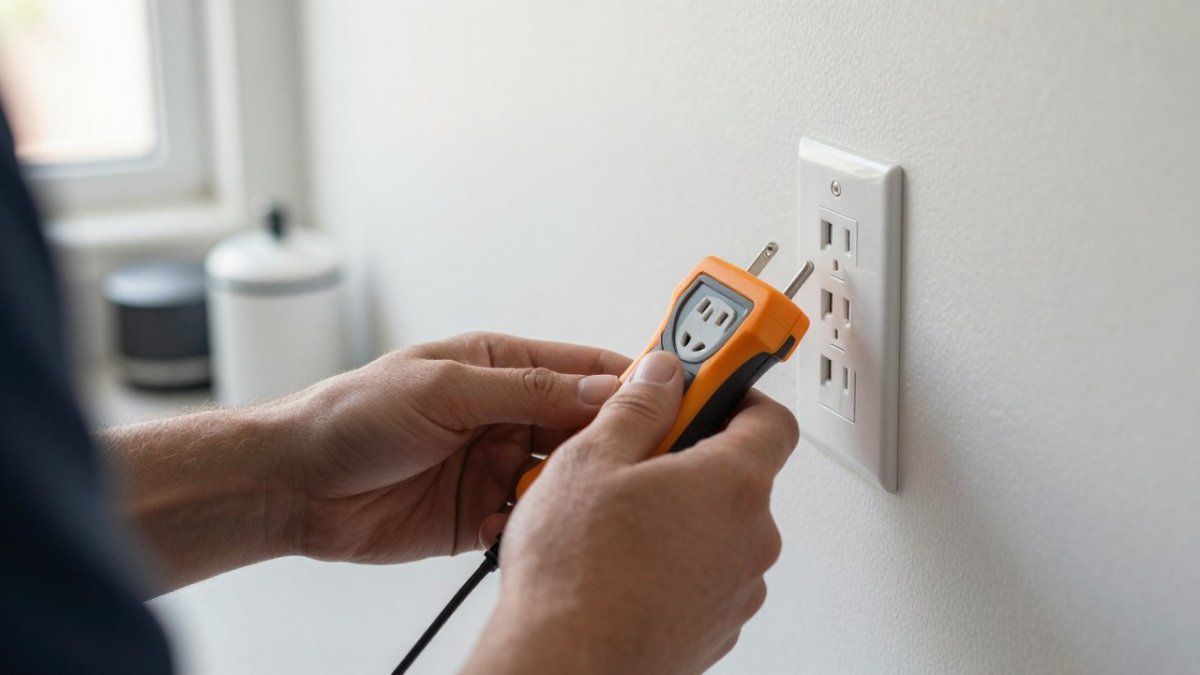
Plug-in outlet tester. Plug the tester into the dead outlet and compare its light pattern to the chart printed on the tester or in its instructions. The common patterns tell you different things:
- All lights correct / one light on: the outlet has power and is wired correctly, the problem is the appliance, not the outlet.
- No lights at all: the outlet has no power. That points back to the breaker, a GFCI upstream, or a broken connection, not a wiring error at this receptacle.
- Open hot, open neutral, or open ground: the outlet has a wiring fault. An open neutral in particular can leave an outlet dead while other outlets on the circuit still work.
- Hot and neutral reversed, or hot and ground reversed: the outlet is miswired. Stop using it and have it corrected, reversed polarity can energize surfaces you expect to be safe.
A tester confirms power and basic wiring, but it does not measure voltage or tell you whether a connection is loose. If the tester shows no lights, move to the breaker and GFCI checks before assuming the receptacle failed.
Multimeter. Set the meter to AC voltage (the range that includes 120V, often marked 200V AC or auto-ranging). With the outlet live, insert one probe into each vertical slot, the narrower slot is hot, the wider slot is neutral. A healthy kitchen receptacle should read close to 120 volts. Then check hot to the round ground slot; you should see roughly the same reading. A few results to know:
- About 120V hot-to-neutral and hot-to-ground: the outlet is powered and the problem is downstream or in the appliance.
- 0V hot-to-neutral but 120V hot-to-ground: the neutral is open somewhere upstream. This is a wiring fault, not a dead circuit.
- 0V on every combination: no power is reaching the outlet. Go back to the breaker and GFCI checks.
- A reading that jumps or flickers: a loose connection is likely. Stop using the circuit until it is inspected.
Watch out: Never test with the receptacle cover removed and the power on unless you are trained to do so, and never probe the slots with anything other than meter probes. If a multimeter reading is inconsistent or you are unsure what a result means, treat it as a fault and call a licensed electrician rather than re-testing until you get an answer you like.
Warning Signs That Need an Electrician Right Away
Some situations call for immediate professional help. Stop and contact a licensed electrician if you notice: (Electrical Safety Month: Improved Home Safety Needed To Prevent Electrical Fires)
- Sparks, sizzling, or a burning smell from an outlet
- Discolored or melted plastic around the receptacle
- An outlet that is hot to the touch
- Breakers that trip repeatedly after resetting
- Several outlets failing at once, or flickering lights throughout the kitchen
Precision Power Services offers after-hours emergency service in Rutland and central Vermont. Book online if you see any of these signs.
Booking Help for a Dead Kitchen Outlet
If the outlet is still dead after you have checked the breaker, GFCI, and circuit, the cause may need professional diagnosis. A licensed electrician can test the wiring, replace a failed receptacle, and find the real source of an overload or fault.
Precision Power Services has completed more than 500 projects over 7 years, and a Vermont licensed electrician handle outlet, GFCI, and circuit repairs. Book an outlet repair with a licensed electrician for current pricing or a quote.
Frequently Asked Questions
How can I diagnose a dead kitchen outlet?
Start by checking whether the outlet is a GFCI receptacle, usually identified by a test and reset button between the two slots. Then check the breaker panel for a tripped breaker and look at nearby outlets and wall switches on the same circuit. If the outlet still has no power, unplug everything and test it with a plug-in outlet tester. A tester that shows no lights or an open ground points to a wiring or connection problem that usually needs a licensed electrician.
Why is my outlet not working when the breaker is not tripped?
A power outlet not working but breaker not tripped is often caused by a tripped GFCI outlet upstream on the same circuit, a loose connection at the receptacle, or a failed outlet. Check whether another outlet on the circuit, such as one in the kitchen with a GFCI reset button, has tripped. If nothing resets the power, the wiring at the outlet may be damaged, and a licensed electrician should inspect it.
What is the best way to do a GFCI outlet reset?
Press the RESET button firmly on the GFCI outlet that is dead. If it does not click back on, press TEST and then RESET again. If the outlet still will not reset, check for other GFCI receptacles in the kitchen, since one upstream device may control the dead outlet. Repeated tripping can signal an overloaded circuit or a ground fault in an appliance, so unplug recently used devices before trying again.
When should I call an electrician about a dead kitchen outlet?
Call a licensed electrician if the outlet stays dead after you have checked the GFCI reset, the breaker, and nearby outlets. Get help immediately if you notice burning smells, scorched plastic, sparks, buzzing, or discolored outlet covers, or if the breaker trips again as soon as you reset it. Precision Power Services offers after-hours emergency service in Vermont, and you can book online or request a quote for current pricing.
Need an electrician in Rutland or central Vermont?
Precision Power Services is a licensed and insured electrical contractor serving Rutland, Killington, Brandon, Castleton, and surrounding towns. Call (802) 417-0587 or book online.
← Back to blog