Electrical Panel Upgrade for Heat Pumps: A Step-by-Step Guide
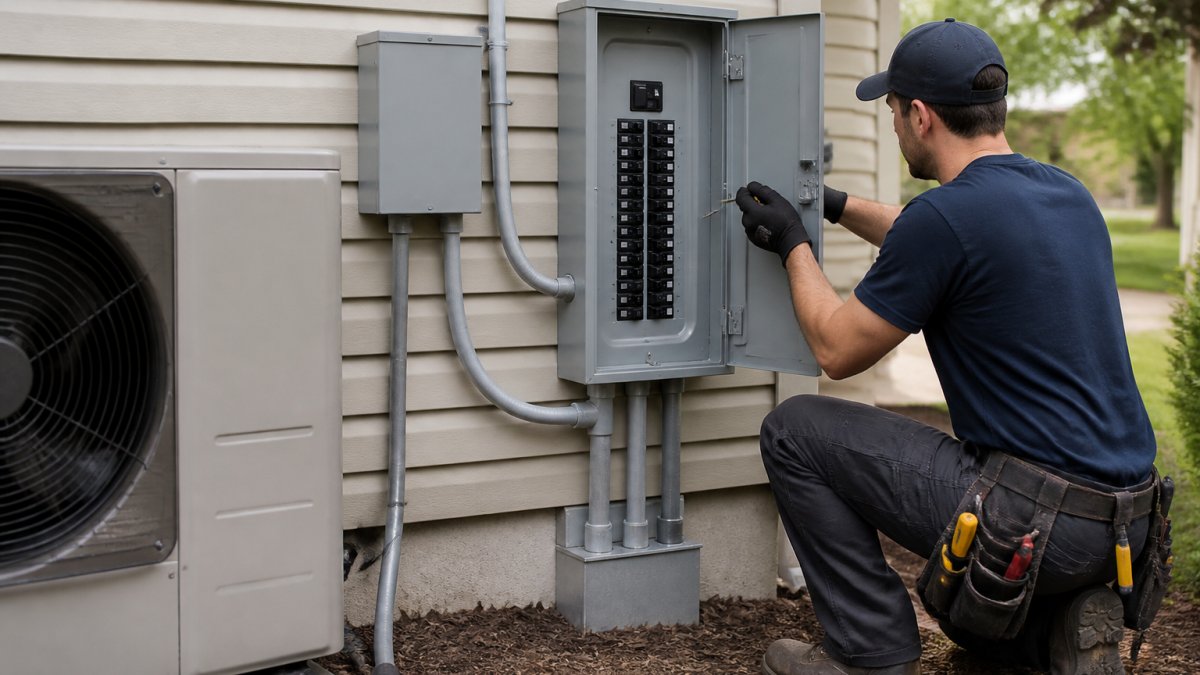
Table of Contents
- Does Your Electrical Panel Support a Heat Pump?
- Understanding Heat Pump Electrical Requirements
- How to Calculate Electrical Load for a Heat Pump
- When a Panel Upgrade Becomes Necessary
- Electrical Panel Upgrade Cost and Budget Breakdown
- Electrical Panel Upgrade Tax Credit and Incentives
- Alternatives to Upsizing Your Panel
- The Panel Upgrade Process: Permits, Inspection, and Installation
- Frequently Asked Questions
Last Updated: October 11, 2026
Does Your Electrical Panel Support a Heat Pump?
If you're planning to install a heat pump, an electrical panel upgrade for heat pumps may become necessary to ensure your system can handle the demand. Heat pumps demand significant electrical capacity, and not all homes have it.
Looking for this work in Rutland or central Vermont? See heat pump wiring and installation from Precision Power Services.
The answer depends on your current service capacity, available breaker space, and the heat pump's electrical requirements.
How to Check Your Current Service Capacity
Your electrical service capacity is the total amount of power your home can use at once, measured in amps on your main breaker. Most homes have 100-amp, 150-amp, or 200-amp service.
To find your capacity, open your electrical panel door and read the number on the main breaker at the top. A 100-amp service is common in older homes; newer homes often have 150-amp or 200-amp service. Heat pumps typically need 30-60 amps depending on the model and backup resistance heat settings.
Warning Signs Your Panel Is Overloaded
Some homes run near their electrical limits already. If you notice these signs, your panel may struggle with a heat pump:
- Lights flicker when you use multiple appliances
- Breakers trip frequently without obvious cause
- You have an old fuse box instead of a breaker panel
- Your panel is more than 40 years old
- You've added major appliances recently (dryer, oven, water heater)
Understanding Heat Pump Electrical Requirements
Heat pumps move heat from outside air into your home and draw power constantly during operation. The electrical load depends on the heat pump's nameplate rating, whether it uses backup resistance heat, and how often that backup activates.
Nameplate Ratings and Maximum Current Draw
Every heat pump has a nameplate rating showing the maximum current it draws during operation. A typical air-source heat pump for a medium-sized home draws 20-40 amps at full capacity; some larger units draw 50-60 amps.
Find this rating on the heat pump's technical specifications sheet, the outdoor unit's nameplate label, or from your installer. Your panel must have enough available capacity to handle it safely; building codes require that no single circuit uses more than 80% of available capacity continuously.
Backup Resistance Heat and Auxiliary Heat Load
When outdoor temperatures drop below 35°F, heat pumps become less effective and activate backup resistance heat, electric heating elements that draw 40-50 amps. Your panel must handle both the heat pump and its backup heating simultaneously, which is the maximum electrical load scenario.
How to Calculate Electrical Load for a Heat Pump
List all major appliances and their amperage: electric water heater (30-50 amps), electric range (40-50 amps), clothes dryer (20-30 amps), air conditioning (15-25 amps), and heat pump (30-60 amps including backup heat). Add up the amperage for appliances you run simultaneously. A licensed electrician applies building-code demand factors to calculate your realistic electrical needs.
Worked Example: 100-Amp to 200-Amp Capacity
Suppose your home has 100-amp service and you want to install a 40-amp heat pump with 40-amp backup heat (80 amps total). If your current loads are water heater (40 amps), electric range (50 amps), dryer (25 amps), and lighting (20 amps), your total is 135 amps, exceeding your 100-amp service by 35 amps. Upgrading to 200-amp service provides the capacity needed for the heat pump and all other appliances.
When a Panel Upgrade Becomes Necessary
You need an electrical panel upgrade for heat pumps if your current service is 100 amps with major appliances, your available breaker space is less than 60 amps, your panel is a fuse box, you plan to add other electrical loads, or your home is over 50 years old with original wiring. You might not need an upgrade if your service is already 200 amps, you have available breaker space, your current load is light, or your heat pump's draw is modest (under 30 amps).
Common Panel Sizes and Available Breaker Space
Electrical panels come in standard sizes. Most residential homes use one of three:
100-Amp Service (common before 1990) is tight for homes with electric water heaters and air conditioning; adding a heat pump almost always requires an upgrade. 150-Amp Service (1990-2010) provides moderate capacity; a heat pump may fit if other loads are light. 200-Amp Service (standard in new construction) handles heat pumps, EV chargers, and other high-draw appliances without crowding.
Each panel has a fixed number of breaker slots: a 100-amp panel might have 20-24 slots, while a 200-amp panel might have 40+. If your panel is full, you can't add new circuits without upgrading the entire panel.
How an Electrician Evaluates Your System
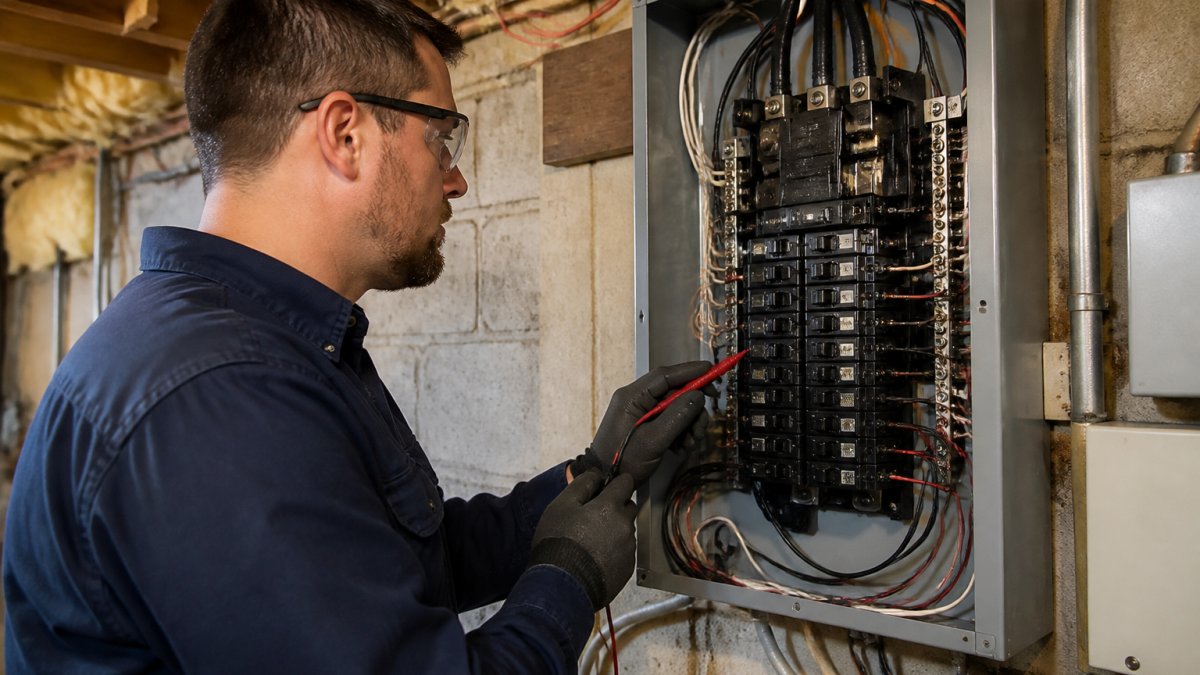
A licensed electrician evaluates your service entrance (meter base, main disconnect, utility wiring), examines the panel for corrosion and overheating, counts available breaker slots, calculates your demand load, and reviews your heat pump's specifications. This evaluation takes 30-60 minutes and results in a written report with findings and recommendations.
Electrical Panel Upgrade Cost and Budget Breakdown
A typical electrical panel upgrade from 100-amp to 200-amp service includes equipment (meter base, breaker panel, wiring, safety equipment), labor (installation, testing, verification), permits and inspection, and utility coordination. Total costs vary based on your home's condition, local labor rates, and utility requirements.
Labor, Materials, and Permit Expenses
Labor typically represents 40-50% of the total upgrade cost. The work is skilled and time-consuming.
Materials, the panel, breakers, wiring, and hardware, make up another 30-40%. Quality equipment costs more but lasts longer and performs more reliably.
Permits and inspections add 10-15%. Your municipality requires permits to ensure the work meets electrical code. An inspector verifies the installation before power is restored.
Utility coordination fees vary. Some utilities charge for meter replacement. Others require service upgrades that add cost.
Regional Variations and Project Timeline
Costs differ across regions. Labor rates are higher in some areas. Utility fees vary by company. Local code requirements affect what equipment is required.
A typical panel upgrade takes 1-2 days for installation. But the full timeline includes:
- Initial assessment: 1 hour
- Permit application: 3-5 business days
- Scheduling: 1-2 weeks
- Installation: 1-2 days
- Inspection: 1-2 days after installation
- Utility activation: 1-3 days
From start to finish, plan 3-4 weeks for the entire process.
Electrical Panel Upgrade Tax Credit and Incentives
Federal and state incentives can offset upgrade costs. These programs encourage homeowners to upgrade aging electrical systems and adopt efficient heating.
Federal Tax Credits and State Rebates
The federal government offers a tax credit for heat pump installations.
However, many states and utilities offer rebates for electrical upgrades that support heat pump installation.
Check with your utility company about available rebates. Some utilities offer direct rebates for panel upgrades. Others offer financing programs that spread costs over time.
Alternatives to Upsizing Your Panel
If a full panel upgrade seems expensive, alternatives exist. They don't always work, but they're worth exploring.
Load Management and Circuit Rearrangement
Some homes have circuits that can be consolidated or removed.
An electrician can also reconfigure your panel to prioritize high-draw appliances. This doesn't increase capacity, but it allows you to use what you have more efficiently.
Load management means running high-draw appliances at different times. For example, running your water heater and heat pump at different times reduces peak demand.
This approach works only if your total load stays within your current capacity. It doesn't work if you're already near your limit.
Heat-Pump Water Heater and HVAC Timing Strategies
A heat-pump water heater uses less electricity than a traditional electric water heater.
Similarly, some heat pump systems allow scheduling. You can program the system to heat your home during off-peak hours when you're using less power for other appliances.
Smart thermostats can coordinate heating with other electrical loads. They delay backup heat activation if you're running high-draw appliances.
These strategies help, but they have limits. They work best when combined with other efficiency improvements.
The Panel Upgrade Process: Permits, Inspection, and Installation
Understanding the upgrade process reduces stress and prevents delays. It's not complicated, but it has specific steps.
Utility Service Coordination and Electrical Code Compliance
Your utility company must disconnect and reconnect your home. They control the service line from the street to your meter.
Contact your utility early. They need advance notice and may require scheduling weeks ahead. Some utilities handle meter replacement themselves. Others allow the electrician to do it.
Electrical code compliance is non-negotiable. Your electrician must follow the National Electrical Code (NEC) and any state or local amendments.
Code compliance includes:
- Proper grounding and bonding
- Correct breaker sizing for each circuit
- Adequate wiring gauge for current capacity
- Proper labeling and organization
- Safety devices and disconnects
Cutting corners on code compliance creates fire and shock hazards. It also voids insurance and may prevent home sales.
What to Expect During Installation
On installation day, your home will lose power for several hours. Plan accordingly.
The electrician will:
- Turn off the main breaker (your home goes dark)
- Disconnect the meter from the utility line
- Remove the old panel
- Install the new meter base and panel
- Install the main breaker and distribution breakers
- Reconnect all circuits to the new panel
- Test everything with a multimeter
- Call the utility to reconnect the meter
- Have the inspector verify the work
The utility company reconnects the meter once the inspector approves. Power is restored within hours of completion.
After installation, you receive documentation showing all circuits, their breaker sizes, and what they power.
Adding a heat pump to your home is a smart investment in comfort and efficiency.
At Precision Power Services, we evaluate electrical systems for homeowners planning heat pump installations throughout central Vermont.
Heat pumps in older Vermont homes
A lot of homes around Rutland County still run on 100-amp service, and adding cold-climate heat pumps on top of an electric water heater, dryer, or EV charger can push that limit. A load calculation tells you whether the panel can handle it before you buy equipment. For current rebates, see Efficiency Vermont and Green Mountain Power.
Electrical work in Vermont follows the National Electrical Code as adopted in the Vermont Electrical Safety Rules (2025 edition, enforced by the Division of Fire Safety). Precision Power Services is a Vermont licensed electrician based at 450 Park Ln in Rutland, serving Rutland County and central Vermont.
Book a free estimate or call (802) 417-0587.
Frequently Asked Questions
Can a heat pump work with a 100-amp electrical panel?
Most modern heat pumps require 150-200 amps of available service capacity, especially when combined with other household loads. A 100-amp service may work for a heat pump alone, but adding other appliances, water heaters, HVAC equipment, or electric vehicle charging, typically requires an upgrade. A licensed electrician can calculate your electrical load and confirm whether your panel has sufficient ampacity. If you're already at or near capacity, a panel upgrade is the safest option.
Can I get a federal tax credit for upgrading my electrical panel?
The federal government offers tax credits for home electrical upgrades that support heat pumps and other electrification improvements. The electrical service upgrade itself may qualify if it's part of a broader heat-pump or electrification project. You must have a licensed electrician perform the work, and the installation must meet electrical code standards. Check the IRS website or consult a tax professional to confirm your eligibility and claim requirements for the current year.
How do I know if my electrical panel can handle a heat pump?
Check your home's main electrical service rating (typically marked on the breaker panel or meter base) and look for available breaker space. Most heat pumps draw 40-60 amps on a dedicated circuit, plus backup resistance heat can add another 10-30 amps. Calculate your total electrical load by adding all major appliances. If your panel is already at 80% capacity or higher, or if you have fewer than two open breaker slots, an upgrade is likely necessary. A professional load calculation from a licensed electrician provides the most accurate answer.
What does an electrical panel upgrade cost for a heat pump installation?
Pricing depends on your current service capacity, local labor rates, permitting requirements, and utility coordination needs. Factors include the meter base replacement, new breaker panel, wiring, and inspection fees. Contact Precision Power Services for a detailed quote based on your home's specific electrical system. Many homeowners may qualify for federal tax credits that can offset a portion of the upgrade cost, and some state or utility incentives may apply as well.
Need an electrician in Rutland or central Vermont?
Precision Power Services is a licensed and insured electrical contractor serving Rutland, Killington, Brandon, Castleton, and surrounding towns. Call (802) 417-0587 or book online.
← Back to blog