7 Steps to Reset a Tripped Breaker Safely
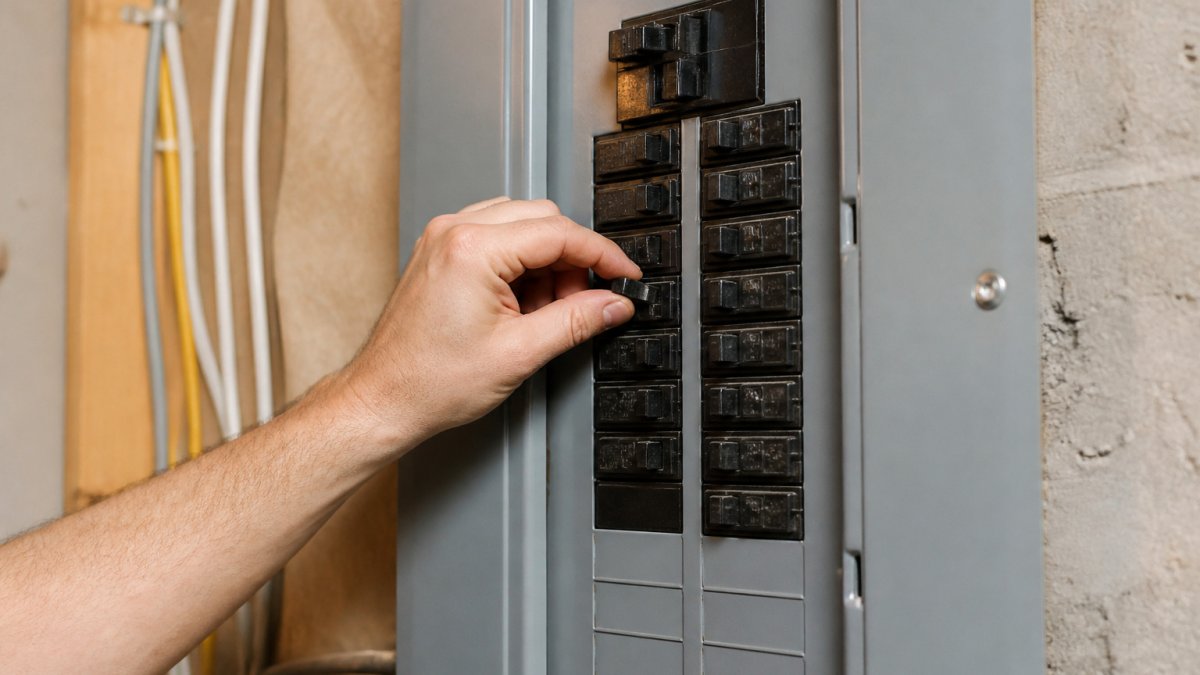
Table of Contents
- Why Breakers Trip and Why Resetting Matters
- Safety Precautions Before You Touch the Panel
- Locating the Breaker Box and Finding the Tripped Breaker
- Step-by-Step Reset Procedure
- Post-Reset Safety Checks and Reducing the Load
- Why Does My Breaker Keep Tripping?
- How to Troubleshoot a Dead Outlet in the Kitchen
- When to Call an Emergency Electrician Instead of Resetting Again
- Frequently Asked Questions
Why Breakers Trip and Why Resetting Matters
Last Updated: November 1, 2026
A tripped breaker is your home's safety system doing its job. When too much current flows through a circuit, the breaker shuts off power before wires overheat and start a fire.
Homeowners often run into this problem in winter, when heaters, space heaters, and holiday lights push circuits to their limits.
Breakers trip for a few common reasons:
- Overload: Too many devices draw power from one circuit at once.
- Short circuit: A hot wire touches a neutral wire or ground, causing a sudden surge.
- Ground fault: Current leaks to ground, often through water or damaged insulation.
Learning to reset tripped breaker the right way is the first step, but doing it without checking the cause is not.
Safety Precautions Before You Touch the Panel
Your safety comes first. Electricity can cause serious shock or burns, so take these steps before you open the panel.
- Stay dry. Do not touch the panel with wet hands or while standing in water.
- Wear dry, rubber-soled shoes if you have them.
- Use a flashlight rather than a candle or lighter.
Watch out: If you smell burning or see scorch marks, stop. Do not reset the breaker. Shut off the main breaker if it is safe to reach, and call a licensed electrician.
Locating the Breaker Box and Finding the Tripped Breaker
Most homes keep the electrical panel in a basement, garage, utility room, or hallway closet. The panel door usually has a metal or plastic cover with a label that matches each breaker to a room or appliance.
Reading Breaker Types and Positions Visually
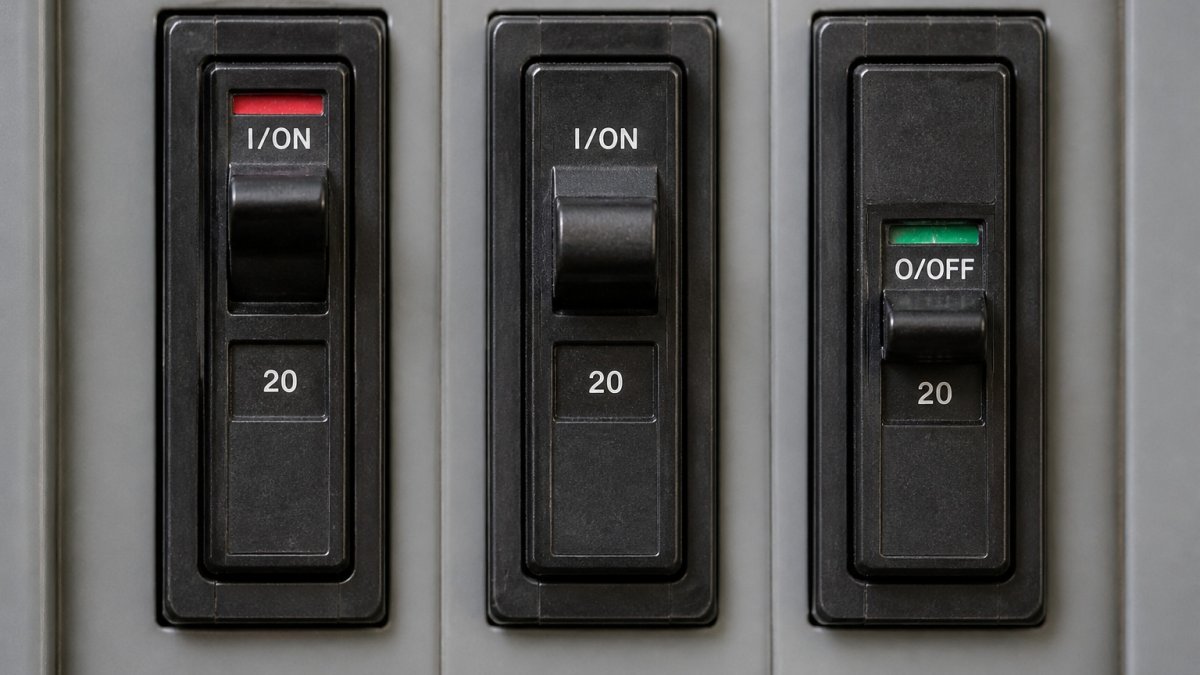
A breaker shows its state by the position of its toggle switch. Learning to read these positions makes the job faster.
- On position: The toggle points toward the "ON" label and the circuit has power.
- Off position: The toggle points toward "OFF" and the circuit has no power.
- Tripped position: The toggle sits in the middle, or "Half-Way" position, between ON and OFF. This is the sign of a trip.
The Half-Way position is the one most people miss. A tripped breaker does not always look fully off. Push the toggle firmly toward OFF first, then back toward ON to reset it.
Breaker types also differ. GFCI and AFCI breakers have a test button, which is a common cause of confusion.
Step-by-Step Reset Procedure
Follow these steps in order. The sequence matters: resetting before you reduce the load is the most common reason a breaker trips a second time.
- Find the tripped breaker. Look for the toggle sitting in the Half-Way position, between ON and OFF, not fully off. A breaker that looks fully off may have been switched off manually; a breaker in the middle has tripped.
- Turn the breaker fully to OFF. Push the toggle firmly until it clicks into the OFF position. This resets the internal latch mechanism. Skipping this step is why some breakers will not go back to ON.
- Unplug or switch off appliances on that circuit. Lower the load before you restore power. If you are unsure which outlets are on the circuit, unplug the obvious high-draw devices first: space heaters, microwaves, hair dryers, and power tools.
- Turn the breaker back to ON. Push the toggle firmly until it clicks. You may hear a soft click and feel resistance release.
- Restore power to appliances one at a time. Plug in or switch on devices slowly, pausing a few seconds between each. This is how you identify the device that caused the trip.
- Watch for a second trip. If the breaker trips immediately or within a few seconds, stop. Leave it OFF and go to the troubleshooting section below. Do not reset it a third time.
- Test the circuit. Confirm that lights and outlets on that circuit work. If some work and others do not, the problem may be a downstream GFCI outlet or a loose connection rather than the breaker.
Post-Reset Safety Checks
Once the breaker holds and power is back, do not walk away. Run this quick inspection before you rely on the circuit again:
- Feel the breaker and panel cover. They should be cool or barely warm. A breaker that feels hot to the touch after a few minutes is a warning sign.
- Listen at the panel. Buzzing, humming, or crackling sounds point to a loose connection or a failing breaker.
- Smell the air near the panel and outlets. A burning or fishy odor is a stop signal, shut off the breaker and call an electrician.
If any of these checks fail, treat the circuit as unsafe until a licensed electrician inspects it. A breaker that resets cleanly but leaves behind a warm outlet or a buzzing panel has not solved the problem, it has only postponed it.
The reset steps below follow a set order, and skipping ahead is the usual reason a breaker trips again.
| Step | What to do | Time or frequency |
|---|---|---|
| 1. Find the tripped breaker | Look for the toggle in the Half-Way position | Before anything else |
| 2. Turn fully to OFF | Push firmly until it clicks into OFF | Resets the latch mechanism |
| 3. Reduce the load | Unplug or switch off appliances on that circuit | Before restoring power |
| 4. Turn back to ON | Push firmly until it clicks | Once per reset attempt |
| 5. Restore appliances one at a time | Plug in or switch on devices slowly | Pause a few seconds between each |
| 6. Watch for a second trip | If it trips immediately, leave it OFF | Do not reset a third time |
| 7. Test the circuit | Confirm lights and outlets work | After the breaker holds |
Post-Reset Safety Checks and Reducing the Load
Once the breaker holds, check the circuit before you rely on it.
- Feel the breaker and panel for warmth. A warm breaker is a warning sign.
- Look for flickering lights or buzzing sounds from the panel.
- Check outlets on the circuit for warmth or discoloration.
Reducing the load is often the simplest fix. Unplug devices you do not need, and move cords away from walls and rugs where heat can build up.
Why Does My Breaker Keep Tripping?
A breaker that keeps tripping is telling you something. Repeated trips usually point to one of three causes: an overloaded circuit, a short circuit, or a ground fault. The trick is figuring out which one, and whether the fault is in an appliance or in the wiring itself. Find and fix the cause with a licensed Vermont electrician.
Isolate the Cause: Appliance vs. Wiring
Use this sequence to narrow down a recurring trip without guessing:
- Note what was running when it tripped. Write down every device on the circuit, heater, microwave, hair dryer, power strip, chargers. Patterns matter: if the trip happens only when a specific appliance starts, that appliance is the prime suspect.
- Reset once with everything unplugged. If the breaker holds with the circuit empty, the wiring is likely fine and the load or a device is the problem.
- Add devices back one at a time. Plug in and switch on one device, wait a minute, then add the next. The device that trips the breaker when added is the culprit, or the straw that breaks an already overloaded circuit.
- Test the suspect device on another circuit. If it trips a different circuit, the device is faulty. If it runs fine elsewhere, the original circuit is overloaded or has a wiring issue.
- If the breaker trips with nothing plugged in, stop. That points to a short, a ground fault, or a failing breaker, all of which need a licensed electrician.
Overload vs. Short vs. Ground Fault
- Overload: Too many devices draw power at once. The breaker trips after the load builds, not instantly. Spread high-draw devices across circuits and avoid daisy-chaining power strips.
- Short circuit: A hot wire touches a neutral or ground. The breaker trips instantly, often with a snap or a flash at the outlet. Stop using that circuit and call an electrician.
- Ground fault: Current leaks to ground, often through water or damaged insulation. GFCI and AFCI breakers are designed to catch this. If a GFCI breaker trips repeatedly, moisture or a damaged cord is a common cause.
Do Not Install a Bigger Breaker
Many homeowners try to fix recurring trips by swapping in a larger breaker. Do not do this. A larger breaker lets wires overheat before it trips, which creates a fire risk. If the circuit cannot carry the load, the fix is to move devices to another circuit or have a new circuit installed, not to upsize the breaker. See what a panel upgrade costs in Vermont and how it is done.
When Recurring Trips Mean a Wiring Problem
Some patterns point past the appliance and into the wiring:
- The breaker trips with nothing plugged in.
- The same circuit trips at random times, not just under heavy load.
- Outlets on the circuit feel warm or show discoloration.
Any of these is a stop signal. Recurring trips that are not load-related rarely fix themselves, and the underlying fault, a loose neutral, damaged insulation, or a failing breaker, can escalate into a fire hazard. Learn what qualifies as an electrical emergency and when to call a licensed electrician.
How to Troubleshoot a Dead Outlet in the Kitchen
A dead kitchen outlet often has a simple cause. Start by checking for a GFCI outlet, usually found near the sink.
If the GFCI does not reset, check the breaker panel for a tripped breaker. A licensed electrician can repair outlets and GFCI devices and find the source of the fault. Get outlet and GFCI repair from a Vermont licensed electrician.
When to Call an Emergency Electrician Instead of Resetting Again
A reset is a fine first step. But some signs mean you should stop resetting and call a licensed electrician right away:
- The breaker trips again right after a reset.
- You smell burning, see scorch marks, or notice melted insulation.
- The breaker or panel feels hot.
If you are unsure whether your situation is an emergency, it is always safer to call a licensed electrician.
Frequently Asked Questions
How do I know if a breaker is tripped? A tripped breaker sits in the middle, or Half-Way, position between ON and OFF.
Is it safe to reset a breaker that keeps tripping? Resetting once is usually safe if nothing looks or smells wrong.
Can a tripped breaker start a fire? A tripped breaker is designed to prevent fires.
Frequently Asked Questions
Is it dangerous to reset a tripped breaker?
Resetting a single tripped breaker is generally safe when you stand on dry footing, keep your body clear of the panel's interior, and use one hand. The breaker tripped because a circuit drew too much current or detected a fault, so the cause matters more than the reset itself. If the breaker trips again immediately, smells of burning, feels hot, or the panel shows scorch marks, stop and call a licensed electrician rather than trying again.
Which way should breakers be flipped?
A tripped breaker sits in a middle position, often labeled OFF or sitting slightly toward the center. To reset it, push the switch fully to the OFF position first, then firmly push it to ON. Some breakers look like they are on when they are actually tripped, so always push fully to OFF before turning it back on. Never hold a breaker in the ON position or tape it in place.
How to tell if a breaker is on or off?
A breaker in the ON position has its toggle pushed toward the labeled ON side, often with a colored indicator visible. A tripped breaker usually rests in the middle or near the OFF side, which is the half-way position many homeowners miss. If you are unsure, push the toggle firmly to OFF and then back to ON, and confirm the circuit has power with a non-contact voltage tester.
My trip switch won't stay up. What can I do to fix it?
If a breaker resets and immediately trips again, the circuit has an overload, short circuit, or ground fault. Unplug or switch off the appliances on that circuit, then try the reset again. If it still will not stay on, the breaker itself may be faulty or the wiring may be damaged. Do not keep resetting it, and call a licensed electrician to inspect the circuit and the breaker.
Need an electrician in Rutland or central Vermont?
Precision Power Services is a licensed and insured electrical contractor serving Rutland, Killington, Brandon, Castleton, and surrounding towns. Call (802) 417-0587 or book online.
← Back to blog