Bathroom Outlet Tripping in Humid Weather: Causes and Fixes
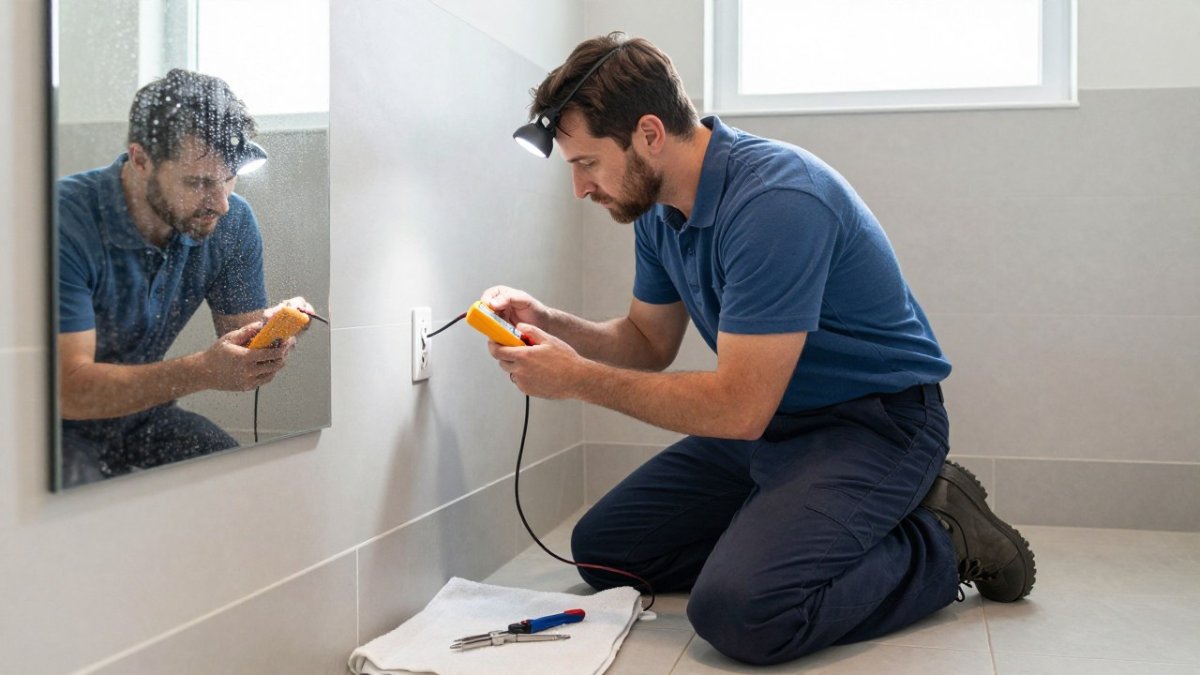
Last Updated: November 21, 2026
Quick Summary
Bathroom outlets tripping in humid weather usually happens because moisture, often condensation from showers, creates a leakage path that the GFCI detects and cuts power to. Humidity makes an existing weakness easier to trigger, so the trips signal a problem worth inspecting rather than simply resetting.
- Condensation on cover plates and outlet boxes is the quiet cause most homeowners miss.
- Run the bathroom exhaust fan for 20 minutes during and after showers.
- Unplug everything, dry the area, then press TEST and RESET once before plugging in one low-power device.
- Do not keep pressing reset, since repeated resets can hide a real fault.
- If the outlet trips with nothing plugged in or will not reset, have a licensed electrician inspect it.
Table of Contents
- Why Bathroom Outlets Trip More in Humid Weather
- How Humidity and Condensation Affect GFCI Outlets
- Outlet Keeps Tripping Reset Button: A Step-by-Step Troubleshooting Checklist
- GFCI Keeps Tripping with Nothing Plugged In
- Why Does My Outlet Keep Tripping When I Plug Something In?
- GFCI Keeps Tripping After Replacing: What Usually Went Wrong
- When to Call a Licensed Electrician About Bathroom Outlets
- Scheduling Your Bathroom Outlet Inspection With Precision Power Services
- Frequently Asked Questions
Why Bathroom Outlets Trip More in Humid Weather
If your bathroom outlets keep tripping in humid weather, you are not alone, and the cause is usually moisture behind those bathroom outlets tripping. A GFCI outlet is designed to cut power when it senses current leaking where it should not. Damp air, condensation on surfaces, and water near the outlet can all create that leakage path.
Bathrooms are the most common place for this to happen. Steam from hot showers, wet hands, and splashing water all add moisture to the air and surfaces around the outlet. Humidity alone does not always cause a trip, but it makes an existing weakness much easier to trigger.
Here is why the problem gets worse in humid weather:
- Moisture builds up on outlet covers and inside the receptacle box.
- Damp air can lower the resistance between hot and ground paths.
- Poor bathroom ventilation keeps the air wet for hours.
- An old or worn GFCI becomes more sensitive to small leaks.
Watch out: Do not keep pressing reset over and over. Repeated resets can hide a real fault that needs inspection.
How Humidity and Condensation Affect GFCI Outlets
A GFCI, or ground-fault current interrupter, compares the current leaving on the hot wire with the current returning on the neutral wire. When the difference reaches a trip threshold, the device cuts power to protect people from shock.
Condensation is the quiet cause most homeowners miss. When warm, wet air from a shower hits a cooler wall, cover plate, or outlet box, water forms on the surface. That film of water can bridge contacts or seep into the box over time.
Humidity alone does not always trip a GFCI. It makes an existing weakness easier to trigger, so the useful question is not "is it humid?" but "what is the humidity revealing?" Use timing and load patterns to separate the likely causes:
- Trips during or shortly after showers, on damp days, or on cold mornings. Condensation or moisture intrusion is the leading suspect, especially if the trips ease when the exhaust fan runs.
- Trips only when a specific appliance is plugged in. A hair dryer, space heater, or older motor with a damaged cord or wet internals is leaking current. The outlet is doing its job.
- Trips with nothing plugged in, or trips that will not reset. The fault is in the wiring, the box, or the GFCI itself, and moisture may be aggravating a pre-existing defect.
- Trips that cluster across several outlets or circuits at once. A shared neutral, a downstream GFCI, or a panel-level issue is more likely than simple bathroom humidity.
One pattern is a GFCI that holds in dry weather and trips during a humid spell or after heavy rain. That pattern points toward moisture reaching the box or a worn device that has become more sensitive to small leakage currents.
Watch out: Do not treat a humidity trip as harmless. Moisture inside an outlet box can corrode connections and create a real shock or fire hazard, so repeated damp-weather trips deserve inspection rather than a habit of pressing reset.
Outlet Keeps Tripping Reset Button: A Step-by-Step Troubleshooting Checklist
Work through these steps in order, and stop at any point where you see heat, a burning odor, buzzing, scorch marks, or loose parts. Learn how to reset a tripped breaker safely before pressing anything. The goal is to separate a humidity-driven trip from an appliance fault, a wiring problem, or a failing GFCI before you reset anything again.
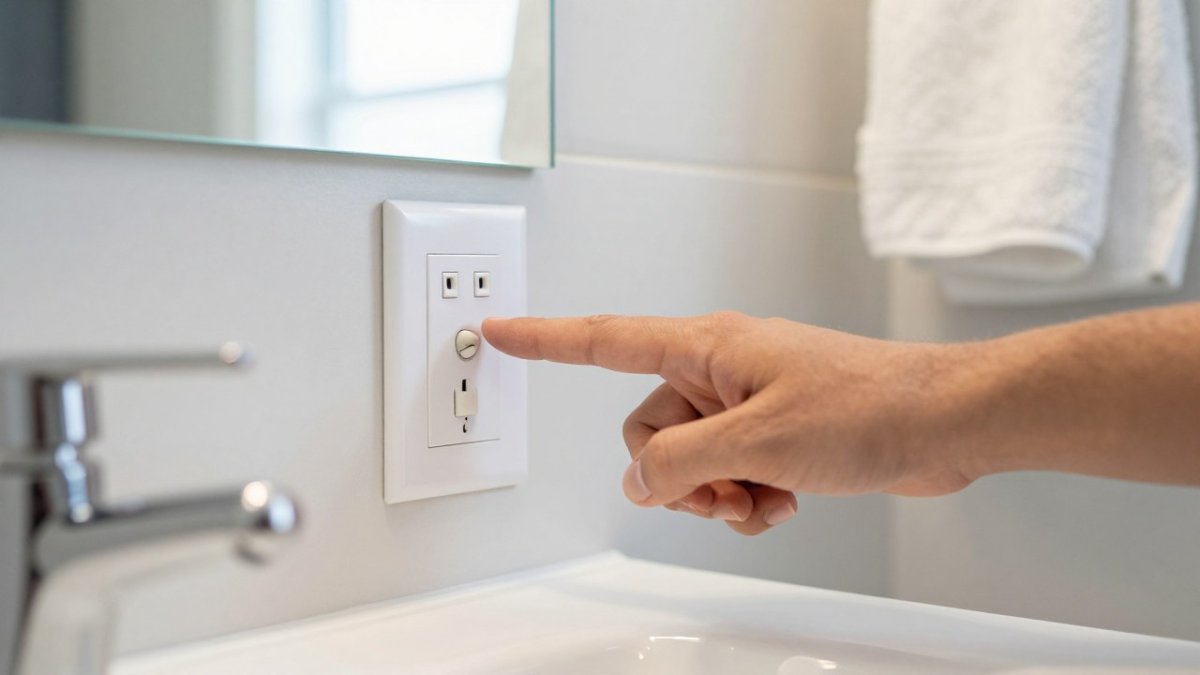
- Unplug everything from the tripping outlet and from every outlet it protects downstream. A single GFCI often protects receptacles in other parts of the bathroom, in an adjacent hallway, or even in a nearby garage or exterior wall. Leave everything unplugged for this step.
- Dry the area and wait. Wipe the cover plate and the wall around the outlet with a dry towel, then let it air out for 15 to 30 minutes with the bathroom door open and the exhaust fan running. This gives surface condensation time to clear without you touching the device.
- Press test, then reset. Press the TEST button firmly until it clicks, then press RESET until it clicks and holds. If the button will not hold, do not keep pressing it; move to the section on a GFCI that will not reset.
- Plug in one low-power device such as a nightlight or a phone charger. If the GFCI trips immediately with only that load, the fault is in the outlet, its wiring, or a downstream device, not in a high-draw appliance.
- Check downstream outlets. Walk the bathroom and nearby rooms and look for another GFCI with a tripped reset button. One tripped GFCI can kill power to several ordinary outlets wired after it, so the "dead" outlet you are testing may not be the device that tripped.
- Reproduce the timing. Note whether the trip happens during or right after a shower, on damp mornings, or only when a specific appliance is plugged in. Timing is the clearest clue for separating humidity from an appliance or wiring fault.
- Run the exhaust fan during showers. Run the bathroom fan for 20 minutes during and after each shower and watch whether the trips become less frequent. If they do, condensation is likely a major contributor.
- Log the trips. Record the date, the weather, whether the fan was running, and what was plugged in. A pattern across several trips is more useful than a single event.
Watch out: If the outlet trips with nothing plugged in, or if it trips again immediately after a successful reset, shut off power at the breaker before touching the device and treat it as a wiring or GFCI fault rather than a humidity problem.
The checklist below summarises the main steps and the cause each one helps you separate.
| Step | What to do | Time or frequency |
|---|---|---|
| Unplug everything | Unplug the outlet and all downstream outlets | Before any reset |
| Dry the area | Wipe the cover plate and wall, let it air out | 15 to 30 minutes |
| Press test, then reset | Press TEST, then RESET until it holds | Once, do not keep pressing |
| Plug in one low-power device | Use a nightlight or phone charger | One device at a time |
| Check downstream outlets | Look for another tripped GFCI | Walk the bathroom and nearby rooms |
| Reproduce the timing | Note trips during or after showers, or with an appliance | Each trip |
| Run the exhaust fan | Run the fan 20 minutes during and after showers | Every shower |
| Log the trips | Record date, weather, fan use, and load | Each trip |
GFCI Keeps Tripping with Nothing Plugged In
When a GFCI trips with nothing connected, the likely cause is a ground fault in the wiring or the device itself. Moisture inside the box, a damaged neutral wire, or a worn GFCI can all do this. Because the fault is in the building wiring, it is not something a plug-in device can fix.
A licensed electrician can test the circuit, check the box for moisture, and confirm whether the GFCI itself has failed. Find a licensed electrician in Manchester, VT who can inspect the circuit and box.
Why Does My Outlet Keep Tripping When I Plug Something In?
If the outlet trips only when you plug something in, the device may be the problem. A hair dryer, heater, or older appliance with a damaged cord can leak current. Motors that are worn or wet can do the same.
Try these checks before you blame the outlet:
- Unplug the appliance and test the outlet with nothing connected.
- Inspect the cord for cracks, scorch marks, or exposed wire.
- Plug the appliance into a different outlet on a different circuit.
- Stop using any device that trips the outlet every time.
If the outlet only trips with one appliance, replace or repair that appliance. If it trips with several, the outlet or circuit needs attention.
GFCI Keeps Tripping After Replacing: What Usually Went Wrong
Replacing a GFCI can fix a worn device, but a new one will still trip if the wiring has a fault.
If the new GFCI trips right away, turn the power off and have a licensed electrician check the wiring. Repeated replacements without finding the root cause waste money and leave the real hazard in place. Read how to prevent electrical fire hazards from repeated trips and failed replacements.
When to Call a Licensed Electrician About Bathroom Outlets
Call a licensed electrician if any of these apply:
- The outlet trips every time it gets damp, even after drying.
- The GFCI will not reset or trips with nothing plugged in.
- You see scorch marks, buzzing, a burning smell, or discolored covers.
- Multiple outlets or circuits trip at the same time.
- You are not sure whether the wiring is safe to work on.
A licensed electrician can test the circuit, find moisture or wiring faults, and confirm whether the GFCI or the wiring needs repair. Working on live wiring is dangerous, so do not attempt repairs you are unsure about.
Scheduling Your Bathroom Outlet Inspection With Precision Power Services
If your bathroom outlets keep tripping in humid weather, a professional inspection is the fastest way to find the cause. Precision Power Services is a Vermont licensed electrician serving Rutland and central Vermont, with 7 years of experience and more than 500 projects completed.
A licensed electrician can test the GFCI, check downstream outlets, and look for moisture in the boxes. Book an inspection with a Vermont licensed electrician to get the trips diagnosed and fixed.
Frequently Asked Questions
What causes a bathroom outlet to trip?
Bathroom GFCI outlets trip when they detect a small imbalance between the current flowing out on the hot wire and the current returning on the neutral wire, which signals current leaking to ground. Common causes include moisture or condensation reaching the outlet, a damaged or worn device, a faulty appliance such as a hair dryer with a damaged cord or motor, and loose or damaged wiring. Humidity alone rarely trips a healthy GFCI, but it can expose a weak device or wiring fault. Start by unplugging everything on that circuit, pressing reset, and checking whether the outlet holds.
Can humidity cause a GFCI to trip?
Yes, indirectly. High humidity and steam can leave condensation on outlet covers, inside electrical boxes, or on nearby fixtures, and moisture that bridges a path to ground can trigger a GFCI. A properly installed GFCI in good condition is designed to tolerate normal bathroom humidity. If the outlet trips only on humid days, check for water droplets on the cover, poor bathroom ventilation, and any damage to the device. Persistent tripping on humid days usually points to a device or installation problem that a licensed electrician should inspect.
What should I do if my bathroom GFCI won't reset?
If the reset button will not hold, first unplug everything connected to that outlet and to any downstream outlets, then press reset again. A GFCI that will not reset while nothing is plugged in usually indicates an active ground fault, wiring fault, or a failed device. Do not bypass the outlet or remove the protection. Dry any visible moisture, confirm the outlet is not damaged or discolored, and check the breaker. If the outlet still will not reset, turn off power at the breaker and call a licensed electrician to test the circuit.
When should I call an electrician about a bathroom outlet that keeps tripping?
Call a licensed electrician if the outlet trips repeatedly after you have unplugged appliances and dried the area, if it will not reset, if you notice burning smells, buzzing, scorch marks, or warm outlet covers, or if multiple outlets on the same circuit stop working. A professional can test the GFCI, inspect wiring and ground connections, and confirm that protection is installed correctly across downstream outlets. Precision Power Services offers professional electrical troubleshooting in Rutland and central Vermont. For current pricing or a quote, contact Precision Power Services through its website.
Need an electrician in Rutland or central Vermont?
Precision Power Services is a licensed and insured electrical contractor serving Rutland, Killington, Brandon, Castleton, and surrounding towns. Call (802) 417-0587 or book online.
← Back to blog