How Do You Find an Honest Electrical Contractor?
Last Updated: November 2, 2026
Quick Summary
Honest electrical contractors can be found by verifying their state license, confirming active insurance with the insurer, and comparing itemized written estimates on the same scope. A trustworthy contractor also shows you the problem and explains it in plain words before any work begins.
- Look up the license number on your state board's public search and confirm the classification fits the work.
- Call the insurer on the certificate of insurance to confirm general liability and workers' compensation are active.
- Compare two or three written, itemized estimates on identical scope rather than comparing only the bottom-line price.
- Watch for the change-order clause, since estimates silent on change-order pricing can lead to surprise charges.
- Avoid pressure to sign today, cash payments, or large upfront deposits.
Table of Contents
- Why Honest Electrical Contractors Are Hard to Spot Before the Job Starts
- How to Verify an Electrician's License and Insurance
- Questions to Ask an Electrician Before Hiring
- How to Read an Electrical Contractor Estimate Checklist
- Red Flags When Hiring an Electrician
- How to Tell a Real Problem From an Upsell Before You Approve Work
- Booking Your Electrical Assessment With Precision Power Services
- Frequently Asked Questions
Why Honest Electrical Contractors Are Hard to Spot Before the Job Starts
Finding honest electrical contractors is harder than it should be. Most homeowners only learn who they hired after the work is done, when a wire or breaker problem shows up.
A good contractor should explain the problem in plain words and show you the evidence. Watch for someone who rushes you toward a big purchase before you understand what is wrong.
How to Verify an Electrician's License and Insurance
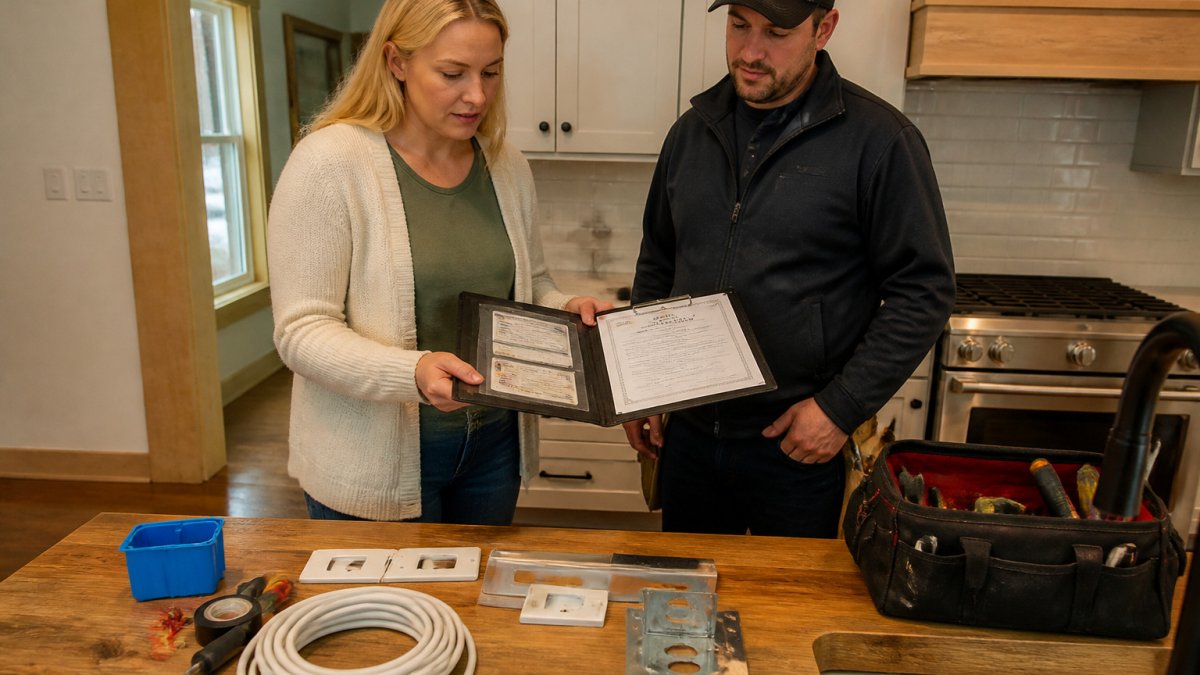
Credential checks are the single highest-leverage step in hiring, because they are the only part of the process you can verify before money changes hands. Do them in this order.
Step 1: Confirm the license at the state level
Electrical licensing is handled by the state, not the federal government, so the lookup tool differs depending on where you live. Many state boards publish a public license search where you can enter a name or license number and see:
- The license status (active, expired, suspended, or revoked)
- The license classification, for example, journeyman electrician, licensed electrician, or electrical contractor
- The expiration date and any disciplinary actions on record
- Whether the license is held by an individual or by the business entity
Two details trip people up. First, a journeyman or master license belongs to a person, not a company; the business itself often needs a separate contractor registration. Confirm both. Second, the name on the license should match the name on your estimate and invoice, and a mismatch is worth questioning before you proceed.
state contractor licensing board lookup
Step 2: Read the certificate of insurance, not just the word 'insured'
Ask for the actual certificate of insurance (often called a COI) and check four things on the page:
- General liability, covers damage to your property or injury to others caused by the work. Confirm the policy is current by checking the effective and expiration dates.
- Workers' compensation, covers the contractor's own employees if they are hurt on your property. If this is missing, an injured worker's medical bills and lost wages can become your liability as the property owner.
- The named insured, must match the company you are hiring, not a different entity.
- Policy limits, a very low limit is a warning that the contractor is thinly covered.
Call the insurer's number printed on the certificate to confirm the policy is active. Certificates can be altered or stale, and a two-minute phone call closes that gap.
Step 3: Check for a surety bond and business registration
Some states require electrical contractors to carry a surety bond, which can give you a claims path if the contractor fails to complete the work or violates the contract. Ask for the bond number and the surety company. Also confirm the business is registered with your state's secretary of state or business filing office, this catches fly-by-night operations using a name that does not legally exist.
Step 4: Cross-check permits and complaints
Before hiring, ask your local building department whether the contractor has pulled permits in your jurisdiction and whether any complaints are on file. A contractor who routinely pulls permits is working in the system; one who avoids permits is avoiding inspection. Combine this with a check of your state attorney general's consumer complaint resources and the Better Business Bureau for patterns, not one-off disputes.
A five-minute verification checklist
- License number obtained in writing and looked up on the state board site
- License status active and classification appropriate for the work
- Business name matches license, COI, and estimate
- Certificate of insurance received and insurer called to confirm
- Workers' compensation confirmed for all employees
- Surety bond number and surety company recorded
- Business registration confirmed with the secretary of state
- Permit history and complaint records checked with the local building department
Questions to Ask an Electrician Before Hiring
Ask direct questions before anyone touches your panel. A straight answer tells you a lot about how the job will go.
- Are you licensed and insured for this type of work?
- Will you pull the required permits, and who signs the final inspection?
- How do you explain the problem, and can you show me where it is?
- Will you give me a written estimate with the parts and labor listed?
- What is your warranty on the work?
A contractor who gets annoyed by these questions is a warning sign. Honest professionals expect them.
How to Read an Electrical Contractor Estimate Checklist
An estimate is a contract in draft form. Read it the way you would read a lease: line by line, looking for what is missing as much as what is stated. The goal is to compare two or more bids on identical scope, not on the bottom-line number.
What a complete electrical estimate contains
A trustworthy estimate separates the job into four parts:
- Scope of work, described by room, circuit, or fixture, not as 'electrical work.' For a panel replacement, it should name the panel brand, the amperage, the number of spaces, and whether the service mast and grounding electrode are included.
- Materials, itemized by type and quantity: wire gauge and length, breakers, outlets, boxes, conduit, and fixtures. 'Materials included' is not itemization.
- Labor, hours or a flat labor line, plus whether the rate is straight time or overtime.
- Permits, inspection fees, and cleanup, listed as separate lines so you can see what the contractor is passing through versus marking up.
How electrical work is actually priced
Residential electrical pricing commonly follows three structures, and knowing which one you are looking at can change how you compare bids:
- Flat-rate or per-task pricing, a set price per outlet, fixture, or panel. Easy to compare, but confirm what is included (drywall patching, haul-away, permit).
- Time-and-materials (T&M), labor rate plus materials at cost plus a markup. Fair for diagnostic work and small repairs, but ask for the hourly rate and the markup percentage in writing, and request a not-to-exceed cap.
- Good-better-best tiers, common on panel and service upgrades, where the contractor quotes three options. Compare the middle tier across contractors, not the cheapest tier, which often omits permits or grounding.
A common pattern is that the lowest bid is lowest because it excludes permits, inspection, or code-required upgrades such as arc-fault or ground-fault protection. Those exclusions reappear later as change orders.
The change-order trap
Read the estimate for language about change orders. A fair estimate states the hourly rate and materials markup that will apply to any work added after signing. An estimate that is silent on change-order pricing leaves the door open for surprise charges once the wall is open. Ask the contractor to add a change-order clause before you sign.
Bid comparison checklist
- Scope described by room, circuit, or fixture, not 'electrical work'
- Materials itemized by type and quantity
- Labor listed separately with rate or flat amount
- Permit and inspection fees shown as separate lines
- Cleanup and haul-away included
- Payment schedule tied to milestones, with no large upfront deposit
- Change-order rate and markup stated in writing
- Warranty terms in writing, including labor warranty length
Pricing depends on the scope, the age of your home, and local conditions. For realistic figures, see what a panel upgrade costs in Vermont. For current pricing, contact Precision Power Services directly for a quote.
Before you compare bids, check that each estimate covers the same parts of the job.
| Estimate part | What to look for | Why it matters |
|---|---|---|
| Scope of work | Described by room, circuit, or fixture | Not 'electrical work' |
| Materials | Itemized by type and quantity | 'Materials included' is not itemization |
| Labor | Listed separately with rate or flat amount | Shows what you are paying for |
| Permits and inspection | Separate lines | Lowest bids often omit them |
| Change orders | Rate and markup stated in writing | Prevents surprise charges |
Red Flags When Hiring an Electrician
Some signs point to a contractor you should avoid. Watch for these:
- Pressure to sign today or pay cash to "lock in" a price
- Door-to-door offers to inspect your panel for free
- Refusing to pull permits when the work requires them
- No license number or insurance proof when asked
- A "problem" that appears only after they arrive
If someone claims an emergency, stay calm. Learn what qualifies as an emergency and how to stay safe before agreeing to major work. Turn off the affected circuit only if you can do it safely, and call a licensed electrician to confirm the danger before you agree to major work.
How to Tell a Real Problem From an Upsell Before You Approve Work
Ask the electrician to show you the problem. If you're unsure whether a professional inspection is worth paying for, learn whether a professional electrical inspection is worth the investment.
If the explanation stays vague, get a second opinion before spending money. Compare the findings against the list of common safety checks published by the U.S. Consumer Product Safety Commission electrical safety guidance.
Booking Your Electrical Assessment With Precision Power Services
If you want a clear answer about your electrical system, Precision Power Services provides electrical solutions for homes and businesses in Rutland and central Vermont. Our approach is to explain what we find and provide a written estimate before work begins. Visit our website to request an estimate.
Frequently Asked Questions
How can I tell if an electrician is honest?
Verify the license, confirm insurance, get a written and itemized estimate, and ask the electrician to show you the problem.
Should I get more than one estimate?
Yes. Two or three written estimates help you compare scope, materials, and price on the same job.
Is it safe to pay a large deposit up front?
Avoid large upfront payments. A reasonable deposit tied to a payment schedule protects you better.
Frequently Asked Questions
How can I tell if an electrical contractor is trustworthy?
Start by confirming the contractor holds a current state electrical license and carries both general liability and workers' compensation insurance. Then check for a local business address and a clear written estimate. A trustworthy contractor explains what the work involves, why it is needed, and what alternatives exist, and does not pressure you to sign on the spot.
What questions should I ask before hiring an electrician?
Ask whether the electrician is licensed in your state, how long they have worked on projects like yours, and whether they pull permits when required. Ask who will be on site and how they handle unexpected findings. Request the warranty terms in writing.
What should an electrical estimate include?
A complete estimate lists each task, the materials, labor hours or a flat labor charge, and any permit fees. It should state the scope clearly, including what is excluded, and give a timeline. Compare two or three written estimates line by line, since a much lower total often means missing materials or vague scope. Pricing depends on the project details, so request a written quote from Precision Power Services through its website.
Should an electrician provide a written estimate and warranty?
Yes. A written estimate protects you from surprise charges and makes it easier to compare bids. A written warranty states how long workmanship is covered and what happens if a problem appears after the job. If a contractor will not put either in writing, treat that as a warning sign and consider another professional.
Need an electrician in Rutland or central Vermont?
Precision Power Services is a licensed and insured electrical contractor serving Rutland, Killington, Brandon, Castleton, and surrounding towns. Call (802) 417-0587 or book online.
← Back to blog