Is Professional Electrical Inspection Worth It?
Table of Contents
- Why Professional Electrical Inspection Matters for Safety and Code Compliance
- What Does an Electrical Inspection Include
- Electrical Inspection Cost and What You're Actually Paying For
- How Often Should Electrical Wiring Be Inspected
- Professional Electrical Inspection Before Buying a House
- Common Problems a Professional Inspection Catches That Home Inspectors Miss
- How to Choose a Licensed Electrician for Your Inspection
- Frequently Asked Questions
Last Updated: October 9, 2026
Why Professional Electrical Inspection Matters for Safety and Code Compliance
A professional electrical inspection is a thorough examination of your home or business's electrical system to identify safety hazards, code violations, and potential problems.
Electrical hazards are serious. Faulty wiring, outdated panels, and damaged outlets cause fires, shocks, and system failures.
A professional electrical inspection catches problems before they become emergencies, because a trained electrician with the right tools spots issues invisible to the untrained eye.
What Does an Electrical Inspection Include
A professional electrical inspection examines every part of your electrical system, main panel, wiring, outlets, switches, grounding, and connected equipment, to ensure it's safe and up to code.
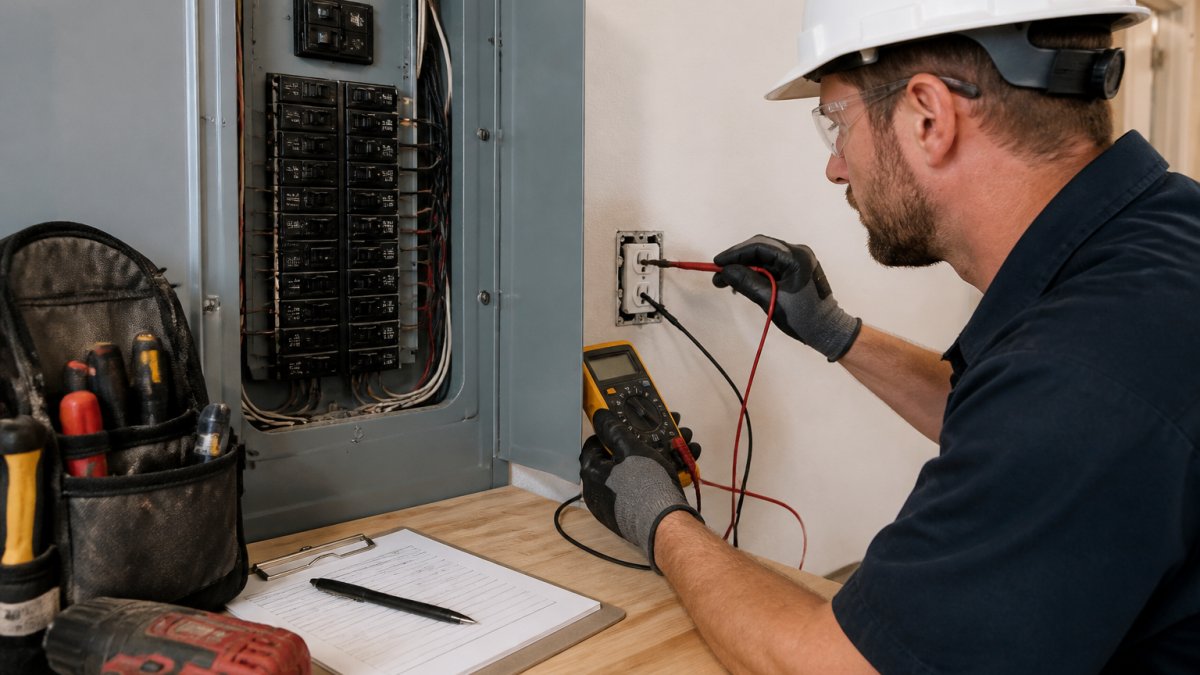
Here's what an electrician typically checks:
- Main electrical panel, breaker condition, proper labeling, signs of damage or overheating
- Wiring throughout the house, visible damage, outdated materials, improper installation
- Outlets and switches, proper grounding, function, signs of wear or burning
- Grounding and bonding, earth connection integrity and safety
The inspection is visual and hands-on: the electrician tests components, checks connections, and documents everything in a detailed report.
A key distinction: a professional electrical inspection differs from a general home inspection.
Electrical Inspection Cost and What You're Actually Paying For
What does an inspection cost, and how do you know the number is worth it? Here is the math.
Typical price ranges
Pricing varies by region, property size, system age, and scope, but most residential inspections fall into recognizable bands:
- Basic visual and functional inspection (single-family home): commonly quoted in the low hundreds of dollars. This covers the panel, visible wiring, outlets, switches, grounding, and a written summary.
- Detailed inspection with testing and documentation: often a few hundred dollars. Adds circuit-level testing, load calculations, thermal scanning where available, and a prioritized written report with photos.
- Inspection tied to a real estate transaction or major upgrade: priced higher because it includes code-compliance review, capacity analysis for new loads, and faster turnaround.
- Commercial or multi-unit properties: quoted per square foot or per panel, typically well above residential rates.
Treat these as planning ranges, not quotes. A licensed electrician should give you a written scope and fixed price before starting. If a quote is far below market, ask what's being left out, testing, the written report, or both.
What you are actually paying for
You're not paying for someone to look at your panel. You're paying for four things:
- Training and licensing. A licensed electrician has completed an apprenticeship, passed a journeyman or master exam, and meets continuing education requirements, the background that lets them spot a double-tapped breaker or missing bonding jumper in seconds.
- Tools and testing. A multimeter, circuit tracer, receptacle tester, and thermal camera cost real money and take skill to interpret. A visual walk-through without testing misses most latent hazards.
- Liability and documentation. A written report with photos creates a record that matters if a problem is later tied to a fire or insurance claim.
- Insurance. Licensed electricians carry general liability and often errors-and-omissions coverage; unlicensed or handyman inspections carry none.
The value calculation
Run the comparison honestly:
- Cost of inspection: a few hundred dollars, one time.
- Cost of a panel replacement: typically in the low thousands, plus permits and inspection fees.
- Cost of a rewire: often five figures in an older home.
- Cost of an electrical fire: structural damage, contents loss, displacement, and insurance disputes that can exceed the inspection cost by orders of magnitude.
When the inspection is clearly worth it
- Buying a house. The inspection is due diligence. Findings become negotiating leverage: repair credits, price reductions, or a clean walk-away.
- Planning an EV charger, heat pump, or generator. It tells you whether the service and panel can carry the new load before you buy equipment you can't safely install.
- Older home. Aging wiring, aluminum branch circuits, and undersized services are common; inspection reveals which you have.
- Insurance or refinance requirement. Many carriers and some lenders want code-compliance documentation on older properties.
When it may not be worth it
Be honest about the other side. If your home is recent, passed a recent inspection, shows no warning signs, and you're not planning major electrical work, a full inspection may be unnecessary. A targeted check of one circuit, outlet, or panel question is usually the better spend.
How Often Should Electrical Wiring Be Inspected
There is no single national rule saying "inspect your wiring every X years." Requirements come from state and local building codes, insurance underwriting guidelines, and manufacturer recommendations. What follows is practical guidance, not a legal standard, always confirm local requirements with your authority having jurisdiction.
Frequency by situation
New construction or recent renovation: The work was inspected before the certificate of occupancy.
Homes 40 years or older: Every 3 to 5 years.
Homes 20 to 40 years old: Every 5 to 7 years, or whenever the electrical load changes significantly.
Before any major load addition: Always.
After work by another contractor: Immediately.
Commercial and industrial: Driven by occupancy type, insurance requirements, and often a formal preventive maintenance schedule rather than a fixed year count.
Warning signs that override the schedule
If any of these appear, do not wait for the calendar:
- Breakers that trip repeatedly on the same circuit
- Flickering or dimming lights when appliances cycle on
- Warm or discolored outlet covers, switch plates, or panel deadfronts
- A burning or fishy smell near outlets, switches, or the panel
Any one of these is a same-week call. A burning smell or visible scorching is an emergency.
What changes the answer in your jurisdiction
Adoption of the National Electrical Code is not uniform: states and localities adopt different editions on different timelines, and some add local amendments. The code an inspector cites in one town may differ from the next, and "my house passed inspection in 1998" tells you almost nothing about today's requirements.
Two practical consequences:
- Ask which code edition the inspector is inspecting against and whether they'll note grandfathered items versus current violations.
- When you sell, expect a buyer's inspector to apply current standards. A pre-listing inspection avoids surprises at the worst possible moment.
What happens after the inspection
An inspection without follow-through is just paperwork. A useful process:
- Review the report with the electrician. Ask them to sort findings into three buckets: immediate safety hazards, code violations needing correction, and recommended maintenance.
- Prioritize hazards first. Exposed conductors, missing grounds, overheating terminations, and double-tapped breakers are not deferrable.
- Get repair quotes in writing. For anything beyond a minor fix, ask for a scope naming parts, labor, and permit responsibility.
- Pull permits where required. Most jurisdictions require them for panel changes, new circuits, and service upgrades. Unpermitted work is a resale liability and can void insurance coverage.
- Retest after repairs. A short re-inspection confirms the fix and produces documentation for a buyer, insurer, or lender.
- File the report. Keep the inspection report and repair receipts with your home records. They are worth real money at resale.
Professional Electrical Inspection Before Buying a House
Buying a house is the biggest financial decision most people make. A professional electrical inspection is essential due diligence.
The electrical system is hidden behind walls and panels, you can't see the wiring or the main switch's condition.
Before you commit to a purchase, hire a licensed electrician to inspect the entire system. They'll identify:
- Outdated or unsafe wiring materials
- Panels that are at or over capacity
- Missing or improper grounding
- Code violations that require expensive fixes
- Components that are failing or near end of life
This gives you negotiating leverage: if the inspection finds significant problems, you can ask the seller to make repairs, reduce the price, or walk away.
Don't skip this step. An inspection costs far less than discovering problems after you've closed and the house is yours.
Common Problems a Professional Inspection Catches That Home Inspectors Miss
Home inspectors do a surface-level check; professional electricians go deeper. Problems that often slip past a general inspection:
Overloaded circuits, Too many devices on one circuit trips breakers and creates fire risk. A home inspector might not notice.
Outdated wiring materials, Old cloth or aluminum wiring can overheat and cause fires.
Double-tapped breakers, Two wires on one breaker, which is unsafe and against code.
Missing or inadequate bonding, Metal pipes and components must be bonded together for safety.
Damaged or deteriorated components, Burned outlets, corroded connections, or water damage.
The difference comes down to training and tools. An electrician uses a multimeter to test voltage, continuity, and grounding.
How to Choose a Licensed Electrician for Your Inspection
Not all electricians are equal. How to find one you can trust:
Verify licensing, Your state and local jurisdiction require electricians to be licensed. Confirm a current license, in Vermont, through the Department of Labor. Never hire unlicensed work.
Check references, Ask for past clients and specifically about inspection accuracy, whether problems found were real or upsold.
Get a written scope, Confirm what will be checked.
Expect a detailed report, A written report listing all findings by severity, with photos and specific locations.
Ask about emergency service, Can they respond quickly if problems arise?
A professional inspection is only valuable if you trust the inspector.
A professional electrical inspection is worth the investment if your home is older, you're planning upgrades, or you've noticed electrical problems. At Precision Power Services, we provide thorough, honest inspections with detailed reports that help you understand your system and make informed decisions. The National Electrical Code establishes safety standards for all electrical installations to protect homeowners and businesses.
Electrical inspections in Vermont
Vermont has a lot of older housing, and wiring in these homes has often been added to by several owners over the years. An inspection is worth it when you are buying or selling, when an insurer asks, or when you see warning signs like warm outlets, flickering lights, or breakers that trip.
Electrical work in Vermont follows the National Electrical Code as adopted in the Vermont Electrical Safety Rules (2025 edition, enforced by the Division of Fire Safety). Precision Power Services is a Vermont licensed electrician based at 450 Park Ln in Rutland, serving Rutland County and central Vermont.
Book a free estimate or call (802) 417-0587.
Frequently Asked Questions
Is a professional electrical inspection worth the money?
Yes, if your home has an older electrical system, you're buying a property, or you've noticed safety signs like flickering lights or warm outlets. A professional electrical inspection identifies fire hazards, code violations, and system overload risks that could cost thousands in emergency repairs or endanger your family. The cost of an inspection is minimal compared to the liability and safety risks of ignoring electrical problems.
How often should you have an electrical inspection?
Homes over 40 years old should be inspected every 3-5 years. Newer homes typically need inspection every 10 years or when major changes occur, such as adding an EV charger, heat pump, or significant load to your electrical system. If you experience flickering lights, circuit breaker trips, or warm outlets, schedule an inspection immediately regardless of age.
What's included in a professional electrical inspection?
A licensed electrician tests the main electrical panel, circuit breakers, grounding system, outlets, switches, wiring condition, and safety devices. They check for code violations, fire hazards, improper installations, and system capacity. The inspection produces a detailed report identifying problems and safety risks, but does not include repairs unless you request them separately.
Should I get an electrical inspection before buying a home?
Absolutely, especially if the house is over 20 years old or has an older electrical panel. While a general home inspector reviews the electrical system, they're not licensed electricians and may miss critical safety issues. A dedicated professional electrical inspection reveals problems that could require expensive upgrades or pose fire and shock hazards, giving you accurate information to negotiate repairs or price.
Need an electrician in Rutland or central Vermont?
Precision Power Services is a licensed and insured electrical contractor serving Rutland, Killington, Brandon, Castleton, and surrounding towns. Call (802) 417-0587 or book online.
← Back to blog