Book Emergency Electrical Repair Now: What to Do
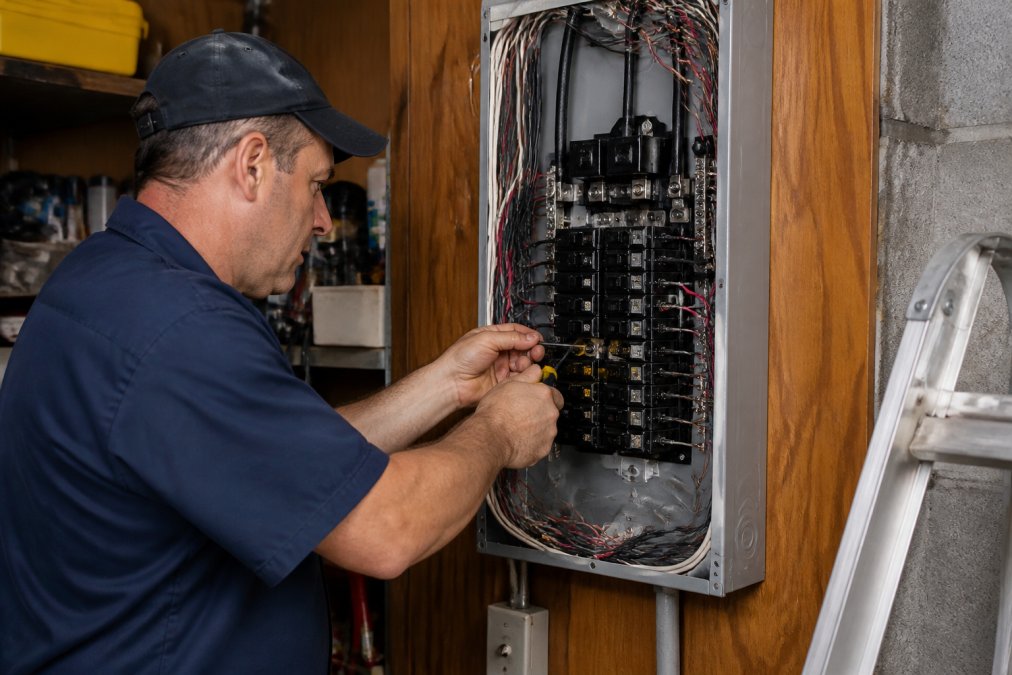
Table of Contents
- What Qualifies as an Electrical Emergency
- Safety First: Immediate Actions During an Electrical Emergency
- How to Troubleshoot a Dead Outlet in the Kitchen
- Signs of Electrical Panel Failure You Can't Ignore
- When to Call an Emergency Electrician
- Why Same-Day Emergency Electrical Service Matters
- Book Your Emergency Electrical Repair Today
- Frequently Asked Questions
Last Updated: September 27, 2026
What Qualifies as an Electrical Emergency
An electrical emergency is any situation where your home's electrical system poses an immediate safety risk or has stopped functioning entirely, not a flickering light or tripped breaker you can reset yourself, but a condition requiring professional intervention now.
Common signs include exposed wiring, sparking outlets, burning smells, complete power loss in multiple rooms, or hot outlets. Call an emergency electrician immediately, do not attempt troubleshooting yourself.
Common Electrical Emergencies in Homes
Sparking outlets signal damaged wiring or internal arcing that could ignite a fire. Stop using the outlet and call for emergency electrical repair immediately.
A burning smell near your electrical panel or outlets indicates overheating wires or failed components and often precedes electrical fires. Evacuate if the smell is strong and call emergency services.
Widespread or persistent flickering throughout your home points to a serious wiring issue requiring professional diagnosis.
Complete power loss in one or more rooms could indicate a failed circuit breaker, damaged wiring, or a problem with your main service. If resetting the breaker doesn't restore power, you need emergency electrical repair services.
Water damage near electrical components creates immediate shock and fire risks requiring professional assessment before power is restored (the CDC).
Safety First: Immediate Actions During an Electrical Emergency
Your first priority is preventing injury or fire. Actions in the first 5 minutes can mean the difference between a contained problem and catastrophe.
Minute 1: Assess and Evacuate if Necessary
If you see active flames, smell heavy smoke, or feel heat from an outlet or panel, evacuate immediately and call 911 from outside. Do not attempt troubleshooting.
If you see sparking, smell burning, or notice a hot outlet but no active fire, move all people and pets away from the affected area until a professional assesses it.
Minute 2: Locate and Access Your Electrical Panel
Your electrical panel is typically located in a basement, garage, utility room, or exterior wall. Locate it now, before an emergency, so you know where it is.
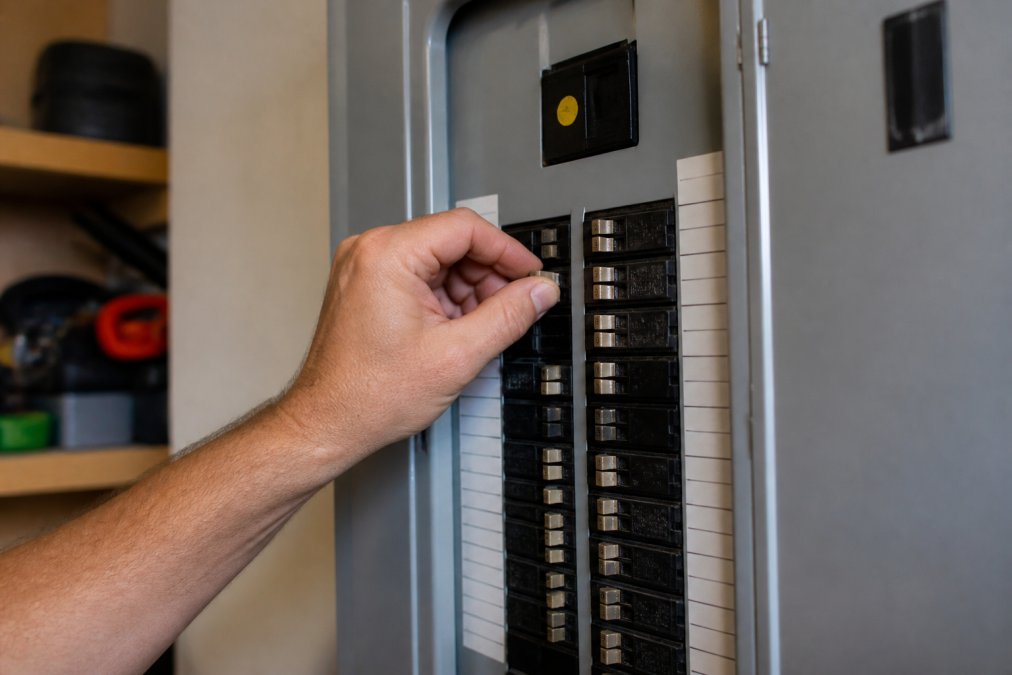
If you can safely reach the panel, open the door. Inside, you'll see a main breaker at the top and individual circuit breakers below it, each labeled with the area it controls. If labels are missing, take a photo now for reference.
Minute 3: Turn Off Power to the Problem Area
If the hazard is isolated to one room or outlet, flip the corresponding breaker to OFF, wait 10 seconds, then flip it back ON. If the breaker immediately trips again, turn it OFF and leave it off. Repeated tripping indicates a serious fault.
If you cannot identify which breaker controls the problem or if the problem affects multiple areas, flip the main breaker to OFF. This cuts power to your entire home but eliminates the immediate hazard.
Minute 4: Isolate the Hazard Physically
Do not touch sparking outlets, exposed wires, wet electrical components, or anything hot or producing a burning smell. Turn off the breaker controlling the outlet and leave the device plugged in.
If water is present near electrical components (a flooded basement with outlets, water near the panel, or a wet appliance), do not touch the water or the electrical equipment. Assume the water is energized until a professional confirms otherwise.
Minute 5: Call for Emergency Help
Contact an emergency electrician immediately. Describe exactly what you observed: sparking outlet, burning smell, complete power loss, or hot outlet. This helps the electrician arrive prepared.
If you've evacuated due to fire or heavy smoke, call 911 first. The fire department will ensure the scene is safe before an electrician enters.
What NOT to Do
- Do not attempt repairs yourself. Mistakes can cause electrocution or fire.
- Do not leave hazards unaddressed. Sparking outlets or burning smells will not resolve on their own.
- Do not use extension cords or temporary patches as long-term solutions. These mask underlying problems and increase fire risk.
- Repeated breaker tripping indicates a fault requiring professional diagnosis.
How to Troubleshoot a Dead Outlet in the Kitchen
Determining whether a dead kitchen outlet is a quick fix or an emergency requires a systematic approach.
Step 1: Determine if the Problem is Utility-Side or Home-Side
Check whether the power company's service is the issue. Look outside at your electrical meter and main service lines. If you see downed lines, sparking, or meter damage, call your power company's emergency line immediately, do not touch downed lines.
If your entire neighborhood is without power, check your power company's website or call their outage line.
If only your home has lost power, the problem is home-side and requires troubleshooting your electrical panel.
Step 2: Check if the Outlet is a GFCI Outlet
GFCI (Ground Fault Circuit Interrupter) outlets protect against shock hazards near water and have two buttons labeled "Test" and "Reset."
If your dead outlet is a GFCI outlet, press the "Reset" button firmly. If the outlet restores, the GFCI detected a ground fault and cut power as a safety measure.
If the outlet doesn't work after pressing Reset or resets but immediately loses power again, there's an underlying fault. Do not keep pressing Reset.
Step 3: Check for a Tripped Breaker
Go to your electrical panel and look for the breaker controlling the dead outlet. A breaker in the middle position (between fully ON and fully OFF) has tripped.
Flip the tripped breaker fully to OFF, then back to ON. If the outlet restores power, the problem is resolved.
If the breaker trips again immediately, there's a persistent fault. Turn the breaker OFF and leave it off. Call an electrician for diagnosis, this is not an emergency unless there's also a burning smell or sparking.
Step 4: Test Nearby Outlets to Map the Problem
Plug a lamp into outlets adjacent to the dead outlet. If multiple outlets in the same area are dead, the problem is likely a failed breaker or circuit fault. If only one outlet is dead, the outlet itself may be damaged.
If outlets throughout your home are dead, the problem may be in your main service or a failed main breaker, requiring professional assessment.
Step 5: Look for Signs of Danger
Before using a dead outlet again, inspect it for these warning signs:
- Burning smell near the outlet or in the wall behind it. Do not use this outlet. Call an electrician immediately.
- Outlet feels hot to the touch. Do not use this outlet.
- Outlet is loose or the plug won't stay inserted. Do not use this outlet. Call for service.
- Visible scorch marks, discoloration, or melting. Do not use this outlet.
- Sparking when you insert a plug. Turn off the breaker and call an electrician immediately.
When to Call an Electrician vs. When It's an Emergency
If troubleshooting restores power and the outlet works normally with no signs of damage, monitor it over the next few days.
If you observe any of these conditions, call for emergency electrical repair immediately:
- Burning smell near the outlet or panel
- Sparking from the outlet
- Outlet is hot to the touch
- Multiple outlets throughout your home are dead and resetting the main breaker doesn't restore power
- The breaker trips repeatedly even after you've turned off all devices on that circuit
Signs of Electrical Panel Failure You Can't Ignore
Your electrical panel is the heart of your home's electrical system. When it fails, you lose power or face serious safety risks. Recognize these warning signs that demand immediate professional attention.
When to Call an Emergency Electrician
Knowing when to call for emergency electrical repair versus scheduling a regular appointment saves time and protects your safety. Call immediately if you experience any of these situations.
Why Same-Day Emergency Electrical Service Matters
When an electrical emergency strikes, same-day emergency electrical repair service protects your home and family.
Book Your Emergency Electrical Repair Today
When an electrical emergency strikes your home, you need a licensed electrician who responds fast and diagnoses problems accurately. Precision Power Services provides after-hours emergency electrical repair service throughout central Vermont.
Frequently Asked Questions
What qualifies as an electrical emergency?
An electrical emergency includes sparking outlets, burning smells from electrical fixtures, flickering lights throughout your home, complete power loss, exposed wiring, water near electrical panels, and any situation where you suspect electrical panel failure. These hazards pose immediate fire or shock risks. If you're unsure whether your situation is urgent, contact a licensed electrician, it's better to call and confirm than to risk your safety.
How do I safely troubleshoot a dead outlet in the kitchen?
First, check if other outlets in the kitchen are also dead, this suggests a tripped circuit breaker. Go to your electrical panel and look for any breakers in the OFF position. If you find one, flip it back ON. If the breaker trips again immediately, stop and call an emergency electrician. Never use wet hands near outlets or attempt to repair wiring yourself. If only one outlet is dead and the breaker is fine, don't use it and schedule professional electrical troubleshooting.
What are the signs of electrical panel failure?
Watch for burning smells near your electrical panel, visible scorch marks, frequently tripped breakers, flickering lights, buzzing sounds from the panel, warm-to-touch panel covers, and inability to reset breakers. Electrical panel failure is a serious safety hazard that requires immediate professional attention. Do not attempt to inspect or repair your panel yourself. Call an emergency electrician right away if you notice any of these warning signs.
When should I call an emergency electrician versus waiting for a regular appointment?
Call for emergency service if you smell burning plastic or electrical odors, see sparks or flames, have complete power loss, suspect electrical panel failure, notice exposed or damaged wiring, or experience shock hazards. These situations demand same-day response. For issues like a single dead outlet or minor flickering that appeared gradually, you can typically schedule a regular service call. When in doubt, contact your electrician to assess whether your situation requires emergency response.
Need an electrician in Rutland or central Vermont?
Precision Power Services is a licensed and insured electrical contractor serving Rutland, Killington, Brandon, Castleton, and surrounding towns. Call (802) 417-0587 or book online.
← Back to blog