Why Commercial Electrical Systems Fail Inspections
Last Updated: November 19, 2026
Quick Summary
Commercial electrical systems most often fail inspection because of aging equipment, overloaded circuits, undocumented changes, poor workmanship, and missing permit records. Many of these problems are predictable, so a pre-inspection walkthrough can catch them before the inspector arrives.
Looking for this work in Rutland or central Vermont? See electrical inspections in Vermont from Precision Power Services.
- Panels are checked first, so overloaded, overheating, or unlabeled breakers are common failure points.
- Reversed polarity and missing grounding at outlets are frequent wiring deficiencies that inspectors test for.
- Confirm the code edition and local amendments your building department enforces, since they vary by town.
- Fix safety hazards first after a failed inspection, then code items, then labeling and documentation.
- Schedule a periodic electrical review after renovations, tenant changes, or equipment additions.
Table of Contents
- Why Commercial Electrical Systems Fail Inspections in the First Place
- Common Commercial Electrical Panel Deficiencies That Fail Inspection
- Wiring, Device and Polarity Errors Inspectors Look For
- Electrical Code Violations in Commercial Buildings and Where They Come From
- A Pre-Inspection Checklist Organized by System
- What Happens After a Failed Inspection: The Reinspection Process
- Scheduling Your Next Inspection Before the Next Problem Starts
- Frequently Asked Questions
Why Commercial Electrical Systems Fail Inspections in the First Place
Most commercial electrical failures during inspection are not surprises to the people who fail. Building owners often know their panels are old, their labels are faded, or their outlets have been wobbling for months. The same problems come up again and again across commercial properties. Understanding why commercial electrical systems fail inspections is the first step toward passing one.
A commercial electrical system is a network of panels, circuits, wiring, devices, and grounding that must work safely for everyone in the building. Inspectors check whether that network meets the electrical code in force where the building sits. Local building officials, not the code book itself, make the final call.
Failures usually come from a few sources:
- Aging equipment that no longer meets current code
- Undocumented changes made by past tenants or contractors
- Overloaded circuits added as the business grew
- Poor workmanship such as loose connections or improper device wiring
- Missing records that prove previous work was permitted and inspected
Many of these problems are predictable, and a walkthrough before the inspector arrives can catch many of them.
Common Commercial Electrical Panel Deficiencies That Fail Inspection
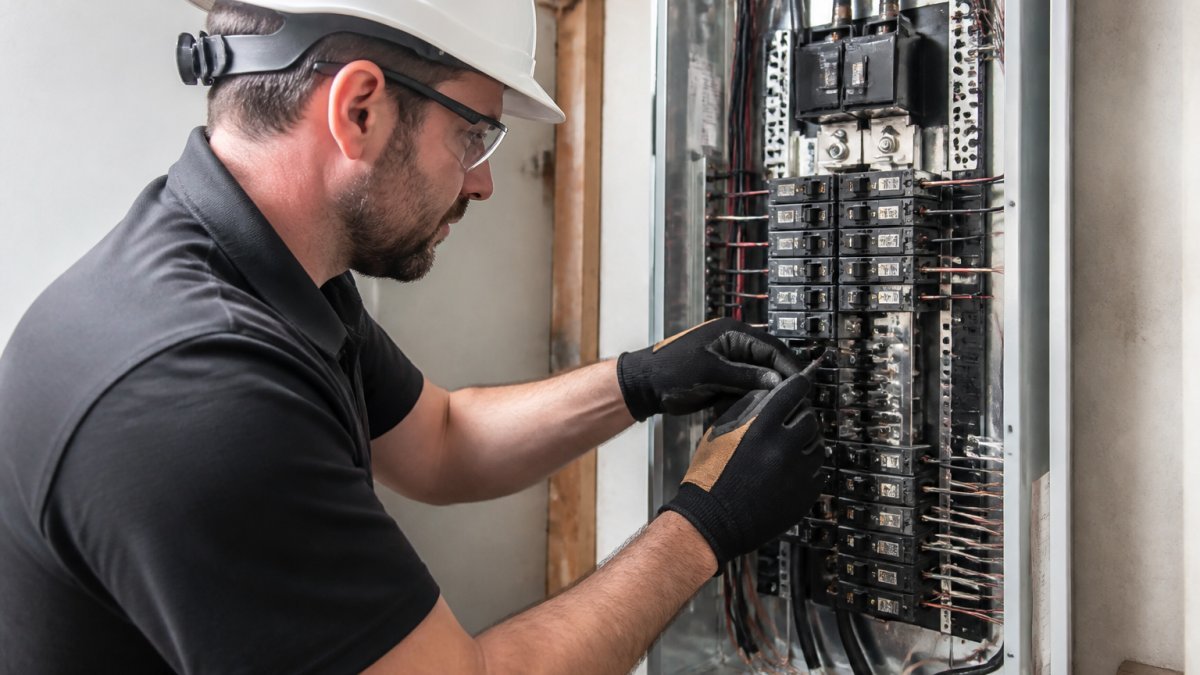
The electrical panel is the first thing inspectors open. Its condition tells them a lot about the rest of the building. Panel problems are among the most common reasons commercial properties fail.
Overloaded, Overheating and Outdated Equipment
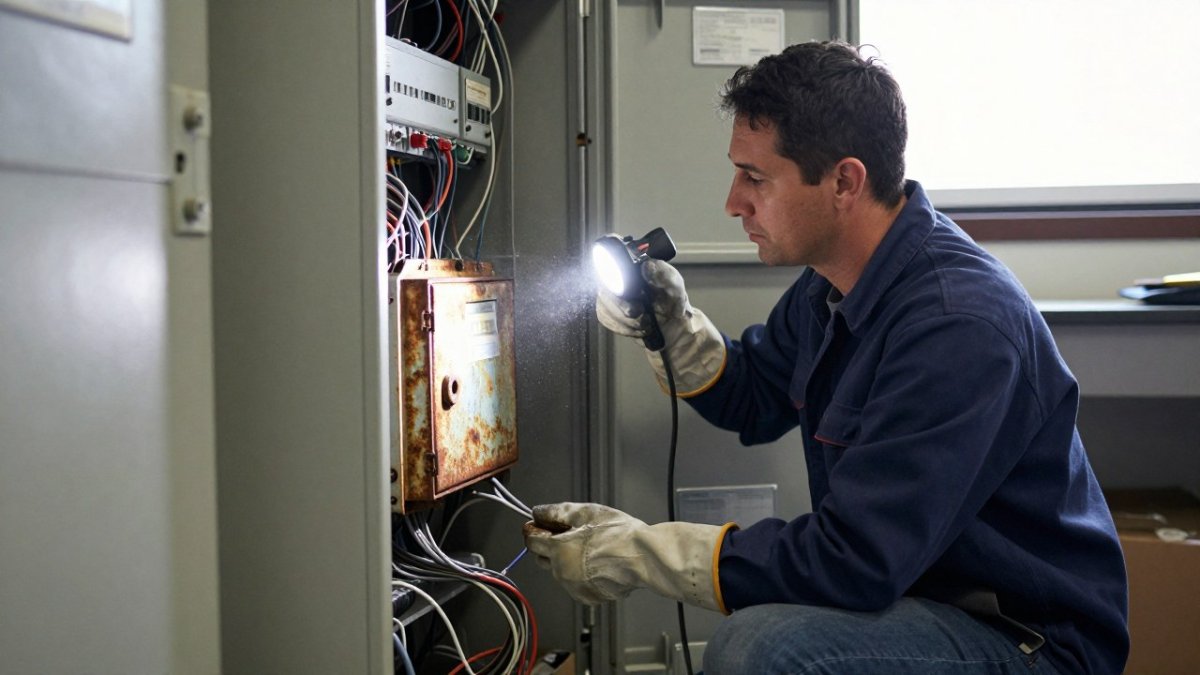
An overloaded panel is one carrying more current than its breakers and bus can safely handle. Signs include warm or discolored breakers, a burning smell near the panel, and breakers that trip often.
A common mistake is adding circuits to a panel without checking its total capacity. Each new tenant space or equipment upgrade adds load. Before any build-out, have a licensed electrician calculate whether the existing service can carry the new demand.
Watch out: A breaker that feels hot to the touch or buzzes under load is a warning sign. Have it checked before the inspection, not during it.
Labeling and Directory Gaps
Inspectors expect every circuit to be identified in the panel directory. Missing or vague labels such as "misc" or "office" often lead to a failed item. The directory should match what is actually powered, room by room. If a circuit was rerouted years ago and the label was never updated, the inspector will notice.
Clear, legible labels protect you in an emergency, too. Firefighters and maintenance staff need to shut off power to specific areas quickly.
Wiring, Device and Polarity Errors Inspectors Look For
Once the panel passes, inspectors move to the wiring and devices. Small errors here can create shock and fire hazards, so they receive close attention.
Common deficiencies include:
- Reversed polarity at outlets, where hot and neutral conductors are swapped
- Missing or improperly installed grounding
- Outlets and switches installed in the wrong location for their use
- Damaged cable jackets or exposed conductors
- Junction boxes left open or without covers
- Splices made outside an approved box
Reversed polarity deserves special attention. It can leave metal parts energized even when a device is switched off. Testing every outlet with a receptacle tester is a quick way to find these faults before the inspector does.
Electrical Code Violations in Commercial Buildings and Where They Come From
Code violations rarely appear from nowhere. They usually trace back to a specific moment: a renovation that skipped a permit, a repair done with the wrong wire gauge, or a system that was never updated after the adopted code changed. The edition in force and any local amendments are set by the authority having jurisdiction (AHJ), usually the municipal or county building department. That local adoption is why two buildings with identical wiring can pass in one town and fail in the next.
A useful way to organize violations is by the code area they fall under. Confirm the edition and any amendments your AHJ enforces before relying on the references below.
- Overcurrent protection (Article 240): Breakers and fuses must be sized to protect the conductors they serve. A common failure is a breaker replaced with a larger size to stop nuisance tripping, which leaves the wire undersized for the load.
- Grounding and bonding (Article 250): Equipment grounding conductors must be continuous and properly bonded to enclosures, raceways, and the service. Missing or loose bonding jumpers are a frequent correction item.
- Wiring methods (Chapter 3, Articles 300-398): Cable and raceway support, protection from physical damage, and box fill are all specified. Splices made outside an approved box or cables stapled too loosely show up on correction notices.
- Devices and receptacles (Article 406): Reversed polarity, missing ground continuity, and improper device placement fall here. Receptacles in wet or damp locations require GFCI protection under Article 210.
- GFCI and AFCI protection (Articles 210 and 406): Ground-fault and arc-fault protection requirements have expanded across code cycles. Older buildings often lack protection that current code requires for new or modified circuits.
- Working clearance and dedicated equipment space (Article 110): Panels and switchboards need clear space in front and dedicated space above. Storage stacked in front of a panel is a classic fail.
- Labeling and identification (Articles 110 and 408): Circuit directories, disconnect labeling, and available fault current markings are required. Faded or missing labels are easy corrections but still fail an inspection.
- Life-safety and emergency systems (Articles 700-760): Emergency lighting, exit signage, and fire alarm circuits have their own requirements, including survivability where cables must remain operational during a fire.
The source of a violation matters for the fix. A code change since the building was constructed generally applies to new work, alterations, and replacements, while unsafe conditions may need correction regardless of age. Ask your local building department which rules apply to your project, and keep a copy of the adopted code edition and any local amendments with your project records. Because requirements and inspection procedures vary by jurisdiction, the AHJ is the final reference, not the code book alone. For a broader overview of permits, wiring types, and costs, see the Vermont commercial electrical wiring guide.
A Pre-Inspection Checklist Organized by System
Walking the building with a checklist can make an inspection easier to manage. Work through each system before the scheduled date.
Panel and service
- Panel door opens and closes freely with clear working space in front
- Every breaker is labeled and the directory matches current use
- No warm, discolored, or buzzing breakers
- Unused knockouts are sealed
Wiring and devices
- Every outlet tested for correct polarity and grounding
- No cracked or missing outlet and switch covers
- Junction boxes closed and accessible
- No exposed conductors or damaged cable jackets
Protection and safety
- GFCI outlets tested and working in wet areas
- Emergency lighting and exit signs functioning
- Fire-rated penetrations sealed where cables pass through walls
Records
- Permits and final inspection sign-offs for recent work on file
- Panel schedule and as-built drawings available on site
- Maintenance and testing logs up to date
Keep copies of all paperwork in one place. Inspectors often ask for documentation of past work.
The article's checklist groups the items to verify before an inspection by system, as summarised below.
| System | Items to check | Where it is covered |
|---|---|---|
| Panel and service | Clear working space, labeled breakers, no warm breakers | Panel checklist |
| Wiring and devices | Outlet polarity and grounding, covers, junction boxes | Wiring checklist |
| Protection and safety | GFCI testing, emergency lighting, sealed penetrations | Protection checklist |
| Records | Permits, panel schedule, maintenance logs | Records checklist |
What Happens After a Failed Inspection: The Reinspection Process
A failed inspection is not the end of the project. Inspectors normally issue a written correction notice listing each deficiency, the code reference behind it, and a deadline for correction.
Read the notice line by line. Each item usually cites a code section and a location. Confirm you understand what the inspector observed before you touch anything; a correction that addresses the wrong interpretation wastes a trip.
Prioritize by hazard, not by list order. Sort the items into three groups: immediate safety hazards (exposed conductors, missing grounding, blocked panel clearance, inoperative GFCI protection), code-compliance items that affect the certificate of occupancy, and documentation or labeling items. Fix the safety items first, because they are the ones most likely to trigger a re-inspection failure or a stop-work order.
Confirm permits before starting repairs. Work performed without a permit can add delays and may require opening walls or redoing finished work. Check with the building department whether the correction itself needs a permit, and pull it before the electrician starts.
Document the repairs. Keep photographs of each corrected item, the electrician's invoice or work order, and any test results. A correction notice is easier to close when you can show the inspector what changed and when.
Schedule the reinspection. Most jurisdictions require you to request the reinspection and pay any applicable reinspection fee. Fees and timelines vary by locality, so confirm the process with your building department.
Watch out: Correcting only the items on the notice and ignoring related deficiencies nearby often leads to a second failed inspection, because the inspector will look at the same system again and may cite adjacent problems.
Many owners find that a single failed item holds up an entire project. Fixing everything on the list in one visit, with documentation in hand, usually shortens the process and reduces the chance of a third inspection.
Scheduling Your Next Inspection Before the Next Problem Starts
The best time to prepare for an inspection is long before it is due. Schedule a periodic electrical review, especially after any renovation, tenant change, or equipment addition. Catching a loose connection in a routine check costs far less than correcting a failed inspection under deadline.
At Precision Power Services, we help property owners in Rutland and central Vermont plan inspections, correct deficiencies, and document the work. NFPA National Electrical Code overview
Electrical inspections in Vermont
Vermont has a lot of older housing, and wiring in these homes has often been added to by several owners over the years. An inspection is worth it when you are buying or selling, when an insurer asks, or when you see warning signs like warm outlets, flickering lights, or breakers that trip.
Electrical work in Vermont follows the National Electrical Code as adopted in the Vermont Electrical Safety Rules (2025 edition, enforced by the Division of Fire Safety). Precision Power Services is a Vermont licensed electrician based at 450 Park Ln in Rutland, serving Rutland County and central Vermont.
Book a free estimate or call (802) 417-0587.
Frequently Asked Questions
What are the most common electrical inspection failures in commercial buildings?
The most frequent failures involve panels and switchboards that are overloaded, overheating or missing accurate circuit directories, along with improperly installed devices, reversed polarity at outlets and switches, and missing or incorrect grounding and bonding. Inspectors also flag unprotected openings, damaged cable jacketing and wiring that is not supported or secured as the National Electrical Code requires.
How can a business prepare for an electrical inspection?
Start with a walkthrough of each electrical system: panels, switchboards, disconnects, receptacles, switches and any emergency or life-safety circuits. Confirm that panel directories are legible and match the actual circuits, that working clearances around equipment are unobstructed, and that covers and knockouts are in place. Keep permits, prior inspection reports, equipment labels and maintenance records together so you can show the inspector what has been done and when.
Can a commercial electrical inspection fail because of labeling or documentation?
Yes. Missing or inaccurate panel directories, unlabeled disconnects and incomplete records of prior corrections can each lead to a failed inspection or a required reinspection, even when the wiring itself is sound. Inspectors often expect the labeling to match the installed circuits, so an out-of-date directory after a tenant build-out is a common cause of failure. Keeping current labels and documentation is a low-cost way to avoid this.
What should a property owner do after an electrical inspection failure?
Request the written list of violations, ask the inspector to clarify any item that is unclear, and have a licensed electrician correct each cited issue with the work documented. Track correction deadlines, because a failed inspection can trigger a reinspection fee or, in serious cases, a stop-work order or occupancy restriction. Once the corrections are complete, schedule the reinspection and keep copies of the corrected work orders and reports for your records.
Need an electrician in Rutland or central Vermont?
Precision Power Services is a licensed and insured electrical contractor serving Rutland, Killington, Brandon, Castleton, and surrounding towns. Call (802) 417-0587 or book online.
← Back to blog