Backup Generator Installation Cost Guide
Table of Contents
- What Backup Generator Installation Actually Costs
- Generator Transfer Switch Installation Cost Breakdown
- Backup Generator Sizing Guide and Power Capacity
- Factors That Drive Your Total Project Price
- Standby Generator Maintenance Requirements and Long-Term Costs
- Permits, Inspections, and Code Compliance
- Whole-House vs. Portable Generator: Installation Cost Comparison
- Total Cost of Ownership Over 10 Years
- Frequently Asked Questions
Last Updated: September 25, 2026
What Backup Generator Installation Actually Costs
A backup generator installation cost for a residential home varies by system size, fuel type, and electrical complexity. Most homeowners discover hidden expenses during installation: electrical panel upgrades, concrete pad work, fuel line extensions, and permitting fees not obvious in initial quotes.
The real cost drivers are the infrastructure work required to integrate the generator safely into your home's electrical system. Projects often balloon by 30-40% once a licensed electrician assesses actual site conditions and code requirements. Understanding these components upfront prevents surprise invoices.
This guide breaks down every cost category for backup generator installation cost planning, whether you're installing a standby generator for whole-house power or a portable unit for essential circuits.
Generator Transfer Switch Installation Cost Breakdown
The automatic transfer switch connects your backup generator to your home's electrical system, detecting outages and switching your home's load to the generator within milliseconds without manual intervention or risk of backfeeding power into utility lines.
Transfer switch installation cost depends on whether you're adding a sub-panel or integrating directly into your main electrical panel. Manual transfer switches cost less but require manual operation during outages. Automatic transfer switches provide seamless backup, which is why most homeowners choose them for convenience and safety.
Installation complexity increases if your main electrical panel is full or outdated. Older homes with 100-amp panels often require upgrades to 200-amp service to safely accommodate both household loads and generator output, a major cost surprise for many homeowners.
The generator transfer switch installation cost includes grounding and bonding work, critical safety measures that ensure proper electrical continuity and prevent dangerous voltage differentials, required for code compliance and permit approval.
Backup Generator Sizing Guide and Power Capacity
Determining the right kilowatt capacity prevents undersizing and unnecessary expense. Start by calculating your home's electrical load.
Essential loads typically include:
- HVAC system compressor and blower
- Water heater
- Refrigerator and freezer
- Well pump (if applicable)
- Lighting circuits
- Internet and communication devices
A 10-20 kW standby generator covers most residential whole-house needs; portable generators (5-7 kW) handle essential circuits only; larger homes may need 25-30 kW systems.
The backup generator sizing guide calculation adds the starting watts (inrush current) of your largest motor plus the running watts of all other simultaneous loads. HVAC compressors and well pumps draw 2-3 times their running wattage at startup, which is why undersized generators often fail to start these devices.
A licensed electrician performs an electrical load calculation to determine your actual requirements. This assessment is essential before selecting equipment and directly impacts your installation cost and long-term reliability.
Factors That Drive Your Total Project Price
Several variables beyond the generator unit itself determine your final backup generator installation cost.
Electrical panel upgrades and sub-panel installation
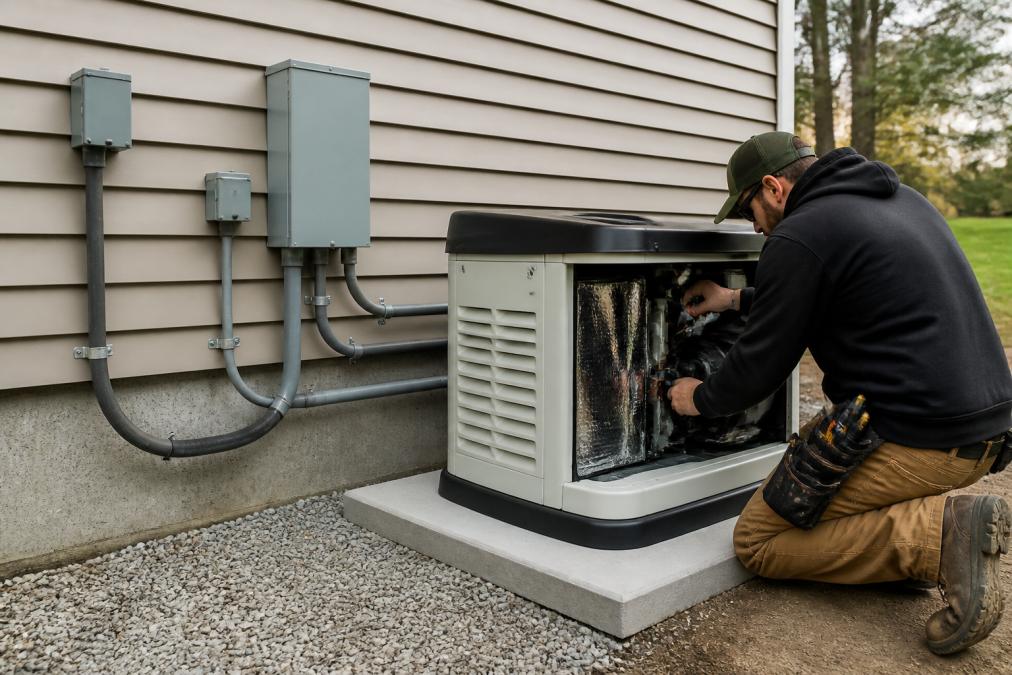
An older electrical panel may lack capacity or available breaker slots for a transfer switch, one of the most common cost surprises. Understanding when and why an upgrade is necessary is critical to accurate budgeting.
Panel capacity assessment: Your main electrical service is rated in amps, typically 100, 150, or 200 amps. A licensed electrician calculates your home's total electrical demand to determine if your current panel has sufficient capacity. The National Electrical Code (NEC) requires that the combined load not exceed 80% of your panel's rated capacity under normal operation.
When an upgrade is mandatory: If your panel is at or near capacity or lacks available breaker slots, an upgrade is required. A full 100-amp to 200-amp service upgrade involves replacing the main breaker, upgrading service entrance wiring, and potentially installing a new meter base, performed by a licensed electrician and inspected by local authorities.
Sub-panel as an alternative: A sub-panel installation provides dedicated space for generator circuits and can be positioned closer to the transfer switch, reducing conduit runs and labor. It typically costs less than a full service upgrade but still requires permits and inspection.
Cost and timeline implications: A full electrical service upgrade typically takes 1-3 days plus 1-2 weeks for utility coordination. A sub-panel installation is faster (1 day) but requires careful load calculation for proper breaker sizing.
Age and condition assessment: Homes with knob-and-tube wiring, cloth-insulated conductors, or corroded panels may require remediation before transfer switch installation. An electrician's site assessment identifies these issues early, preventing delays and unexpected costs.
Concrete pad foundation and site preparation
A standby generator sits outside on a concrete pad that must be level, properly graded to prevent water pooling, and sized to support the unit's weight. Site preparation includes clearing vegetation and ensuring adequate clearance from windows, doors, and air intakes.
The concrete pad must be reinforced and properly finished. Poor site preparation leads to water infiltration, corrosion, and equipment failure, essential work often underestimated in initial projections.
Fuel source and utility connection requirements
Fuel source selection impacts installation cost and long-term operating expenses. Natural gas generators connect to existing utility lines; line extensions add substantial cost if service is unavailable. Propane generators use buried or above-ground tanks. Diesel generators are less common but offer excellent fuel stability.
Natural gas line extensions involve trenching, permits, and utility company coordination. Propane tank installation requires proper sizing and positioning per code. These utility connections must be inspected and approved before the system operates.
Standby Generator Maintenance Requirements and Long-Term Costs
A backup generator requires regular maintenance to function reliably during emergencies. Standby generator maintenance requirements include monthly exercise runs (15-20 minutes under load), annual oil changes, filter replacements, and battery checks.
Many homeowners underestimate long-term maintenance costs. Annual service calls include inspection, testing, and repairs. Fuel stabilizers, oil changes, and replacement parts add up over the generator's 15-25 year lifespan.
The Total Cost of Ownership over 10 years includes not just the installation but also routine maintenance, fuel (for natural gas, propane, or diesel), battery replacement, and potential repairs. Factoring in these ongoing expenses gives a realistic picture of what backup power actually costs.
Permits, Inspections, and Code Compliance
Every backup generator installation requires electrical permits and inspections. Code compliance protects your home's safety and insurance coverage. However, local zoning, HOA rules, and noise ordinances often create barriers homeowners discover too late.
Electrical permits and inspections: Permit fees vary by jurisdiction based on project scope. Inspections occur after electrical rough-in, transfer switch installation, and final system operation. A licensed electrician handles permit applications and scheduling. Code compliance ensures proper grounding, bonding, clearances, and connections. Skipping permits voids warranties and can result in insurance claim denials.
Zoning setback and clearance requirements: Local zoning codes specify minimum distances from property lines, windows, doors, and air intakes (typically 3-10 feet). Small lots or homes close to property lines may require relocation, increasing installation costs for longer conduit runs and fuel line extensions. Some jurisdictions require a variance if standard setbacks cannot be met, adding 4-8 weeks and several hundred dollars in fees.
Noise ordinance compliance: Standby generators produce 70-80+ decibels during operation. Many municipalities limit operation to daytime hours or restrict residential operation without a special permit. Strict noise limits may require a sound-attenuated enclosure, adding $1,500-$3,000. Some jurisdictions prohibit generators in certain residential zones entirely.
HOA and deed restriction compliance: If your home is in a homeowners association or subject to deed restrictions, the HOA may prohibit visible generators, require architectural approval, or impose aesthetic standards (color, screening, setback).
Whole-House vs. Portable Generator: Installation Cost Comparison
Whole-house standby generators provide seamless automatic backup power for your entire home. Portable generators require manual setup, fuel handling, and manual transfer of loads.
| Feature | Whole-House Standby | Portable Generator |
|---|---|---|
| Installation | Permanent, requires electrical work and permits | Minimal setup, no electrical integration |
| Automatic Operation | Yes, automatic transfer switch | Manual, requires startup and load management |
| Power Capacity | 10-30 kW typical | 5-12 kW typical |
| Fuel Source | Natural gas, propane, or diesel | Gasoline or propane |
| Operating Cost | Fuel + annual maintenance | Fuel + occasional maintenance |
| Installation Complexity | High, site prep, electrical panel work, permits | Low, position unit, add fuel, connect extension cords |
| Long-Term Reliability | High, designed for frequent use | Medium, portable units endure more wear |
Total Cost of Ownership Over 10 Years
Understanding backup generator installation cost requires looking beyond the initial purchase and installation. A 10-year cost projection includes:
- Initial equipment and installation
- Annual maintenance and service calls
- Fuel consumption (for natural gas, propane, or diesel)
- Battery replacement (typically every 3-5 years)
- Repairs and replacement parts
- Permit and inspection fees
Frequently Asked Questions
What's the average cost to install a backup generator?
Backup generator installation costs vary based on system size, fuel source, and site conditions. A standby generator for a typical residential home ranges from mid-four figures to low five figures when including equipment, professional installation, electrical work, permits, and site preparation. Portable units cost less upfront but require manual setup during outages. Get a site assessment from a licensed electrician to determine your actual project cost based on your home's electrical load and local code requirements.
How does backup generator sizing affect installation cost?
Larger kilowatt capacity generators cost more for both equipment and installation labor. A proper electrical load calculation determines the right size for your home, oversizing wastes money, while undersizing leaves you without adequate backup power. Installation complexity increases with larger units because they may require electrical panel upgrades, sub-panel installation, or extended natural gas line connections. A backup generator sizing guide should account for your home's square footage, HVAC system, water heater, and other major appliances to calculate actual wattage requirements.
What permits and inspections do I need for generator installation?
Most jurisdictions require electrical permits and inspections for standby generator installations. Your local building department enforces National Electrical Code (NEC) requirements for grounding, bonding, automatic transfer switch installation, and utility connection safety. Permit fees vary by location but typically range from a few hundred dollars. A licensed contractor handles permit applications and ensures your installation passes inspection, preventing costly code violations and protecting your home's safety and insurance coverage.
Does HOA or zoning compliance affect my installation cost?
Yes. Some HOAs restrict generator placement, noise levels, or appearance, which may increase costs if you need to relocate the unit, add sound barriers, or install screening. Local zoning laws may require setback distances from property lines or neighbors' homes. Verify these restrictions before purchasing equipment. Non-compliance can result in fines or forced removal after installation, making upfront zoning research essential to avoid expensive rework.
Need an electrician in Rutland or central Vermont?
Precision Power Services is a licensed and insured electrical contractor serving Rutland, Killington, Brandon, Castleton, and surrounding towns. Call (802) 417-0587 or book online.
← Back to blog