Commercial Generator Installation for Businesses: A How-To Guide
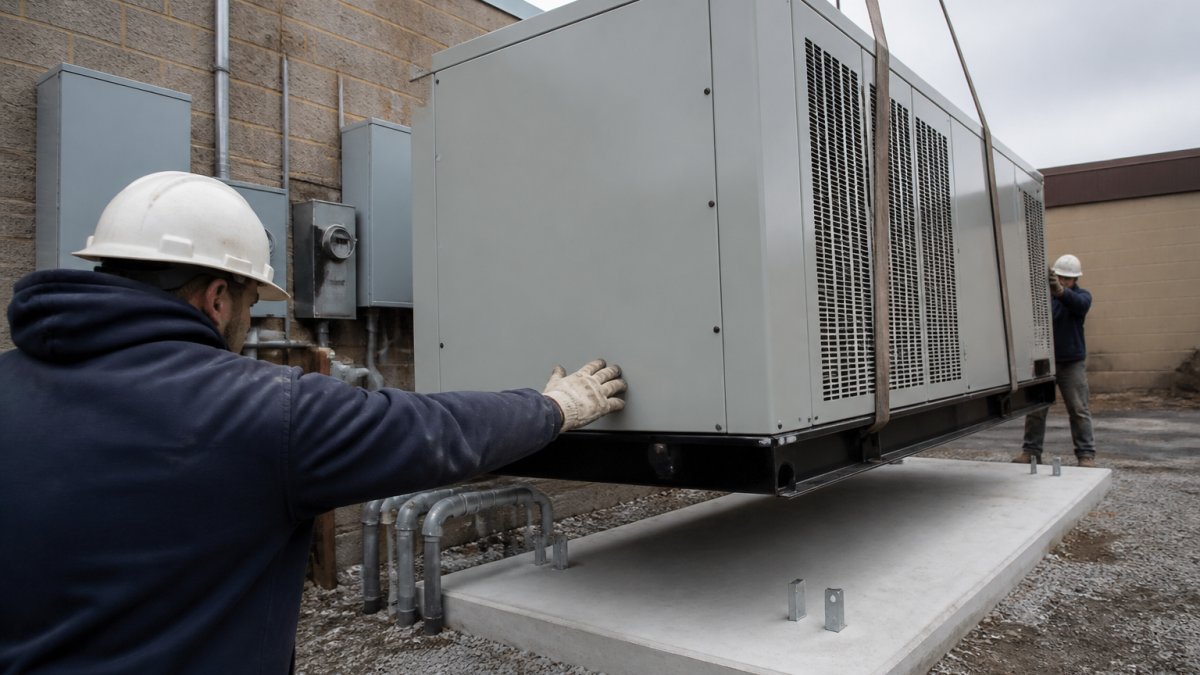
Table of Contents
- Understanding Commercial Generator Installation for Businesses
- Step 1: Assess Your Electrical Load and Power Requirements
- Step 2: Choose the Right Commercial Generator Sizing for Your Facility
- Step 3: Understand Commercial Generator Installation Requirements and Permits
- Step 4: Plan Your Installation Timeline and Minimize Downtime
- Step 5: Budget for Business Backup Generator Cost and ROI
- Step 6: Execute Installation, Testing, and Commissioning
- Common Mistakes to Avoid During Installation
- Frequently Asked Questions
Last Updated: October 20, 2026
Understanding Commercial Generator Installation for Businesses
Commercial generator installation for businesses is the process of permanently mounting, connecting, and integrating a backup power system into your facility's electrical infrastructure. This ensures your operations continue during outages. Unlike portable generators, a permanent installation provides automatic, seamless power switching and integrates directly with your building's electrical system.
Looking for this work in Rutland or central Vermont? See standby generator installation from Precision Power Services.
The stakes are high. A single outage can cost businesses thousands of dollars per hour in lost productivity, spoiled inventory, or halted operations. That's why proper planning matters from the start.
At Precision Power Services, we help businesses across central Vermont understand what actually goes into a generator installation. The process involves more than just placing equipment and running wire. It requires load assessment, proper sizing, code compliance, and careful coordination with your electrical infrastructure.
Most business owners think generator installation is straightforward. Pick a size, install it, turn it on. In reality, the difference between a system that works and one that creates problems comes down to planning.
Step 1: Assess Your Electrical Load and Power Requirements
Start by measuring exactly what your business runs. This is called electrical load assessment, and it determines everything downstream.
Your electrical load is the total power your facility consumes at any given moment. It includes HVAC systems, lighting, computers, refrigeration, manufacturing equipment, and every other device that draws power. The key word is "peak load", the highest amount of power you use at one time, not the average.
Here's how to assess your load:
-
Gather your utility bills. Review the past 12 months. Look for the peak demand in kilowatts (kW). This number appears on commercial bills.
-
Identify critical loads. Not everything needs to run during an outage. Ask yourself: What must stay on? HVAC? Refrigeration? Computers? Security systems? Prioritize these.
-
List all equipment. Walk your facility and document every device by type and power rating. Check nameplates on motors, compressors, and major appliances. Record the wattage or horsepower.
-
Calculate simultaneous demand. Not all equipment runs at once. A commercial HVAC system doesn't run full-blast while the kitchen is cooking and the warehouse is operating simultaneously at peak. Multiply connected loads by a diversity factor (typically 0.7 to 0.9 for commercial buildings).
-
Add contingency. Plan for 20-25% headroom above your calculated peak. This prevents the generator from running at maximum capacity continuously, which shortens equipment life.
The result is your required generator capacity in kilowatts. This number drives everything else: generator type, fuel supply, transfer switch sizing, installation complexity, and cost.
Step 2: Choose the Right Commercial Generator Sizing for Your Facility
Generator sizing is where theory meets reality. The capacity you need depends on your load assessment, your fuel preferences, and your budget.
Commercial generators come in ranges. A small office might need 20-50 kW. A mid-size retail or light manufacturing facility typically runs 75-150 kW. Larger operations or data centers might require 250 kW or more. Your specific kilowatt requirement comes from Step 1.
Once you know your kilowatt requirement, consider fuel source. This choice affects both installation and ongoing operation:
Natural gas generators connect to your existing gas line (if available). They're popular because fuel supply is stable and automatic. No tank to refill. Downside: if the gas utility loses pressure during a regional outage, your generator stops. They also produce more emissions than other options.
Propane generators use onsite storage tanks. You control fuel supply independently of utilities. Propane is cleaner burning than natural gas. Downside: you must monitor tank levels and arrange refills. A 500-gallon tank typically supports 24-48 hours of runtime depending on load.
Diesel generators are the workhorse of commercial backup power. They run longer on less fuel than propane. Diesel fuel is widely available. Downside: higher upfront cost, more maintenance, and emissions concerns in some jurisdictions.
Your fuel choice also affects standby generator placement. Natural gas connects to existing infrastructure. Propane and diesel need tank space or fuel delivery access.
Once you've selected fuel type and calculated kilowatt requirement, verify the generator range covers your need. Most commercial generators come in 5-10 kW increments. Round up to the next available size.
Step 3: Understand Commercial Generator Installation Requirements and Permits
This is where many projects stumble. Code compliance and permitting vary by jurisdiction. Missing a requirement can delay your project or create legal liability.
Commercial generator installation requirements typically include:
Electrical code compliance. Your installation must meet the National Electrical Code (NEC). This covers wire sizing, grounding, overcurrent protection, and transfer switch specifications. An automatic transfer switch (ATS) is mandatory, it detects power loss and automatically switches your facility to generator power. Manual switching is not acceptable for commercial installations.
Permits and inspections. Most jurisdictions require electrical permits before installation begins. Your electrical contractor files these. Expect inspections at rough-in (before walls close) and final completion. Inspection timelines vary.
Emissions compliance. Depending on your location and generator type, emissions testing or certification may be required. Diesel generators face stricter emissions rules than natural gas in many areas.
Fuel storage regulations. If you choose propane or diesel, tank placement and safety distance from buildings are regulated. Tanks must be accessible for refilling but positioned safely.
Setback and noise ordinances. Generators produce noise. Some jurisdictions limit noise levels or require distance from property lines. A 100 kW generator typically produces 80-85 decibels at 25 feet.
Utility coordination. Your utility company must be notified before installation. They may require specific interconnection agreements or equipment.
Step 4: Plan Your Installation Timeline and Minimize Downtime
Installation timeline depends on project scope, site conditions, and permit processing. Understanding the phases helps you plan around business operations.
Typical timeline breakdown:
Permitting usually takes 1-3 weeks depending on jurisdiction. Some areas process faster. Others require multiple department reviews.
Site preparation takes 2-5 days. This includes foundation work, trenching for fuel or electrical runs, and equipment placement. Trenching is often the longest part.
Generator and transfer switch delivery takes 1-2 weeks after ordering. Lead times vary by manufacturer and model.
Electrical installation and integration takes 3-5 days. This includes mounting the generator, installing the transfer switch, running conduit, connecting wiring, and integrating with your existing electrical panel.
Testing and commissioning takes 1 day. verifies the generator can handle your peak load. System testing confirms automatic switching works.
Total project duration: 3-6 weeks from permit filing to operational system.
The good news: most of this happens outside business hours or in phases. Site preparation and trenching can occur before or after hours.
Step 5: Budget for Business Backup Generator Cost and ROI
Generator cost is driven by capacity, fuel type, installation complexity, and site conditions. This section uses qualified language because pricing varies widely by region, contractor, and specific circumstances.
A small commercial generator (20-50 kW) typically costs more per kilowatt than a larger system due to economies of scale.
Fuel type affects cost. Natural gas generators are often less expensive upfront than diesel but depend on utility availability. Propane requires tank installation and ongoing refills.
Installation cost includes labor, permits, site preparation, and integration work. Trenching for fuel or electrical lines adds significant cost if distances are long.
To calculate ROI, consider the cost of downtime. A business losing operations for 8 hours during an outage faces real financial impact.
Maintenance cost is predictable. Annual inspections, fuel stabilization, and regular exercise runs (running the generator under load monthly) keep systems ready.
Precision Power Services can help you understand your specific cost picture.
Step 6: Execute Installation, Testing, and Commissioning
Installation execution is where planning becomes reality. This phase requires coordination, precision, and professional expertise.
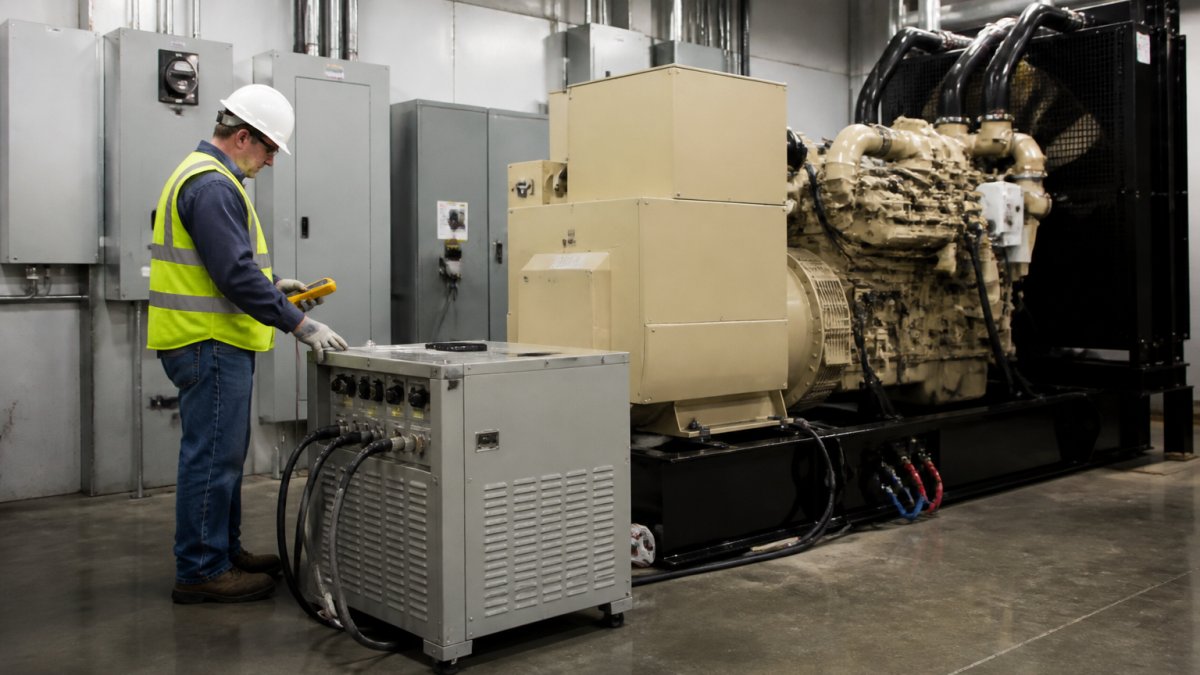
The installation workflow follows these steps:
Foundation and placement. The generator sits on a concrete pad sized for weight and vibration isolation. Technicians pour the pad, verify level, and allow curing time. The generator is positioned for fuel access, electrical connections, and maintenance clearance.
Fuel system integration. For natural gas, plumbing connects to your existing line with appropriate sizing and safety shutoffs.
Electrical connections. The transfer switch is installed in your electrical panel or nearby. Conduit and wire run from the generator to the transfer switch and back to your electrical panel.
System testing. applies a simulated load to the generator to verify it can handle your peak requirement. This is not optional.
Automatic transfer switch commissioning. The ATS is programmed and tested. Technicians verify it detects grid power loss, initiates generator startup, and transfers load automatically. Manual override is tested.
Documentation and handoff. You receive operation manuals, maintenance schedules, and emergency procedures. Authorized personnel are trained on manual override and basic operation.
Professional commissioning is not a box-check. It's verification that your backup power system actually works when you need it.
Common Mistakes to Avoid During Installation
Learning from others' errors saves time, money, and headaches.
Mistake 1: Undersizing the generator. Businesses often pick a smaller size to save money upfront. During the first outage, critical systems fail.
Mistake 2: Ignoring fuel supply reality. A natural gas generator stops if utility pressure drops during a regional outage.
Mistake 3: Skipping the permit process. Unpermitted installations create insurance gaps, code violations, and legal liability. Permits exist for safety and compliance. Budget time and cost for proper permitting.
Mistake 4: Poor site preparation. A generator on unprepared ground settles unevenly, creating vibration and noise problems. Proper foundation and placement matter. Don't skip this step.
Mistake 5: Inadequate. Some contractors skip formal load testing to save time.
Mistake 6: No maintenance plan. A generator that sits unused for months often fails when you need it. Monthly exercise runs and annual inspections keep systems ready.
Commercial generator installation for businesses protects your operations from the financial impact of power outages. The process requires careful load assessment, proper sizing, code compliance, and professional execution.
Backup power for Vermont winters
Ice, heavy snow, and wind take down lines across central Vermont every winter, and outages on rural roads can take a while to restore. A standby generator needs a properly sized transfer switch and a code-compliant connection to your panel, and it needs yearly service so it actually starts during the outage. Early fall is the best time to have it checked.
Electrical work in Vermont follows the National Electrical Code as adopted in the Vermont Electrical Safety Rules (2025 edition, enforced by the Division of Fire Safety). Precision Power Services is a Vermont licensed electrician based at 450 Park Ln in Rutland, serving Rutland County and central Vermont.
Book a free estimate or call (802) 417-0587.
Frequently Asked Questions
How do you choose the right generator size for a business?
Start by calculating your total electrical load: add the wattage of all critical equipment and systems your business needs during an outage. Include HVAC, lighting, IT infrastructure, and production equipment. Multiply by 1.25 to account for motor startup surges. A professional load assessment ensures you don't oversize (wasting money) or undersize (leaving critical systems unpowered). Most businesses need between 20 kW and 500 kW, depending on facility type and size.
What is involved in commercial generator installation requirements?
Installation requires site preparation (concrete pad or foundation), trenching for fuel and electrical lines, mounting the permanently installed generator, installing an automatic transfer switch (ATS), connecting to your electrical infrastructure, and integrating with existing utility lines. You'll need electrical permits, building permits in many jurisdictions, and final inspection approval from local authorities. Fuel supply setup (natural gas, propane, or diesel) and exhaust venting also factor in. All work must meet National Electrical Code (NEC) standards and local codes.
How long does commercial generator installation typically take?
A straightforward installation takes 2-5 days once permitting is complete. Complex projects with extensive trenching, fuel line installation, or significant electrical infrastructure changes can extend to 2-3 weeks. Permitting adds 1-4 weeks depending on your jurisdiction and project complexity. Plan for utility coordination delays if your site requires new gas or propane lines. Budget 1-2 weeks for final inspections and commissioning testing after physical installation.
What should a business include in a generator installation plan?
Your plan should identify critical loads (equipment that must stay online), backup fuel runtime requirements, site location and foundation specs, fuel supply logistics, automatic transfer switch design, electrical integration points, permit requirements, utility notifications needed, testing and commissioning protocols, maintenance schedules, and emergency procedures. Work with your installation team to document system capacity, warranty terms, service provider contact details results. This plan becomes your operational manual for outages and maintenance.
Need an electrician in Rutland or central Vermont?
Precision Power Services is a licensed and insured electrical contractor serving Rutland, Killington, Brandon, Castleton, and surrounding towns. Call (802) 417-0587 or book online.
← Back to blog