Level 2 EV Charger Installation Cost: A Complete Breakdown
Table of Contents
- What You'll Need Before Installation
- Home EV Charger Installation Cost: Breaking Down the Total
- Cost to Install a 240-Volt Outlet for an EV Charger
- EV Charger Electrical Panel Upgrade Cost
- Level 2 Charger Electricity Cost Per Month
- Factors That Affect Installation Cost
- Rebates, Tax Credits, and Incentives
- Common Mistakes to Avoid
- Frequently Asked Questions
Last Updated: October 5, 2026
What You'll Need Before Installation
Understanding the level 2 EV charger installation cost requires more than just buying equipment. You need to understand your electrical system, your home's capacity, and what local codes demand.
Before any work begins, a licensed electrician should evaluate your home. They'll check your electrical panel, measure wire run distances, and identify what upgrades you might need. This assessment typically takes an hour or two and gives you a clear picture of the project scope.
At Precision Power Services, we start every EV charger installation with a thorough site evaluation. We look at your panel's available capacity, the distance from your panel to the charging location, and whether your home's wiring can handle the load.
Key items to assess before installation:
- Current electrical panel capacity and available breaker space
- Distance from panel to charger location
- Existing wiring gauge and circuit capacity
- Local permit requirements and inspection timelines
- Whether your utility company needs to approve the installation
- Hardwired versus plug-in charger preference
Home EV Charger Installation Cost: Breaking Down the Total
The total cost of installing a level 2 EV charger includes equipment, labor, permits, and potential electrical upgrades. Understanding each piece helps you budget accurately and avoid sticker shock.
Charger Equipment Cost
The charger itself is just one part of the expense. Equipment includes the charging unit, mounting hardware, and any necessary connectors. Chargers range widely in features and quality.
Basic Level 2 chargers offer essential functionality. They deliver 240 volts and charge your vehicle at a standard rate. Mid-range models add features like scheduling and energy monitoring. Premium chargers include smart home integration and load management.
Most homeowners choose a charger that matches their vehicle's onboard charging capacity and their home's electrical setup. The charger cost itself is typically the smallest portion of your total project expense.
Installation Labor and Site Assessment
Labor costs depend on the complexity of your installation. A straightforward installation in a garage near your panel costs less than running wire across your yard or through walls.
Licensed electricians charge for their time and expertise. The installation work includes mounting the charger, running circuits, connecting wiring, and testing the system for safety. Site-specific challenges add to labor costs.
A simple garage installation might take 4-6 hours. More complex setups take longer. Your electrician should provide a labor estimate after the site assessment.
Permits and Inspection Fees
Local jurisdictions require permits for EV charger installations. Permits ensure the work meets electrical code and safety standards. Your electrician typically handles the permit process.
Permit fees vary by location. Some municipalities charge flat fees. Others charge based on the project scope or estimated cost. Inspection fees are separate and cover the official inspection after installation.
Most jurisdictions require at least one inspection. Some require inspections at multiple stages. Your electrician knows the local requirements and can explain the timeline.
Cost to Install a 240-Volt Outlet for an EV Charger
A 240-volt outlet is the foundation of any Level 2 charger installation. The outlet must be properly sized, protected, and wired to handle the charger's power demands.
Wiring and Circuit Requirements
The wiring from your electrical panel to the charger must match the circuit's amperage rating. A 40-amp circuit typically uses 8-gauge wire. A 50-amp circuit uses 6-gauge wire. Larger wire costs more but handles the load safely.
The wire run distance matters significantly. Short runs from panel to charger cost less than long runs. Long runs might require larger wire gauges to prevent voltage drop.
Conduit protects the wiring from damage. Conduit installation adds to labor costs, especially if it runs through walls or across outdoor spaces. Underground conduit costs more than surface-mounted.
Your electrician determines the exact requirements based on:
- Charger amperage rating (typically 30-50 amps)
- Distance from panel to charger location
- Wire routing (shortest path, through walls, outdoors, or underground)
- Local code requirements for protection and support
Hardwired Chargers Versus Plug-In Chargers
Hardwired chargers are permanently connected to the electrical system. They cannot be unplugged. Hardwired installations require dedicated circuits and professional installation.
Plug-in chargers connect to a 240-volt outlet like an electric dryer or range. They're more flexible. You can move them between homes if you relocate. Plug-in chargers are easier to install because the outlet can serve other purposes if needed.
Hardwired chargers are more common for dedicated home charging. They're slightly more efficient and eliminate the need to plug/unplug. Plug-in chargers work well if you want flexibility or plan to move.
The wiring and outlet requirements are similar for both types. The main difference is whether the charger is permanently attached or plugged in.
| Charger Type | Installation Complexity | Flexibility | Typical Amperage |
|---|---|---|---|
| Hardwired | Higher | Fixed location | 40-50 amps |
| Plug-in | Moderate | Portable | 30-50 amps |
EV Charger Electrical Panel Upgrade Cost
Many homes need electrical panel upgrades to support Level 2 charging. Older homes with limited panel capacity almost always require upgrades.
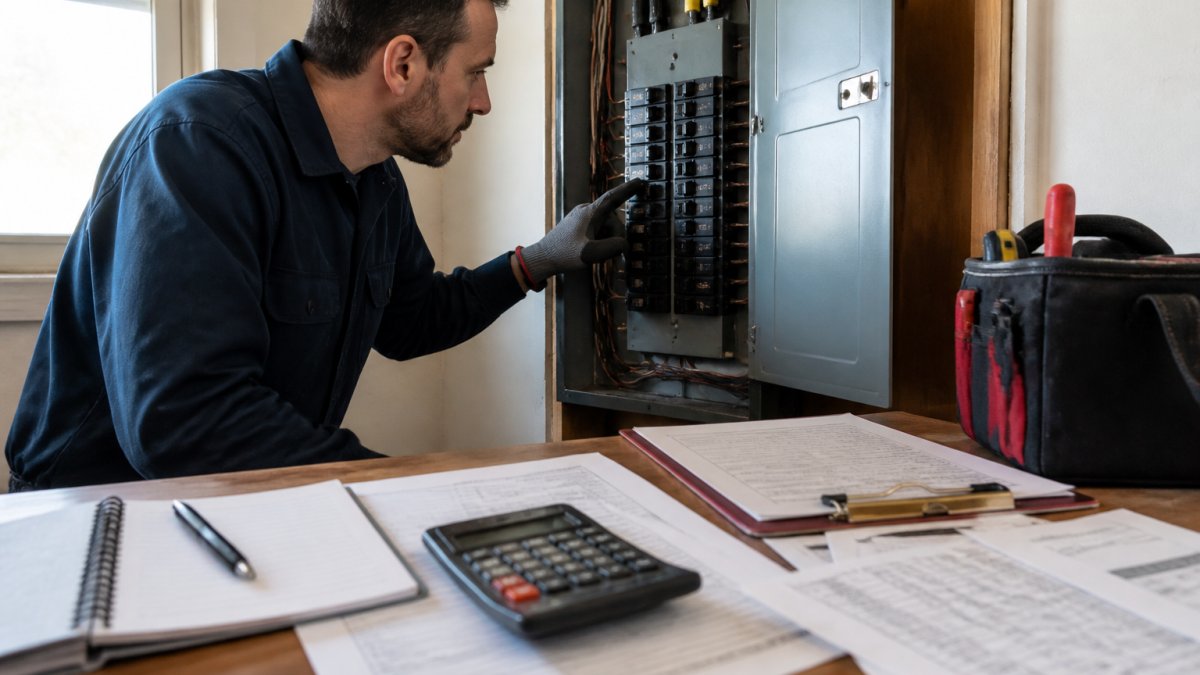
Assessing Your Current Electrical Capacity
Your electrical panel has a total service size, typically 100, 150, or 200 amps. The service size is the maximum power your home can draw at any time.
Each circuit breaker in the panel represents a separate circuit. Your panel has a limited number of available breaker slots.
Most homes have some spare capacity. If your panel is full, you need to replace a breaker or upgrade the entire panel. A licensed electrician can assess your panel in minutes.
When and Why Panel Upgrades Are Necessary
Panel upgrades become necessary when your home's total electrical load approaches its service capacity. Adding a 40-50 amp circuit for an EV charger can push an older home over its limit.
Your electrician calculates your home's demand load. This includes all circuits that might run simultaneously. If adding the charger circuit exceeds safe capacity, an upgrade is needed.
Panel upgrades involve replacing the main breaker and potentially the entire panel. This is more expensive than simple circuit installation.
Some homes need only a service upgrade from 100 amps to 150 or 200 amps. Others need a complete new panel. The cost depends on your current setup and local electrical code.
Level 2 Charger Electricity Cost Per Month
Once your charger is installed, you'll pay for the electricity to charge your vehicle. The monthly cost depends on your local electricity rates and how often you charge.
A Level 2 charger draws 30-50 amps at 240 volts, delivering 7-19 kilowatts of power. Charging a typical EV battery from empty to full takes 4-10 hours.
Your local electricity rate determines the cost. Rates vary by region and utility company. Some utilities offer special EV charging rates, lower during off-peak hours.
To estimate your monthly cost, divide your vehicle's battery capacity by your charger's kilowatt output. Multiply by your local electricity rate. Most homeowners find home charging costs significantly less than gas or public charging.
Factors That Affect Installation Cost
Several variables influence the level 2 EV charger installation cost and final price. Understanding these factors helps you anticipate the final price.
Wire Run Distance and Conduit Installation
The distance from your electrical panel to the charger location is one of the biggest cost drivers. A 20-foot run costs much less than a 100-foot run. Long distances require larger wire gauges and more conduit.
Outdoor wire runs typically cost more than indoor runs. Underground runs cost more than surface-mounted. Conduit protection adds labor and material costs.
Your electrician can measure and provide a cost estimate based on the specific routing. Sometimes running wire through your home is cheaper than running it outside.
Garage Installation Versus Outdoor Placement
Garage installations are typically the least expensive. The charger is close to your home's electrical panel. Wiring runs are short. No outdoor weatherproofing is needed.
Outdoor installations require weatherproof conduit and GFCI protection. The wire run is often longer. Installation takes more time and costs more.
Driveway installations, carport installations, and side-of-house installations all have different costs. Your electrician can explain the options and associated costs.
Single-Family Home Versus Multi-Unit Property
Single-family homes are straightforward. You own the electrical system and can make modifications. Multi-unit properties require coordination with property managers or landlords.
Condos and apartments often have shared electrical systems. Installing a charger may require panel upgrades that serve the entire building. Costs can be higher and approval more complex.
Renters should discuss charger installation with their landlord. Some landlords allow portable chargers that plug into standard outlets. Others allow permanent installations.
Rebates, Tax Credits, and Incentives
Several programs help offset the cost of installing a level 2 EV charger. Federal tax credits, state incentives, and utility rebates can reduce your out-of-pocket expense.
The federal tax credit covers a portion of the charger equipment and installation costs (Tax Incentives). Eligibility depends on income and vehicle type. Check the latest federal guidelines for current amounts and requirements.
Many states offer additional rebates or tax credits. Some utilities provide rebates for customers who install chargers during off-peak charging periods. These programs change frequently.
Contact your local utility company to ask about available incentives. Visit the Database of State Incentives for Renewables and Efficiency to find programs in your area. Ask your electrician about incentives they're familiar with.
Common Mistakes to Avoid
Understanding what goes wrong helps you avoid costly errors and delays.
Underestimating electrical capacity is the most common mistake. Homeowners assume their panel has space for a new circuit without checking.
Choosing the wrong charger type for your situation wastes money. Plug-in chargers are more flexible but require a properly installed outlet.
Skipping the permit process creates problems. Unpermitted work fails home inspections, voids warranties, and creates insurance issues.
Choosing an unlicensed electrician to save money often costs more. Faulty work requires expensive repairs. Unpermitted work by unlicensed contractors creates liability.
Not planning for future needs leaves you with inadequate capacity.
Installing a level 2 EV charger at your home requires planning, proper assessment, and professional installation.
Frequently Asked Questions
What is the average cost to install a level 2 EV charger at home?
The total cost of installing a Level 2 EV charger at home depends on your electrical system, wiring distance, and whether your panel needs upgrades. Equipment, installation labor, and permits all contribute to the total cost, with variations based on complexity and local requirements. Most homeowners should budget for a professional site assessment before getting a firm quote. Contact a licensed electrician for an itemized estimate tailored to your home's specific requirements.
How much does a level 2 charger add to your electric bill?
A Level 2 charger operating at 240 volts draws approximately 30-50 amps, consuming 7-19 kilowatts per charging session. Charging costs depend on your local electricity rates and charging frequency. The monthly cost will depend on your charging frequency and local electricity rates. Off-peak charging rates offered by many utilities can reduce this significantly. Review your utility's EV charging rates and time-of-use options to minimize operating costs.
Does installing a Level 2 charger require an electrical panel upgrade?
Not always. If your home has sufficient available amperage and a dedicated circuit can be run to your charger location, an upgrade may not be necessary. Older homes or those with high existing electrical loads (heat pumps, large air conditioners) often need panel upgrades to safely support a Level 2 charger. A licensed electrician can assess your electrical capacity and determine whether an upgrade is required. Panel upgrades add significant cost but are essential for safety and code compliance.
Are there tax credits or incentives for EV charger installation?
A federal tax credit may be available for qualified residential EV charger installation, with eligibility depending on income and vehicle type. Some states and utilities offer additional rebates or incentives. Equipment must be new, permanently installed, and used primarily for personal transportation. Check your state and local utility programs for supplemental incentives. Requirements change, so verify current eligibility and claim procedures before purchasing equipment.
Need an electrician in Rutland or central Vermont?
Precision Power Services is a licensed and insured electrical contractor serving Rutland, Killington, Brandon, Castleton, and surrounding towns. Call (802) 417-0587 or book online.
← Back to blog