7 Warning Signs of Overloaded Electrical Circuits
Last Updated: October 25, 2026
Quick Summary
Overloaded electrical circuits occur when you draw more power than a circuit can safely handle, causing breakers to trip or warning signs to appear. Common signs include flickering lights, repeatedly tripping breakers, warm outlets, burning smells, and buzzing sounds from electrical devices.
- A standard 15-amp household circuit supplies about 1,800 watts and a 20-amp circuit supplies about 2,400 watts.
- Electricians recommend keeping continuous loads at no more than 80 percent of circuit capacity to prevent nuisance trips.
- High-draw devices like hair dryers, space heaters, and microwaves each draw 1,000 watts or more and should not run together on one circuit.
- Warm or hot outlets and discolored wall plates are serious warning signs requiring immediate attention from a licensed electrician.
- A panel upgrade from 100 or 150 amps to 200 amps may be necessary for homes with frequent overloads or modern appliances like EV chargers.
Table of Contents
- What Causes Circuits to Become Overloaded
- Flickering, Dimming, or Brightening Lights
- Circuit Breaker Keeps Tripping Repeatedly
- Warm or Hot Outlets, Switches, and Wall Plates
- Burning Smells and Discolored Outlets
- Buzzing and Humming Sounds from Electrical Devices
- What to Do If a Circuit Is Overloaded
- Electrical Panel Upgrade Signs and Long-Term Solutions
- Frequently Asked Questions
What Causes Circuits to Become Overloaded
When you draw more power than a circuit can safely handle, you create overloaded electrical circuits that trip breakers or show warning signs. Every circuit has a limit; exceed it and the breaker trips or warning signs appear. Understanding the causes and how to measure load prevents it.
The basic math: watts, volts, and amps
Electrical load uses three units:
- Volts (V) measure electrical pressure. Most U.S. household circuits run at 120 volts; dryers and ranges use 240-volt circuits.
- Amps (A) measure current flow. A circuit's amp rating is its capacity limit.
- Watts (W) measure actual power used: W = V × A.
A standard household branch circuit is rated for 15 or 20 amps at 120 volts:
- A 15-amp circuit supplies about 1,800 watts (15 × 120).
- A 20-amp circuit supplies about 2,400 watts (20 × 120).
Most electricians keep continuous loads at no more than 80 percent of capacity, about 1,440 watts on a 15-amp circuit and 1,920 watts on a 20-amp circuit. The headroom covers startup surges and prevents nuisance trips.
A simple example
Suppose a 20-amp kitchen circuit powers a microwave (about 1,000 watts), a coffee maker (about 900 watts), and a toaster (about 1,200 watts). All three draw about 3,100 watts, well above the circuit's 2,400-watt capacity and the 1,920-watt continuous-load guideline. The breaker will likely trip; if it doesn't, the wiring is carrying more current than designed. The microwave and coffee maker alone draw about 1,900 watts, right at the continuous-load limit.
Common causes of overload
With the math in hand, the causes are clear:
- Too many high-draw devices on one circuit. Hair dryers, space heaters, microwaves, irons, and power tools each draw 1,000 watts or more; two or three on one circuit can exceed capacity.
- Older wiring sized for fewer appliances. Many pre-1980s homes were wired for far less demand than modern households place on them.
- Undersized circuits for the room's actual use. A kitchen or home office may have one or two general-purpose circuits where a modern layout uses several dedicated ones.
- Extension cords and power strips used as permanent wiring. These don't add capacity; they just let you plug more into the same overloaded circuit.
- Appliances that draw more than their label suggests. Motors in refrigerators, furnaces, and power tools draw a startup surge several times their running wattage.
The root cause: electrical load exceeds circuit capacity. When demand surpasses what the wiring can safely carry, heat builds up, triggering safety mechanisms or visible warning signs. Recognizing these signs early lets you fix the problem before it becomes dangerous.
Flickering, Dimming, or Brightening Lights
Flickering, dimming, or brightening lights signal that your circuit is struggling to deliver steady power, a common warning sign of an overloaded circuit.
Pay attention to when lights flicker:
- Lights dim when the microwave or dryer starts
- Lights brighten and dim throughout the day
- Only certain lights flicker while others stay steady
- Flickering happens in one room but not others
The pattern tells you which circuit is overloaded. If lights flicker only when you use the kitchen, the kitchen circuit is likely at or near capacity.
Subtle dimming when major appliances run means the circuit is at maximum capacity; any additional load could trip the breaker. Short-term, unplug devices or redistribute appliances across circuits.
Circuit Breaker Keeps Tripping Repeatedly
A circuit breaker keeps tripping repeatedly when your circuit is consistently overloaded. The breaker is doing its job by cutting power to prevent fire or damage, but frequent trips mean a real problem.
If your breaker trips when you:
- Turn on a specific appliance
- Run multiple devices at once
- Use the dryer and another appliance together
...then overload is the cause. The breaker is protecting your home by cutting power before the wiring overheats.
Reset the breaker once and identify the cause. Unplug devices and try again; if it holds, you've found the culprit.
The key is not to ignore the problem.
Warm or Hot Outlets, Switches, and Wall Plates
Warm or hot outlets, switches, and wall plates are a serious warning sign.
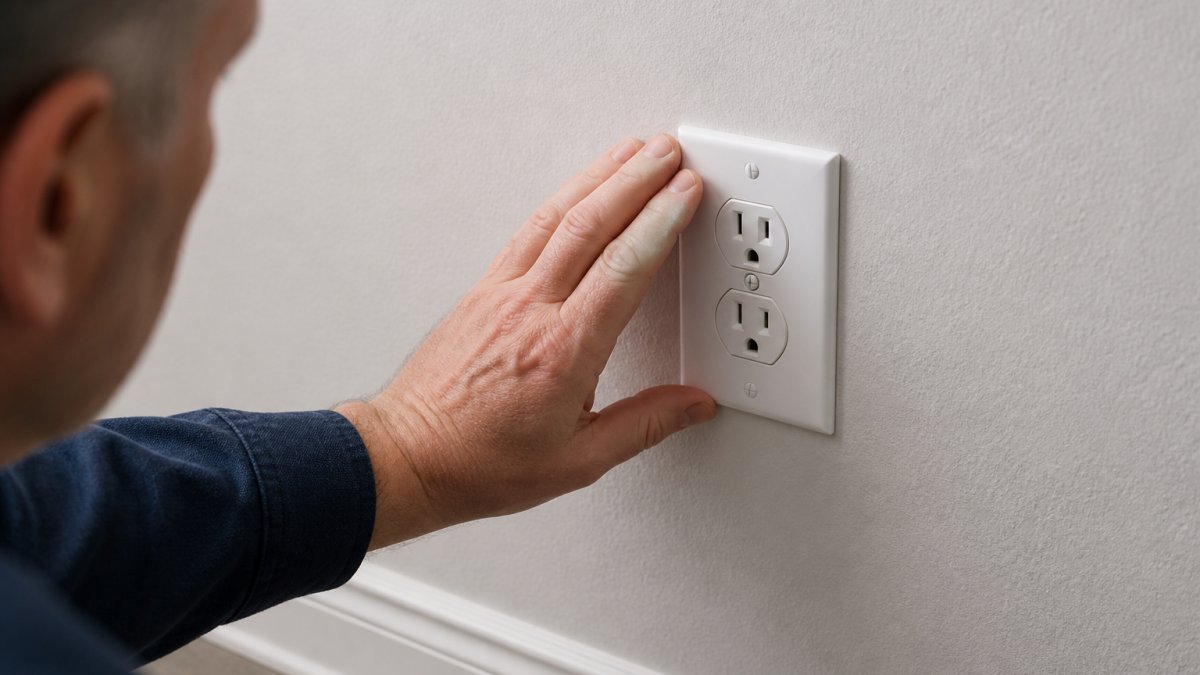
Test outlets regularly: turn off the breaker, wait a few minutes, then feel the outlet, it should be cool or room temperature.
Never ignore warm outlets. Unplug everything, turn off the breaker, and call a licensed electrician.
Burning Smells and Discolored Outlets
A burning smell near outlets or switches is an emergency: insulation is burning off wiring or connections are overheating severely, and fire risk is immediate.
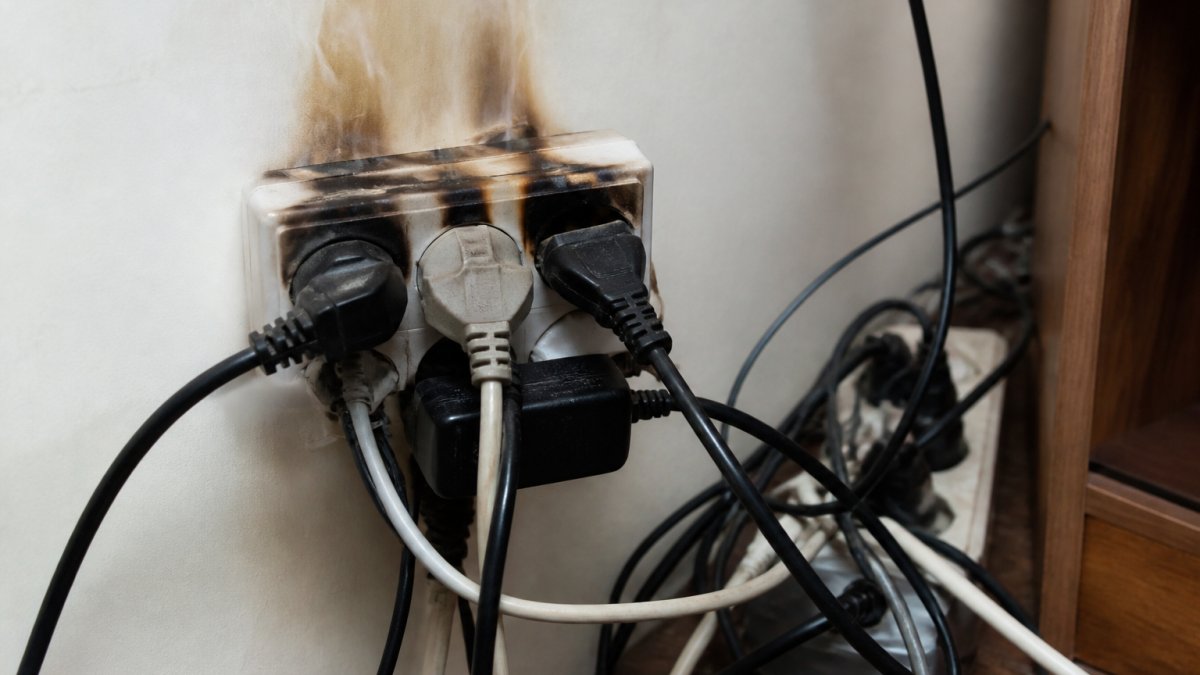
Discolored outlets or switches are another critical sign. Look for black or brown marks around outlet holes, scorching on the outlet face or wall, charring on the faceplate, or darkening around the switch. These marks show arcing or overheating has occurred, arcing creates intense heat that can ignite nearby materials.
Buzzing and Humming Sounds from Electrical Devices
Buzzing or humming from outlets, switches, or appliances indicates loose connections or overloaded circuits: current flowing through a loose connection vibrates the metal. Listen near outlets when appliances run, at light switches, at the panel, and at appliances themselves. A light buzz is sometimes normal, but loud or constant buzzing, especially if new or getting louder, warrants investigation. Buzzing alongside dimming lights or a warm outlet means the circuit is severely overloaded or has a fault.
What to Do If a Circuit Is Overloaded
When you suspect an overload, the response depends on what you're seeing: some signs call for a reset and load reduction, others mean stop using the circuit and call a licensed electrician, and a few mean leave and call 911.
Safe steps you can take yourself
These actions suit mild, repeatable signs like a tripped breaker, dimming lights, or a breaker that trips only when specific appliances run:
- Identify the affected circuit. Note which outlets, lights, or appliances lost power. A single-room pattern points to a branch circuit; a whole-house pattern points to the main panel or utility service.
- Unplug nonessential devices. Start with high-draw items: space heaters, hair dryers, microwaves, irons, and power tools.
- Reset the breaker once. Switch it fully to OFF, then firmly to ON. A breaker that holds after a single reset and load reduction was simply over its limit.
- Redistribute the load. Move a lamp, charger, or small appliance to a different circuit. Avoid running the dryer, microwave, and space heater together.
- Monitor for a few days. If it trips again under the same conditions, the circuit is chronically overloaded and needs a long-term fix.
Steps that require a licensed electrician
Stop DIY troubleshooting and call a licensed electrician if:
- The breaker trips immediately after reset with no load connected.
- An outlet, switch, or wall plate is warm or hot to the touch.
- You see discoloration, scorch marks, or melted plastic around an outlet or switch.
- You hear buzzing, crackling, or sizzling from an outlet, switch, or the panel.
- The breaker trips repeatedly even after you've redistributed appliances.
- You smell burning plastic or rubber near electrical equipment, even faintly.
These signs point to a fault, a failing connection, or a circuit beyond what load redistribution can fix. An electrician can trace the circuit, check connections, and determine whether a dedicated circuit or panel work is needed.
When to treat it as an emergency
Some warning signs mean fire risk is immediate. Leave and call 911 if you see visible smoke from an outlet, switch, or panel; sparks or arcing; a strong burning smell that persists after shutting off the breaker; or flames or glowing at an outlet, cord, or panel. Learn what qualifies as an emergency and how to stay safe.
electrical fire safety guidance covers what to do during and after an electrical fire, including when to evacuate and when to call emergency services.
Overload, short circuit, or ground fault?
Not every tripped breaker is an overload. The pattern tells them apart:
- Overload: Trips after you run several high-draw devices together or a heavy appliance cycles on, and usually holds after you unplug some devices and reset it.
- Short circuit: Trips immediately, often with a snap or pop, even with nothing plugged in, a hot wire is touching a neutral or ground wire.
- Ground fault: Trips immediately, possibly with buzzing or crackling, current is escaping to ground through damaged insulation or a wet connection.
Overloads are often fixable by redistributing load or adding a dedicated circuit. Short circuits and ground faults require an electrician to find and repair the damaged wiring. If the same breaker trips under the same conditions more than once or twice, the underlying problem needs a long-term fix such as a dedicated circuit or a panel assessment.
Electrical Panel Upgrade Signs and Long-Term Solutions
If you're experiencing frequent overloads, a panel upgrade may be necessary. Modern homes with heat pumps, EV chargers, and multiple appliances need more capacity than older systems provide. Signs you need one:
- Breakers trip regularly even after redistributing loads
- You can't use certain appliances together
- You've added major appliances and the system is strained
- Your home is more than 20 years old and you're adding significant demand
- You're planning to install an EV charger or heat pump
how to identify outdated electrical panels provides a detailed guide to recognizing when your panel needs upgrading.
An upgrade involves a new main breaker, panel, and additional circuits, requires a licensed electrician and permits, and takes a day or two.
Overloaded electrical circuits are serious but fixable. Recognize the warning signs, tripping breakers, flickering lights, warm outlets, and buzzing sounds.
Frequently Asked Questions
What are the most dangerous signs of an overloaded electrical circuit?
The most dangerous signs include burning smells near outlets, discolored or charred wall plates, warm or hot outlets that feel uncomfortable to touch, and any visible sparking. These indicate your circuit is drawing more power than it safely can handle. If you notice any of these, stop using that outlet immediately and contact a licensed electrician. Do not ignore these warnings, they can lead to electrical fires.
What should you do if a circuit is overloaded?
First, unplug non-essential devices from the affected circuit to reduce the load immediately. Do not attempt to bypass a tripping breaker or use a higher-amperage breaker as a temporary fix. If the circuit trips again after unplugging devices, or if you see warning signs like burning smells or hot outlets, call a licensed electrician. A professional can diagnose whether you need to redistribute appliances across circuits or upgrade your electrical panel.
Why do lights dim when appliances turn on?
Lights dim when appliances turn on because high-power devices like air conditioners, water heaters, or refrigerators demand a sudden surge of electricity. If they share a circuit with your lights, the voltage drops momentarily, causing dimming. Occasional, brief dimming is normal, but frequent or severe dimming suggests your circuit is struggling to handle the combined load. This is a sign you may need to add dedicated circuits or upgrade your electrical panel.
Can an overloaded circuit cause a fire?
Yes, overloaded circuits are a genuine fire hazard. When a circuit carries more current than its wiring is designed for, the wiring heats up. Over time, this heat can damage insulation around the wires, potentially causing sparks or ignition inside your walls. This is why burning smells, hot outlets, and frequent breaker trips should never be ignored. Professional electrical upgrades and load redistribution prevent this risk.
Need an electrician in Rutland or central Vermont?
Precision Power Services is a licensed and insured electrical contractor serving Rutland, Killington, Brandon, Castleton, and surrounding towns. Call (802) 417-0587 or book online.
← Back to blog