Smart Lighting for Homes: A Complete Guide
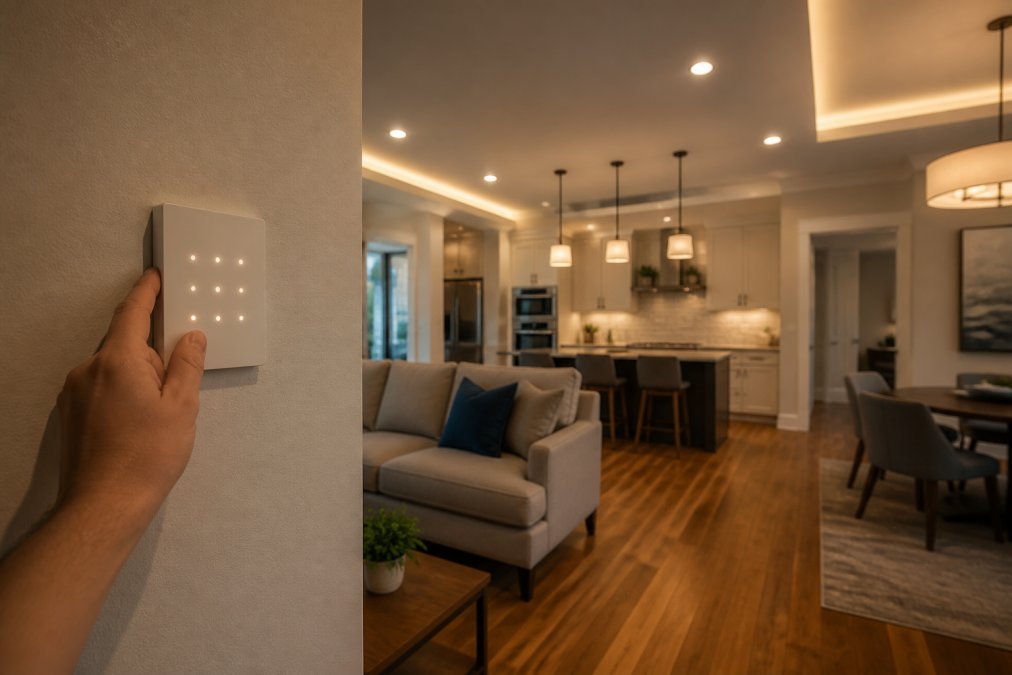
Table of Contents
- What Smart Lighting Actually Delivers
- Smart Lighting Energy Savings and Cost Reduction
- Smart Lighting Security Benefits for Your Home
- Automation, Scheduling, and Convenience
- Smart Bulb vs Smart Switch: Which Approach Works Best
- Integration with Your Smart Home Ecosystem
- Health, Circadian Rhythm, and Privacy Considerations
- Getting Started: Installation and Professional Support
- Frequently Asked Questions
Last Updated: September 20, 2026
What Smart Lighting Actually Delivers
Smart lighting for homes has moved beyond novelty into practical necessity for most homeowners. The real value isn't just convenience, it's the combination of energy efficiency, security, and health benefits that compound over time. When you install smart bulbs or smart switches, you're not just adding remote control to your lights. You're creating a foundation for broader home automation that adapts to your daily rhythms and protects your property when you're away.
The appeal is straightforward: control your lights from anywhere using a mobile app, set schedules that turn lights on and off automatically, and adjust color temperature based on time of day. But the practical benefits run deeper. Smart lighting reduces energy consumption compared to traditional incandescent or even older LED setups. It integrates with voice commands through common smart home ecosystems. And it provides security signals that deter break-ins by creating the appearance someone's home.
We help homeowners throughout central Vermont understand which smart lighting solutions actually fit their homes and electrical systems. The gap between what manufacturers promise and what works in practice comes down to compatibility, installation quality, and understanding your home's existing infrastructure.
Smart Lighting Energy Savings and Cost Reduction
Smart lighting for homes delivers measurable energy savings primarily through two mechanisms: LED technology itself and automated scheduling that eliminates waste.
LED bulbs consume 75% less energy than incandescent bulbs and last significantly longer, typically 25,000 to 50,000 hours compared to 1,000 hours for incandescent. When you add smart scheduling, you eliminate the human error of forgotten lights. Motion sensors detect when rooms are empty and turn lights off automatically. Occupancy sensors in hallways and bathrooms prevent lights from running all night. Dimming capabilities reduce energy draw when full brightness isn't needed.
The cost reduction compounds over time. A smart bulb costs more upfront than a standard LED, but the extended lifespan and reduced energy consumption can offset the premium. Smart switches can offer greater savings if you're retrofitting an existing home, since you can convert standard bulbs to automated control without replacing every fixture.
The real savings appear in homes that combine smart lighting with broader smart home ecosystem integration. Scheduling lights to turn off at specific times, linking them to occupancy sensors, and adjusting brightness based on natural daylight all contribute. Homeowners who implement comprehensive automation across multiple rooms typically see energy cost reductions that justify the initial investment.
Smart Lighting Security Benefits for Your Home
Smart lighting for homes serves as an active security tool, not just convenience. Lights that turn on and off in patterns simulate occupancy when you're away, which deters break-ins more effectively than dark windows. Automated schedules can be randomized to avoid predictable patterns that experienced burglars recognize.
Integration with smart home ecosystems amplifies security. When you connect smart lighting to motion detection systems, lights activate in response to movement around your property. Outdoor smart lights with motion sensors illuminate entryways and driveways when someone approaches, eliminating dark entry points. Integration with security cameras means lights activate when the camera detects motion, creating a coordinated deterrent.
Voice commands and remote access let you control lights instantly if you see suspicious activity on security cameras. Geofencing features turn lights on automatically as you approach home, eliminating the risk of arriving to a dark house. This combination of automation and remote control creates multiple layers of security that standard lighting cannot provide.
The security benefit extends to perception. Homes with active, intelligent lighting appear occupied and monitored. This psychological deterrent is often more effective than locks alone. Smart lighting's integration with broader smart home ecosystems, including door locks, cameras, and alarm systems, creates a coordinated security posture that's difficult to defeat.
Automation, Scheduling, and Convenience
Smart lighting for homes eliminates the friction of manual control. Schedules run automatically based on time of day, sunrise and sunset, or occupancy patterns. You set the rules once and the system executes them consistently, day after day.
Scheduling works through multiple triggers. Time-based automation turns lights on at 6 AM and off at 11 PM. Sunset-based scheduling adjusts automatically as daylight hours change seasonally, your lights turn on later in summer and earlier in winter without manual adjustment. Occupancy sensors detect when rooms are empty and turn lights off after a set delay, preventing waste in rooms people rarely use.
The convenience multiplies with voice control. Commands like "turn off all lights," "set bedroom to 50% brightness," or "activate movie mode" execute instantly without touching a switch. Voice commands work through common smart assistants, making control accessible even when your hands are full.
Mobile app control provides remote access from anywhere. Forgot to turn off lights before leaving? Control them from the car. Want lights on when you arrive home? Activate them from the driveway. This flexibility is particularly valuable for vacation homes or properties you visit irregularly.
Smart Bulb vs Smart Switch: Which Approach Works Best
Smart lighting for homes comes down to two primary approaches, each with distinct advantages and limitations.
Smart bulbs (WiFi or Bluetooth-enabled individual bulbs) offer flexibility and lower upfront cost. You replace existing bulbs with smart versions and control them through a mobile app or voice commands. No electrical work required. Smart bulbs work with existing fixtures and switches. The limitation: if someone uses the physical switch to turn off the bulb, the smart features stop working until the switch is flipped back on. This creates user friction in multi-person households.
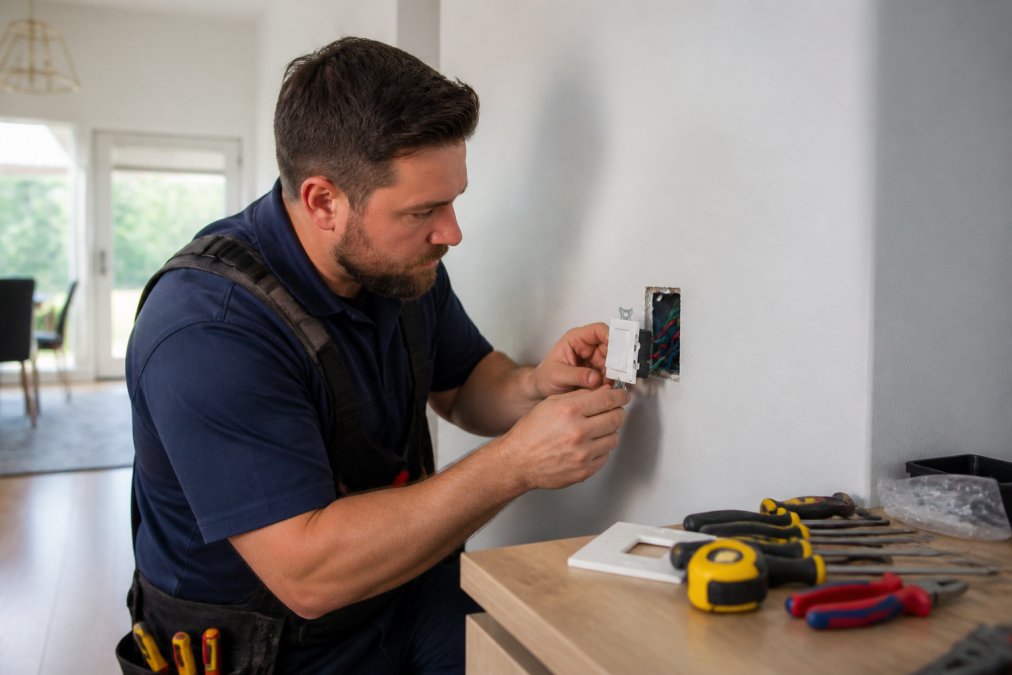
Smart switches replace the wall switch entirely and control any bulbs in that fixture, smart or standard. This approach works with regular LED bulbs, reducing per-bulb costs significantly. Smart switches maintain functionality even when someone uses the physical switch. The trade-off: installation requires electrical work, which is why professional installation ensures code compliance and proper integration with your home's electrical system.
The best choice depends on your situation. Renters or those avoiding electrical work prefer smart bulbs. Homeowners planning long-term installations, retrofitting multiple rooms, or wanting seamless family use prefer smart switches. Many homes use both: smart switches for primary areas and smart bulbs for supplemental fixtures.
| Approach | Upfront Cost | Installation | User Experience | Best For |
|---|---|---|---|---|
| Smart Bulbs | Lower per bulb | No electrical work | Physical switch breaks smart features | Renters, specific fixtures |
| Smart Switches | Higher per switch | Requires electrician | Works with any bulb type | Permanent installations, whole-home automation |
| Hybrid (both) | Moderate | Mixed | Maximum flexibility | Comprehensive smart homes |
Integration with Your Smart Home Ecosystem
Smart lighting for homes only reaches full potential when integrated with your broader smart home ecosystem. Isolated smart bulbs provide convenience. Connected systems provide intelligence.
Compatibility standards matter significantly. Zigbee, Bluetooth, and WiFi-enabled devices work within different ecosystems. Matter protocol, the emerging standard, aims to unify these systems so devices from different manufacturers work together seamlessly. Thread, a mesh networking technology, ensures reliable communication across your home without depending on WiFi strength (Thread in Homes).
The smart hub serves as the central control point. This device communicates with all smart lights, scheduling them, responding to sensors, and executing automation routines. Integration with smart speakers (voice control), motion sensors, occupancy detectors, and security systems creates coordinated automation. A motion sensor in the hallway triggers lights to activate at 30% brightness during nighttime hours. A door sensor linked to smart lighting turns on entryway lights when someone enters.
Interoperability becomes critical as you expand your smart home. Lights that work only within one ecosystem limit your options for future additions.
Health, Circadian Rhythm, and Privacy Considerations
Smart lighting for homes can support your body's natural circadian rhythm by adjusting color temperature throughout the day. Warmer color temperatures (2700K) in evening hours support melatonin production and sleep quality. Cooler color temperatures (5000K+) during morning and afternoon hours promote alertness and focus. Automated scheduling adjusts these transitions without manual intervention.
Getting Started: Installation and Professional Support
Installation complexity depends on whether you choose smart bulbs or smart switches. Smart bulbs require no electrical work, screw them into existing fixtures and connect through your mobile app. Smart switches require wall access, circuit breaker knowledge, and electrical code compliance.
Frequently Asked Questions
Is smart lighting worth the investment for my home?
Smart lighting delivers measurable returns through reduced energy consumption and extended LED bulb lifespan. The real value depends on your use case: if you're away frequently, automation prevents wasted lighting. If you want to adjust ambiance without leaving your chair, the convenience alone justifies the upgrade. Start with one room to test the workflow before committing to whole-home installation. Many homeowners find the payoff worthwhile through lower electricity bills.
How does smart lighting improve home energy efficiency?
Smart lighting cuts energy consumption through three mechanisms: LED technology uses 75% less energy than incandescent bulbs, dimming capabilities reduce output when full brightness isn't needed, and automation schedules prevent lights from running in empty rooms. Motion detection and occupancy sensors add another layer by turning lights off automatically. Voice commands and mobile app control let you manage lights remotely, eliminating the 'I left the lights on' problem that wastes energy throughout the day.
Can smart lighting systems enhance home security?
Yes. Smart lighting deters intruders by creating the appearance of occupancy when you're away, lights turn on and off on randomized schedules that mimic normal behavior. Outdoor smart lights with motion detection activate instantly when movement is detected, startling potential trespassers and alerting you via mobile notification. Some systems integrate with security cameras and smart locks, creating a coordinated response: lights activate when doors unlock or motion triggers. This layered approach makes your home a less attractive target.
Do I need a professional electrician to install smart lighting?
Smart bulbs require no electrician, they screw into existing fixtures. Smart switches, however, involve working inside wall boxes with live wiring and require code-compliant installation. A licensed electrician ensures the work meets local electrical codes, handles any panel upgrades if your system can't support additional load, and troubleshoots integration issues with your smart home hub. Professional installation can help ensure safety, particularly in older homes where wiring may be outdated or damaged.
Need an electrician in Rutland or central Vermont?
Precision Power Services is a licensed and insured electrical contractor serving Rutland, Killington, Brandon, Castleton, and surrounding towns. Call (802) 417-0587 or book online.
← Back to blog