Smart Home Energy Efficient Lighting Installation
Table of Contents
- What You'll Need Before Starting
- Understanding Smart Home Energy Efficient Lighting Basics
- Benefits of Smart Lighting for Homes
- Step-by-Step Smart Home Energy Efficient Lighting Installation
- How to Program Smart Light Schedules
- Smart Lighting Installation Cost and ROI Calculation
- Common Installation Mistakes and Troubleshooting
- When to Call a Licensed Electrician
- Frequently Asked Questions
Last Updated: September 30, 2026
What You'll Need Before Starting
Before you begin installing smart home energy efficient lighting, gather the right tools and materials. You'll need a voltage tester, wire strippers, a screwdriver set, and potentially a stud finder if you're installing outdoor fixtures. Have your smart bulbs, smart light switches, and any required hub hardware on hand.
Check your home's electrical capacity first. Older homes may need panel upgrades before adding smart systems. Your circuit breaker should support the additional load. If you're unsure, have a licensed electrician evaluate your system.
Review compatibility requirements. Smart lighting devices use different protocols, Wi-Fi, Zigbee, Z-Wave, or Thread. Your smart home hub must support the same protocol as your bulbs and switches. Mixing incompatible devices is a common installation mistake.
Document your home's layout. Mark which rooms need smart lighting and identify existing switch locations. This planning step prevents costly rewiring later.
Understanding Smart Home Energy Efficient Lighting Basics
Smart home energy efficient lighting combines LED technology with automated controls. The system lets you schedule lights, dim them remotely, and integrate them with other smart home devices. This approach cuts energy consumption while adding convenience.
LED vs CFL Bulbs for Smart Home Systems
LED bulbs are the superior choice for smart home integration. They're compatible with dimmers, respond instantly to commands, and last 25,000+ hours. LEDs produce less heat and work reliably with smart switches.
CFL bulbs have limitations in smart systems. They're slower to respond to commands, incompatible with many dimmers, and generate more heat. CFL technology doesn't integrate well with voice control or automation schedules. For smart home energy efficient lighting installation, skip CFLs entirely.
LED bulbs cost more upfront but deliver long-term savings through:
- Lower energy consumption per bulb
- Longer lifespan reducing replacement costs
- Better compatibility with smart controls
- Instant on/off response without lag
Smart Light Switches and Dimmers
Smart light switches replace your existing wall switches and connect to your home network. They control standard bulbs or work alongside smart bulbs for dual functionality. Dimmers let you adjust brightness and set scenes automatically.
Hardwired smart switches install directly into your electrical circuit. They offer reliable performance and don't require separate bulbs to be smart. This approach works well for whole-room lighting control.
Smart plugs provide an easier alternative. They plug into existing outlets and control connected lamps. Smart plugs avoid rewiring but only work with lamps, not ceiling fixtures.
Consider your home's layout when choosing. Rooms with multiple switches benefit from smart dimmers. Single-switch rooms work fine with smart plugs or hardwired switches.
Benefits of Smart Lighting for Homes
Smart home energy efficient lighting delivers measurable benefits beyond convenience. Automated schedules reduce energy waste from forgotten lights. Motion sensors turn lights on only when rooms are occupied, cutting electricity use significantly.
Remote access means you control lights from anywhere. Adjust brightness before arriving home or turn off lights you forgot. This flexibility prevents energy waste from unoccupied spaces.
Voice control integration with Alexa, Google Home, or similar systems adds hands-free operation. You can create lighting scenes that match activities, "movie mode" dims lights and adjusts color temperature automatically.
Enhanced home security comes from automated schedules that simulate occupancy. Lights turn on at dusk and off at dawn, deterring intruders when you're away.
Smart lighting integrates with other smart home devices. Coordinate with thermostats, door locks, and security systems for comprehensive automation. A unified ecosystem simplifies control and improves energy efficiency across your entire home.
Step-by-Step Smart Home Energy Efficient Lighting Installation
Installing smart home energy efficient lighting requires careful planning and proper safety procedures. Follow these steps to ensure code-compliant, safe installation.
Step 1: Plan Your Lighting Layout and Compatibility
Start by mapping your home's lighting needs. Identify which rooms need smart controls, which require dimming capability, and which benefit from motion sensors. This planning prevents expensive changes later.
Verify compatibility before purchasing anything. Check that your smart home hub supports the protocols used by your chosen bulbs and switches. Research whether your Wi-Fi network provides adequate coverage in all installation areas. Weak signals cause connectivity issues that frustrate users.
Create a wiring diagram for your home. Mark existing switch locations, circuit breaker assignments, and any planned additions. This diagram guides installation and helps a licensed electrician verify code compliance.
Consider your electrical panel's capacity. Older homes with 60-amp service may struggle with modern smart home systems. A licensed electrician can evaluate whether you need a panel upgrade before proceeding.
Step 2: Turn Off Power and Verify Circuit Safety
Safety is non-negotiable. Turn off power at the main breaker before touching any wiring. Lock the breaker panel to prevent accidental re-energization during work.
Use a voltage tester on every wire you'll touch. Test the circuit multiple times to confirm power is off. This simple step prevents electrical shock and protects your safety.
Wait a few minutes after cutting power. Capacitors in lighting circuits can retain charge even when switched off. Waiting ensures complete discharge before you begin work.
Never work alone on electrical installations. Have someone nearby who can call for help if needed. This is especially important when working at heights or in confined spaces.
Step 3: Install Smart Light Switches and Bulbs
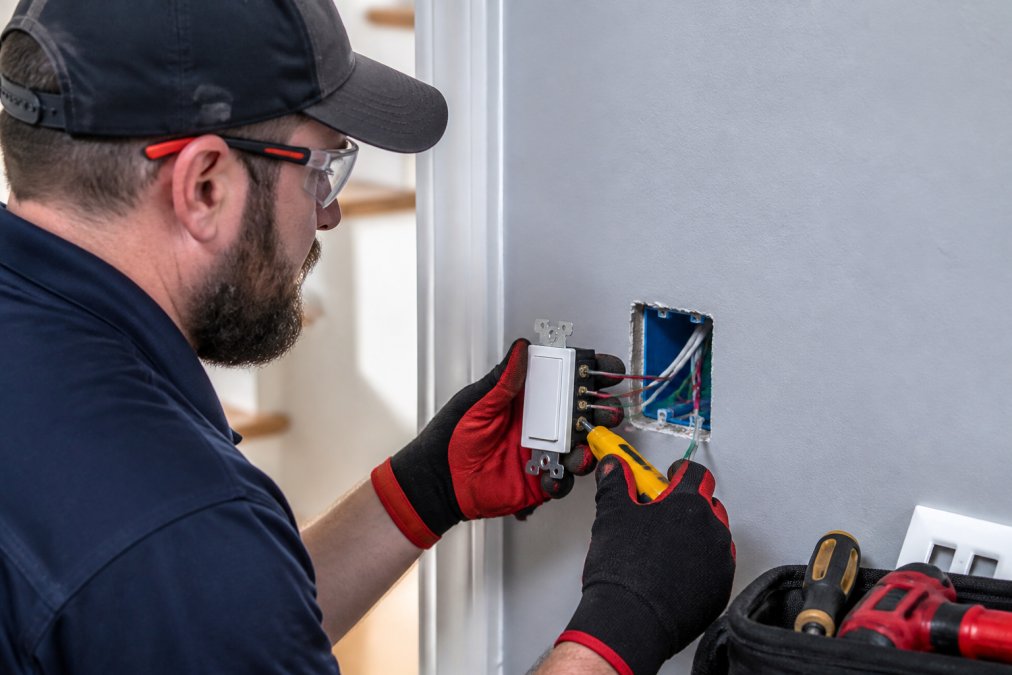
Remove the old switch cover plate carefully. Unscrew and extract the existing switch, supporting it as you pull it out. Disconnect the wires by loosening terminal screws.
Note wire positions before disconnecting. Take a photo for reference. This prevents confusion when connecting the new smart switch.
Connect the new smart switch following the manufacturer's instructions exactly. Typically, black (hot) wires connect to the brass terminal, white (neutral) to silver, and bare copper (ground) to green. Never assume, verify the manual for your specific switch.
Carefully push the new switch into the electrical box. Screw it in place without forcing. Overtightening damages the switch and creates fire hazards.
Install smart bulbs in fixtures according to their specifications. Some smart bulbs require neutral wire connections; others don't. Verify your bulbs' requirements before installation.
Attach the cover plate and restore power at the breaker. Test the switch to confirm proper function before moving to the next location.
Step 4: Connect to Your Smart Home Hub and Network
Place your smart home hub in a central location. Position it away from metal objects and thick walls that block signals. A hallway or central room works well for most homes.
Connect the hub to your home Wi-Fi network. Use your 2.4GHz band for smart home devices, 5GHz signals don't penetrate walls effectively. Enter your Wi-Fi password carefully to avoid connection failures.
Add devices to the hub using the manufacturer's app. Follow pairing instructions for each smart bulb and switch. Most devices pair within minutes, but some require manual reset procedures.
Test connectivity by controlling a light remotely. If the light doesn't respond, check your Wi-Fi signal strength in that area. Weak signals cause intermittent failures and frustration.
Create automation rules in your hub's app. Set schedules for lights to turn on at sunset and off at bedtime. Add motion sensors to turn lights on when rooms are occupied.
How to Program Smart Light Schedules
Programming schedules automates your lighting and reduces energy consumption. Most smart home hubs offer simple scheduling through their apps.
Smart Lighting Installation Cost and ROI Calculation
Smart home energy efficient lighting installation costs vary based on your home's size and complexity. A single smart bulb costs less than a smart switch, but switches offer better long-term value. Calculate your return on investment by tracking energy savings.
Common Installation Mistakes and Troubleshooting
Installation mistakes cause connectivity problems and safety hazards. Understanding common errors helps you avoid them.
Connectivity Issues and Protocol Conflicts
The most common problem is mixing incompatible protocols. Buying Wi-Fi bulbs when your hub uses Zigbee creates unusable devices. Always verify protocol compatibility before purchasing.
Voltage and Wiring Problems
Incorrect wire connections create fire hazards and equipment damage. Always verify wire positions before connecting. Black wires carry power, white wires are neutral, and bare copper wires are ground.
When to Call a Licensed Electrician
Some installations require professional expertise. Recognize when DIY work exceeds safe limits.
Frequently Asked Questions
Does smart lighting actually reduce electricity consumption?
Yes. Smart home energy efficient lighting systems reduce energy waste through motion sensors, occupancy detection, and automated schedules that turn lights off when rooms are unoccupied. LED bulbs combined with smart dimmers allow precise control of wattage and color temperature, cutting energy consumption by 30-50% compared to traditional incandescent fixtures. Voice control and remote access let you manage lighting from anywhere, preventing lights from running unnecessarily.
What is the average cost of a professional smart lighting installation?
Installation costs depend on your home's existing wiring, the number of fixtures, whether you need hardwired smart switches or smart bulbs, and hub compatibility requirements. Retrofit installations in older homes typically cost more than new construction. For accurate pricing tailored to your specific setup and needs, contact Precision Power Services for a detailed quote. Our team will assess your electrical system and provide transparent cost estimates.
Do smart bulbs require a neutral wire for installation?
Most smart bulbs do not require a neutral wire because they draw minimal power. However, hardwired smart light switches often need a neutral wire to power their control circuits. If your home has older wiring without neutral conductors in switch boxes, you may need to retrofit circuits or use smart bulb solutions instead. A licensed electrician can evaluate your circuit configuration and recommend compatible options for your home.
How do I know if my home's electrical system can handle smart lighting upgrades?
Smart lighting systems draw very little additional power, so most homes can accommodate them without panel upgrades. However, compatibility depends on your circuit capacity, wire gauge, and whether your existing switches have neutral wires. If you're planning other upgrades like heat pump or EV charger installation simultaneously, your panel may need capacity evaluation. A professional inspection identifies any voltage issues or circuit limitations before installation begins.
Need an electrician in Rutland or central Vermont?
Precision Power Services is a licensed and insured electrical contractor serving Rutland, Killington, Brandon, Castleton, and surrounding towns. Call (802) 417-0587 or book online.
← Back to blog