Is EV Charger Installation Worth It? A 2026 Guide
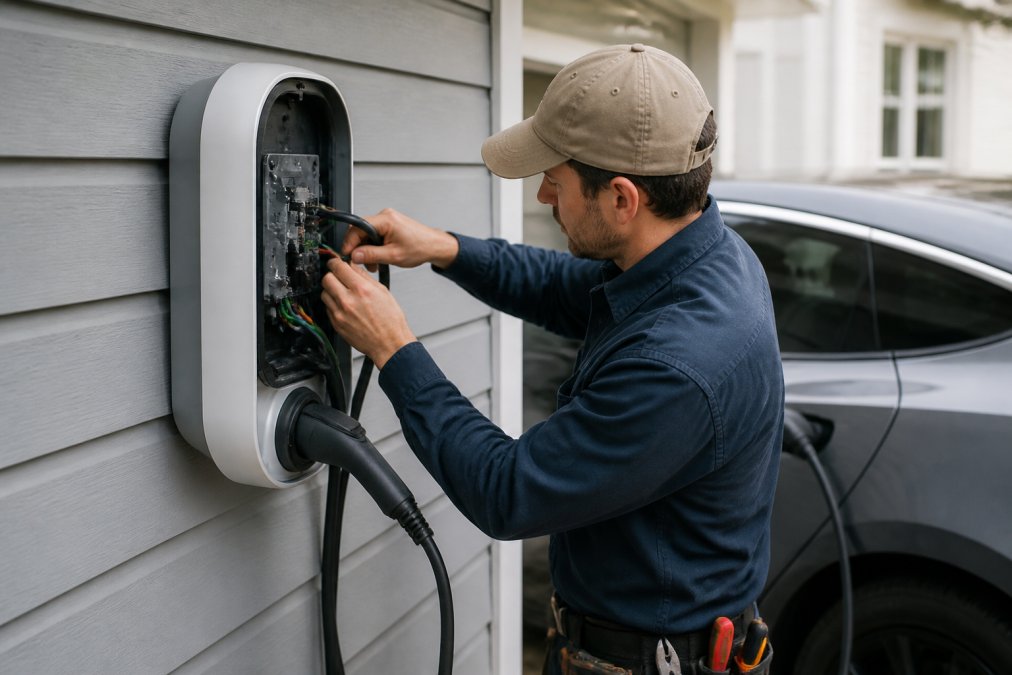
Table of Contents
- The Real Case for Home EV Charger Installation
- EV Charger Installation Cost: What You Actually Pay
- Federal Tax Credit for EV Charger: How to Claim It
- EV Charger Installation and Electrical Panel Upgrade Requirements
- Home Resale Value and Long-Term Financial Impact
- Smart Charging and Off-Peak Electricity Savings
- Renters, HOAs, and Future-Proofing Your Investment
- Conclusion: Making the Decision
- Frequently Asked Questions
Last Updated: September 23, 2026
The Real Case for Home EV Charger Installation
EV charger installation makes financial sense if you charge multiple times weekly; the case weakens if you charge only every two weeks.
The real question is whether upfront costs align with your driving patterns and home setup. The answer depends on three factors: electrical panel capacity, local utility rates, and actual driving frequency.
This guide covers installation costs, federal incentives, hidden expenses, panel upgrades, and future-proofing for bidirectional charging.
EV Charger Installation Cost: What You Actually Pay
EV charger installation cost splits between hardware and electrical work, which is typically the larger expense.
Installation costs vary depending on available panel capacity, location, and the age of the home.
Panel upgrades are the biggest cost variable. Upgrading from 100-amp to 200-amp service is often necessary for homes built before 2000 when adding both a heat pump and EV charger.
Get written quotes from a licensed electrician; the difference between straightforward installation and panel work can exceed $5,000.
Federal Tax Credit for EV Charger: How to Claim It
The federal tax credit covers a portion of equipment and installation costs, claimed on your tax return for the year installed.
To qualify, the charger must be at your primary residence and you must own the home. The credit covers the charger, labor, and electrical work including panel upgrades.
The credit applies to equipment installed after December 31, 2023, through 2032. Keep all invoices and receipts for documentation.
Some utilities offer additional rebates that stack with the federal credit; check with your local utility for available programs.
Claim the credit on Form 8911; unused credits carry forward to future years.
EV Charger Installation and Electrical Panel Upgrade Requirements
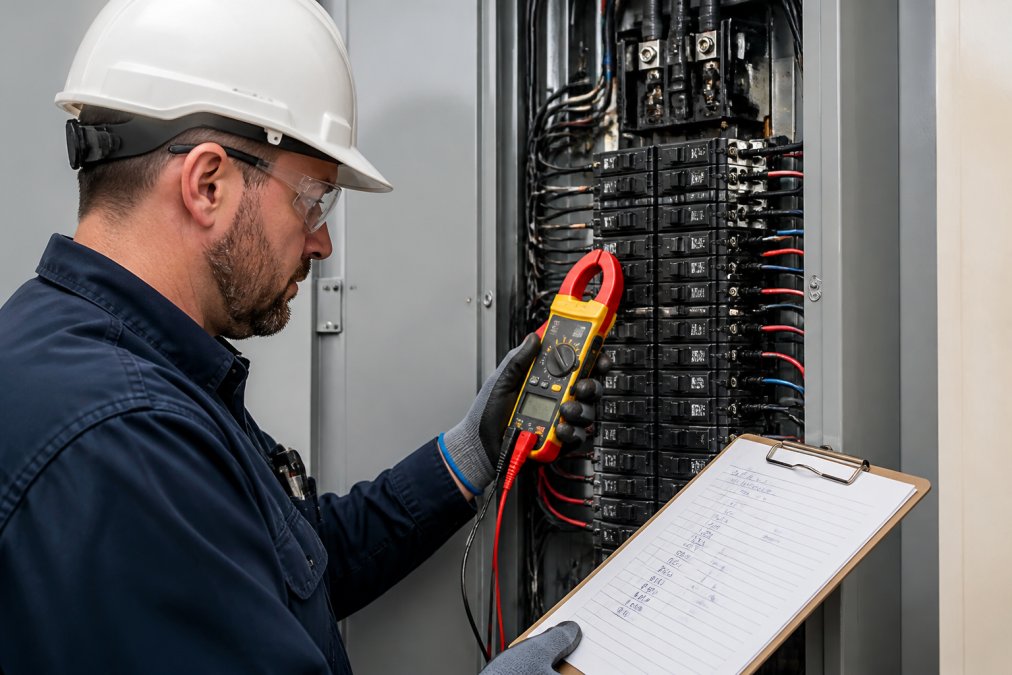
A licensed electrician must assess your panel and calculate load requirements to determine if upgrades are necessary.
Understanding Your Electrical Panel Capacity
A Level 2 charger draws 30-50 amps and requires a dedicated 40-60-amp circuit with sufficient panel capacity.
Here's the diagnostic framework:
200-amp service: Sufficient capacity for a 50-amp charger circuit. Installation cost: $1,500-$3,500.
150-amp service: Capacity depends on current load. An electrician will measure peak load to confirm fit. Installation: $2,000-$4,000; upgrade if needed: $2,500-$5,000.
100-amp service: Cannot safely support a 50-amp charger. A 200-amp upgrade is mandatory and requires utility coordination and permitting. Cost: $3,000-$6,000 for upgrade plus $1,500-$3,500 for installation.
Less than 100-amp service: Mandatory upgrade with potential utility line replacement. Cost: $4,000-$8,000+ depending on utility involvement.
The Panel Upgrade Process
The panel upgrade process involves utility notification, permitting, temporary disconnection, installation of the new panel and charger circuit, and inspection. The work takes 1-2 days but scheduling can extend the timeline.
Charger Outlet Standards and Compatibility
NEMA 14-50 outlets are standard for Level 2 chargers. Older homes may need a new outlet installed. If your home already has one (from a range or dryer), it can sometimes be repurposed if on a dedicated circuit.
Planning for Future Loads
When upgrading, plan for future loads: heat pumps (15-25 amps), solar (20-40 amps), and backup systems (30-60 amps). A 200-amp panel leaves roughly 150 amps available, sufficient for most homes. Ask your electrician to calculate total load if planning multiple upgrades.
Hiring a Licensed Electrician
EV charger installation must be performed by a licensed electrician with liability insurance who pulls permits and guarantees NEC compliance. Get quotes from at least two electricians; verify experience with EV chargers and panel upgrades.
Home Resale Value and Long-Term Financial Impact
Homes with Level 2 chargers command a 1-3% price premium in high-EV-adoption regions, though the resale gain rarely covers full installation costs in the short term. Over 5-10 years, the premium will likely increase as chargers become standard. The stronger financial case comes from operational savings.
Long-Term Maintenance and Hardware Longevity
Most homeowners overlook the 5-10 year lifecycle of EV charger hardware. A Level 2 charger has no moving parts and minimal maintenance, typically just occasional visual inspection of the cable, connector, and weatherproofing. However, the electrical infrastructure supporting it does age, and certain failure modes are predictable.
Common hardware issues over 5-10 years include:
- Connector corrosion or wear: Outdoor chargers exposed to moisture and temperature cycling can develop corrosion on the connector pins. This typically appears as intermittent charging failures or slower charging speeds. Repair usually requires connector replacement.
- Cable insulation degradation: Heavy-use chargers in cold climates may experience insulation cracking or brittleness, especially if the cable is frequently bent or coiled. A replacement cable can be required depending on the charger model.
- Circuit breaker nuisance trips: As the dedicated circuit ages, nuisance trips can occur if the breaker is undersized relative to actual load or if there's minor arcing in the connection. This typically requires a breaker replacement and inspection by a licensed electrician.
- Smart charger component failure: Chargers with Wi-Fi, app integration, or grid-response capability have internal electronics that can fail. Failure rates are low, but replacement costs can be significant for a new unit.
Repairability varies by manufacturer. Some chargers allow field replacement of cables and connectors; others require full unit replacement. Before purchasing, check the manufacturer's warranty (typically 5-10 years) and whether replacement parts are available at reasonable cost. Chargers from established manufacturers tend to have better parts availability than boutique brands.
Operational Savings and Time-of-Use Electricity Rates
The stronger financial case comes from electricity savings, especially if your utility offers time-of-use (TOU) rates. Many utilities across the country now offer TOU plans where evening and night electricity costs 30-50% less than peak hours. Charging a 60-kWh battery overnight at off-peak rates versus using public chargers during the day creates measurable savings over time.
The stronger financial case comes from electricity savings, especially if your utility offers time-of-use (TOU) rates. Many utilities across the country now offer TOU plans where evening and night electricity costs less than peak hours. Charging a 60-kWh battery overnight at off-peak rates versus using public chargers during the day creates measurable savings over time.
The key is automating this with a smart charger that schedules charging during off-peak windows without requiring manual intervention. Without automation, most homeowners charge whenever they arrive home, missing the savings opportunity entirely.
Planning for Future Electrification
The electrical panel upgrade also affects your overall home capacity for future loads. If you're planning to add a heat pump later, install solar panels, or add a backup generator, these all draw from the same panel. A 100-amp service that barely accommodates a Level 2 charger leaves no room for these upgrades without expensive retrofits. A 200-amp service gives you breathing room for multiple electrification upgrades without future panel work.
When evaluating whether to upgrade your panel now, ask your electrician: "What's the total amperage I'll need if I add a heat pump and solar in the next 5 years?" If the answer exceeds your current panel capacity, upgrading to 200 amps now (typically $3,000-$6,000) is cheaper than doing it twice. This forward-looking approach turns the panel upgrade from a charger-specific cost into a multi-decade infrastructure investment.
Smart Charging and Off-Peak Electricity Savings
A smart charger with app integration lets you schedule charging during off-peak hours automatically. Instead of plugging in whenever you arrive home, the charger waits until your utility's cheapest rate window, usually 9 PM to 6 AM, and charges then. This automation is where real savings accumulate for households charging multiple times weekly.
If your utility offers time-of-use rates, the difference between peak and off-peak electricity can be substantial. If your utility offers time-of-use rates, the difference between peak and off-peak electricity can be substantial. Charging a 60-kWh battery overnight can lead to savings compared to peak-hour charging.
Smart chargers also communicate with grid demand response programs that some utilities run. During periods of high grid demand, you might get incentives to delay charging or shift it to a different time. A few utilities in the region are piloting these programs, and they'll likely expand. Smart chargers with demand response capability future-proof your investment.
The app integration also provides visibility into charging efficiency and energy consumption.
Renters, HOAs, and Future-Proofing Your Investment
If you rent your home, EV charger installation becomes complicated. Most leases prohibit permanent electrical modifications, and landlords have little incentive to install chargers unless they're offering premium units. Some new apartment buildings and condos include chargers in common areas, but the majority of rental properties still lack them.
Conclusion: Making the Decision
Is EV charger installation worth it? If you drive electric multiple times weekly, own your home, and have reasonable electrical panel capacity, the answer is yes. The combination of federal tax credits, off-peak electricity savings, and the convenience of home charging justify the investment over a 5-10 year horizon.
Frequently Asked Questions
Is EV charger installation worth it if I only charge a couple times a week?
Yes, even light charging benefits from home installation. You avoid public charging network fees and the inconvenience of finding available stations. A Level 2 charger adds 25-30 miles of range per hour, so even occasional charging saves time and money compared to public infrastructure. The financial payback extends beyond fuel savings, convenience and range security reduce range anxiety significantly.
What federal tax credit am I eligible for with EV charger installation?
The federal tax credit for residential EV charger installation covers a portion of the cost. To qualify, you must own or lease a qualifying electric vehicle, install a Level 2 or DC fast charging station at your primary residence. The credit applies to equipment and installation labor. Check the IRS website for current eligibility requirements, as rules are subject to change.
Do I need an electrical panel upgrade to install an EV charger?
Not always, but many homes do. A Level 2 charger typically requires 40-60 amps of dedicated circuit capacity. If your electrical panel has spare capacity, you may avoid a full upgrade. However, older homes, homes with existing high electrical demand, or those planning future heat pump installations often need panel upgrades. A licensed electrician can assess your panel's current load and determine whether an upgrade is necessary before installation begins.
How much does EV charger installation typically cost?
Total costs vary based on your home's electrical infrastructure, charger type, and local labor rates. Factors include whether you need a dedicated circuit, panel upgrades, permit fees, and the distance from your panel to the charging location. For an accurate quote tailored to your home's specific needs and your local electrical codes, contact a licensed electrician who can assess your setup and provide transparent pricing.
Need an electrician in Rutland or central Vermont?
Precision Power Services is a licensed and insured electrical contractor serving Rutland, Killington, Brandon, Castleton, and surrounding towns. Call (802) 417-0587 or book online.
← Back to blog