Home Standby Generator Maintenance: Why It Matters
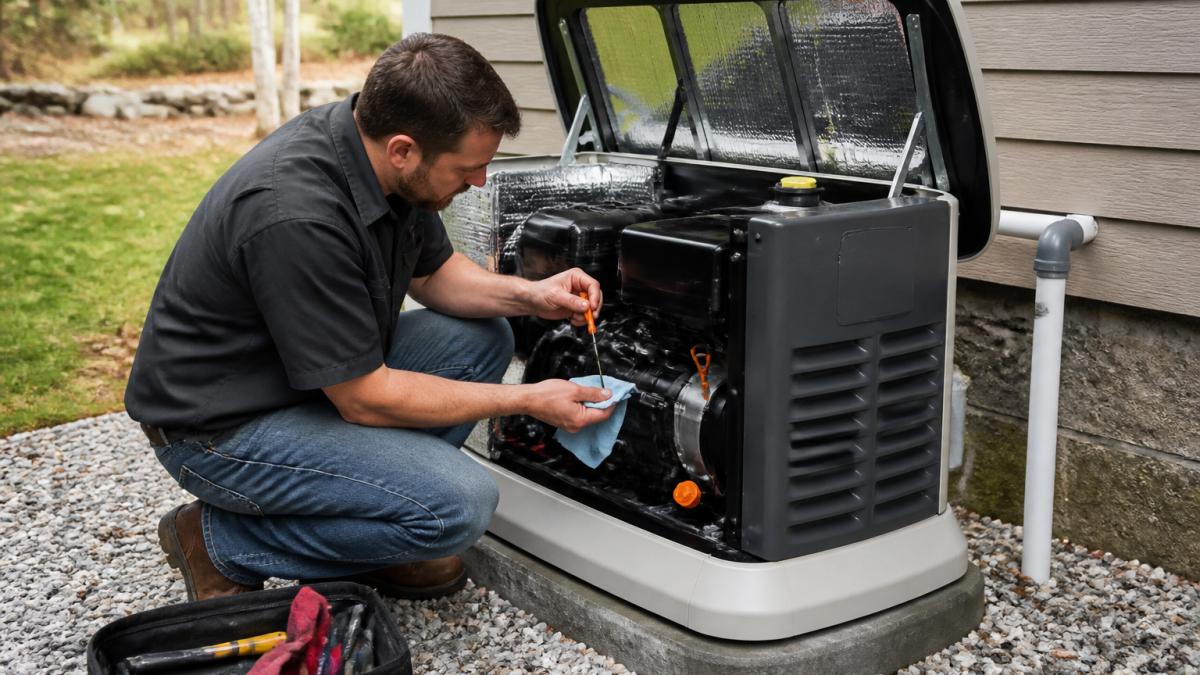
Table of Contents
- Why Your Home Standby Generator Needs Regular Maintenance
- What Happens When Standby Generator Maintenance Gets Skipped
- How Often to Service a Standby Generator
- Essential Standby Generator Maintenance Checklist
- Understanding the Generator Exercise Cycle
- When to Call for Professional Generator Maintenance
- Conclusion
- Frequently Asked Questions
Last Updated: October 8, 2026
Why Your Home Standby Generator Needs Regular Maintenance
A home standby generator is one of your most important backup systems. When the power goes out, it keeps your home running. But like any machine, it needs care to work when you need it most.
The importance of home standby generator maintenance comes down to one simple fact: a generator that sits unused will fail when you turn it on. Dust builds up. Fuel breaks down. Seals dry out. Then, when a storm knocks out your power, you flip the switch and nothing happens.
A homeowner might call in a panic during an outage, only to learn their generator won't start because it hasn't been serviced in years. That's a preventable disaster.
Regular maintenance keeps your standby generator ready 24/7. It catches small problems before they become expensive repairs. It extends the life of your equipment. Most importantly, it ensures your home stays powered when you need it most.
Think of it like your car. You wouldn't skip oil changes for five years, then expect your car to start on a cold morning. Your generator works the same way.
What Happens When Standby Generator Maintenance Gets Skipped
Neglecting standby generator maintenance leads to real problems. Here's what actually happens inside your system when you ignore it.
Fuel degrades. Gasoline and diesel fuel break down over time, especially in a tank sitting idle. The fuel thickens and gums up. When your generator finally runs, this bad fuel clogs the fuel injectors and filters. The engine struggles to start or runs rough.
Oil gets contaminated. Engine oil absorbs moisture and dirt. Without an oil change, this dirty oil stops protecting your engine's moving parts. Wear accelerates. Metal shavings build up in the oil. Eventually, the engine seizes.
Battery dies. Most standby generators have batteries that keep them ready to start automatically during an outage. If you never test the system, you won't know the battery is dead until the power fails and the generator doesn't kick on.
Seals and gaskets dry out. Rubber components harden and crack when not used. This causes oil leaks and allows dirt to enter the engine.
Corrosion spreads. Moisture inside the engine creates rust on cylinder walls and valve seats. Corroded parts don't seal properly. Compression drops. The engine won't start.
Cooling system clogs. Sediment builds up in the coolant passages. The engine overheats. Repeated overheating warps the engine block.
The cost of ignoring maintenance is steep. A small oil change costs far less than replacing a seized engine or rewiring a corroded electrical system.
How Often to Service a Standby Generator
How often to service a standby generator depends on your specific model and fuel type. Most manufacturers recommend servicing every 12 months or every 100 hours of operation, whichever comes first.
For most homeowners, that means annual service. Mark it on your calendar. Spring is ideal, before storm season. Fall is your second-best option.
But annual service is the minimum. Your generator should also run under load every month to stay in peak condition. We'll cover that in the exercise cycle section below.
If your generator sits unused for more than a year, have it serviced before relying on it. Extended storage breaks down fuel and dries out seals. A pre-season inspection catches problems before an outage forces you to use the system.
Some generators need more frequent service. If you live in a dusty or humid climate, your air filter clogs faster. Coastal areas see more corrosion. High-altitude locations stress engines harder. Talk to your service provider about your specific environment.
The key is consistency. One service every 12 months beats sporadic service. Your generator stays reliable because it's checked on a predictable schedule.
Essential Standby Generator Maintenance Checklist
A proper standby generator maintenance checklist covers the critical systems that keep your backup power running. Here's what needs attention:
Oil and filter:
- Check oil level monthly
- Change oil annually or every 100 hours
- Use the oil grade specified in your manual
- Replace the oil filter at the same time
Fuel system:
- Inspect fuel for water and sediment
- Replace fuel stabilizer annually
- Drain and replace old fuel if stored over a year
- Check fuel lines for cracks or leaks
Battery:
- Test battery voltage monthly
- Clean corrosion from battery terminals
- Replace battery every 3-5 years
- Ensure battery connections are tight
Air filter:
- Inspect air filter monthly
- Replace when dirty or clogged
- Clean pre-filter if your model has one
- Check for air leaks around the filter housing
Cooling system:
- Check coolant level monthly
- Flush and replace coolant annually
- Inspect hoses for cracks or bulges
- Ensure radiator fins are clean and free of debris
Spark plugs:
- Replace annually or per manufacturer specs
- Use correct plug type for your engine
- Check gap settings if replacing yourself
Electrical connections:
- Inspect all wiring for damage
- Tighten loose connections
- Clean corrosion from terminals
- Check ground connections
Load bank testing:
- Run generator under load monthly
- Let it run for 20-30 minutes at 50% capacity
- Check for proper voltage and frequency output
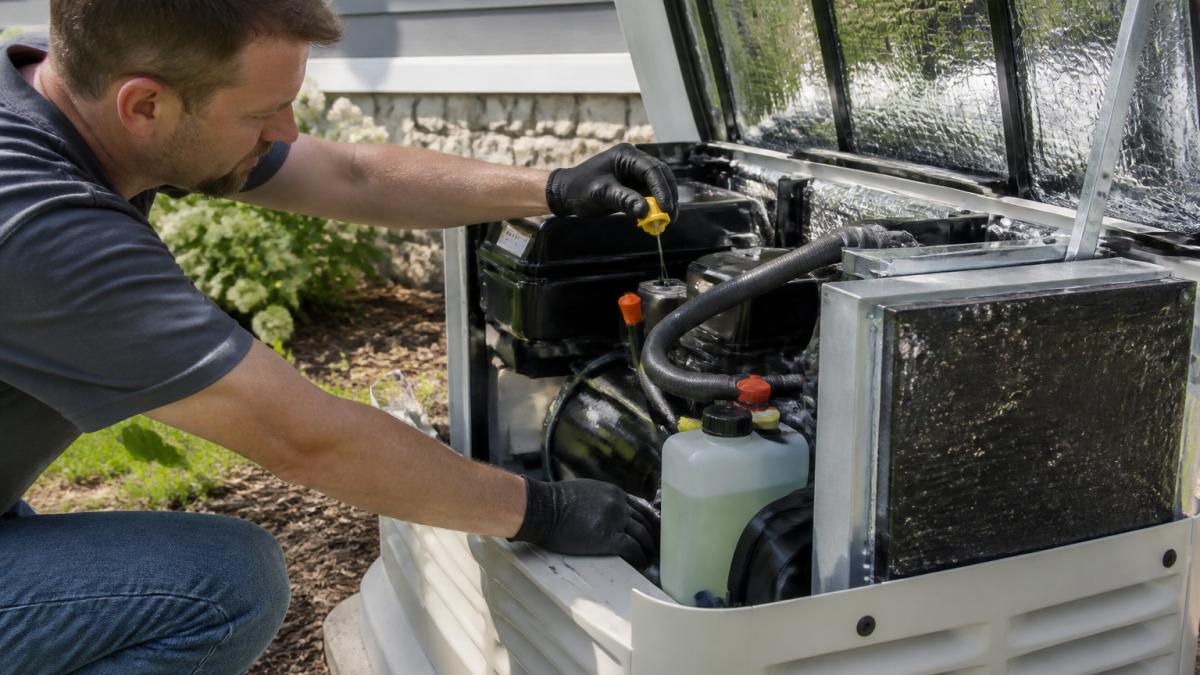
Create a simple spreadsheet or calendar to track these tasks. Note the date you completed each item. This record proves you've maintained your system. It also helps your service technician spot patterns or recurring issues.
Understanding the Generator Exercise Cycle
The generator exercise cycle is one of the most misunderstood parts of standby generator maintenance. Many homeowners think their generator is fine because it sits quietly in the yard. They don't realize it's slowly failing inside.
An exercise cycle means running your generator regularly under load. This is different from just starting it. Starting an engine and letting it idle does almost nothing. The engine needs to work. It needs to produce real power.
Here's why: when an engine idles, it doesn't reach full operating temperature. Fuel doesn't burn completely. Water condenses in the oil. Fuel injectors don't spray properly. Carbon builds up. The engine gets weaker, not stronger.
Running your generator under load for 20-30 minutes each month solves this. The engine reaches full temperature. Fuel burns cleanly. Oil circulates through every passage. Seals stay flexible. The entire system stays sharp.
Most automatic standby generators have a built-in exercise feature. Check your manual for how to enable it. If your manual doesn't mention it, your service provider can set it up. The generator will run automatically every week or month for a set time.
If you have a portable generator, you need to manually exercise it. Plug in a load like a space heater or work light. Let it run for 30 minutes. Do this once a month, year-round.
The exercise cycle prevents the "won't start" disaster. It keeps fuel fresh. It keeps seals supple. It keeps your generator ready.
When to Call for Professional Generator Maintenance
Some maintenance tasks you can handle yourself. Others need a licensed electrician or generator specialist.
Do these yourself:
- Monthly visual inspections
- Checking fluid levels
- Running the exercise cycle
- Cleaning debris from the unit
- Replacing air filters (if comfortable doing so)
Call a professional for:
- Annual service and inspections
- Oil and filter changes (if not confident)
- Fuel system cleaning or repairs
- Electrical diagnostics
- Battery replacement
- Any repair work
- Load bank testing under full load
- Warranty service (to keep coverage valid)
Precision Power Services handles standby generator maintenance for homes throughout Rutland and central Vermont. We perform complete annual inspections, handle fuel system cleaning, test electrical output, and ensure your backup system is ready. We also set up automatic exercise cycles so your generator stays in peak condition between visits.
A professional inspection catches problems a homeowner might miss. We check voltage regulation, frequency output, fuel quality, and engine compression. We test the automatic transfer switch that connects your generator to your home's electrical panel. We verify all safety systems are working.
Most importantly, professional service maintains your warranty. Many generators require annual service by a licensed technician to keep coverage valid. Skipping professional service can void your warranty, leaving you unprotected if something fails.
Schedule professional service before storm season. Spring is ideal. If you wait until fall, you might face long wait times as other homeowners prepare for winter outages.
Conclusion
The importance of home standby generator maintenance is simple: a well-maintained generator works when you need it. A neglected one fails exactly when it matters most.
Stick to a schedule. Service annually. Run your generator monthly under load. Keep records. Call a professional when something seems wrong.
Precision Power Services is here to handle your generator maintenance and ensure your backup power system is reliable. We'll set up a service schedule that works for you, perform thorough inspections, and keep everything running smoothly. Book online to schedule your annual generator maintenance today. When the power goes out, you'll be ready.
Ready to keep your backup power system running reliably? Precision Power Services provides complete standby generator maintenance for homes throughout the region. We handle annual inspections, fuel system cleaning, battery testing, and load bank verification to ensure your generator is ready 24/7. Our licensed electricians also set up automatic exercise cycles so your system stays in peak condition between visits. Book online to schedule your generator maintenance appointment.
Frequently Asked Questions
Why is regular maintenance important for a home standby generator?
Regular standby generator maintenance ensures your unit will actually start and run reliably when the power goes out. Without it, fuel can degrade, oil breaks down, and internal components corrode. A generator that hasn't been serviced may fail to activate during an outage, leaving you without backup power when you need it most. Maintenance also extends the lifespan of your equipment and keeps it operating efficiently.
How often should a home standby generator be serviced?
Most manufacturers recommend servicing your standby generator at least once per year, typically before the storm season. Some units may need service every 6 months depending on usage and local conditions. Your generator's manual will specify the exact service interval for your model. Beyond annual service, your unit should run through its exercise cycle regularly, typically monthly, to keep internal components in working order.
Can I maintain my home standby generator myself?
You can perform basic checks like inspecting the unit for visible damage and ensuring the area around it is clear of debris. However, most maintenance tasks, fuel system cleaning, oil changes, filter replacements, and load testing, require specialized knowledge and tools. Professional service ensures work meets manufacturer specifications and local electrical codes. If you're unsure about any task, it's safer to have a licensed electrician or generator specialist handle it.
What happens if a standby generator is not maintained?
Neglected generators accumulate problems that compound over time. Fuel degrades and clogs fuel injectors, oil thickens and loses protective properties, filters become clogged, and battery charge depletes. When an outage occurs and you need power, an unmaintained generator may fail to start or run poorly. Over years, deferred maintenance can cause permanent damage requiring expensive repairs or complete replacement of the unit.
Need an electrician in Rutland or central Vermont?
Precision Power Services is a licensed and insured electrical contractor serving Rutland, Killington, Brandon, Castleton, and surrounding towns. Call (802) 417-0587 or book online.
← Back to blog