Can Old Wiring Handle a Heat Pump? 7 Checks to Run First
Last Updated: October 28, 2026
Quick Summary
Old wiring often cannot handle a heat pump without upgrades. Before installing, check your panel's service capacity, the breaker and wire size against the unit's nameplate, and whether the circuit is in good condition. Many older homes need a new dedicated circuit or a panel upgrade for an old wiring heat pump installation.
Looking for this work in Rutland or central Vermont? See heat pump wiring and installation from Precision Power Services.
- Check your main service size, usually 60 or 100 amps, to see if there is room for a heat pump.
- Match breaker and wire size to the unit's nameplate minimum circuit ampacity and maximum overcurrent protection.
- Replace cracked, brittle, or heat-damaged insulation rather than reusing it.
- A heat pump needs its own dedicated circuit, not a shared neutral or tap from another load.
- Get a load calculation and written assessment from a licensed electrician before ordering equipment.
Table of Contents
- Why Old Wiring Matters Before a Heat Pump Goes In
- Heat Pump Electrical Requirements You Need to Know
- Step 1: Check Your Electrical Panel Capacity
- Step 2: Confirm Breaker Size and Dedicated Circuit Needs
- Step 3: Assess Wire Gauge, Insulation, and Condition
- Heat Pump Dedicated Circuit and Disconnect Requirements
- Booking a Licensed Electrical Assessment Before Your Install
- Frequently Asked Questions
Why Old Wiring Matters Before a Heat Pump Goes In
If you are weighing a heat pump for an older home in Vermont, the wiring behind your walls matters as much as the unit itself, and an old wiring heat pump installation deserves the same scrutiny as the equipment.
A heat pump is an electrical load first and a heating system second. Its compressor and air handler need a dedicated, correctly sized supply.
Most of these questions can be answered before any equipment is ordered. Below are checks to consider before installation.
Heat Pump Electrical Requirements You Need to Know
Most residential heat pumps run on 240 volts, with the exact amperage listed on the unit's nameplate. The installer uses that rating to pick the breaker, wire gauge, and disconnect, with the National Electrical Code as the baseline and local inspectors enforcing it.
Here is what usually matters:
- Voltage: Most heat pumps need a 240-volt supply, not standard 120-volt outlets.
- Amperage: The nameplate minimum circuit ampacity and maximum overcurrent protection tell you what the circuit must handle.
- Dedicated circuit: The heat pump typically gets its own breaker, not shared with other loads.
Electric resistance backup heat, often built into the air handler, can add a large additional load. Ask your installer whether backup heat is included in the total electrical demand.
Step 1: Check Your Electrical Panel Capacity
Start with the main panel.
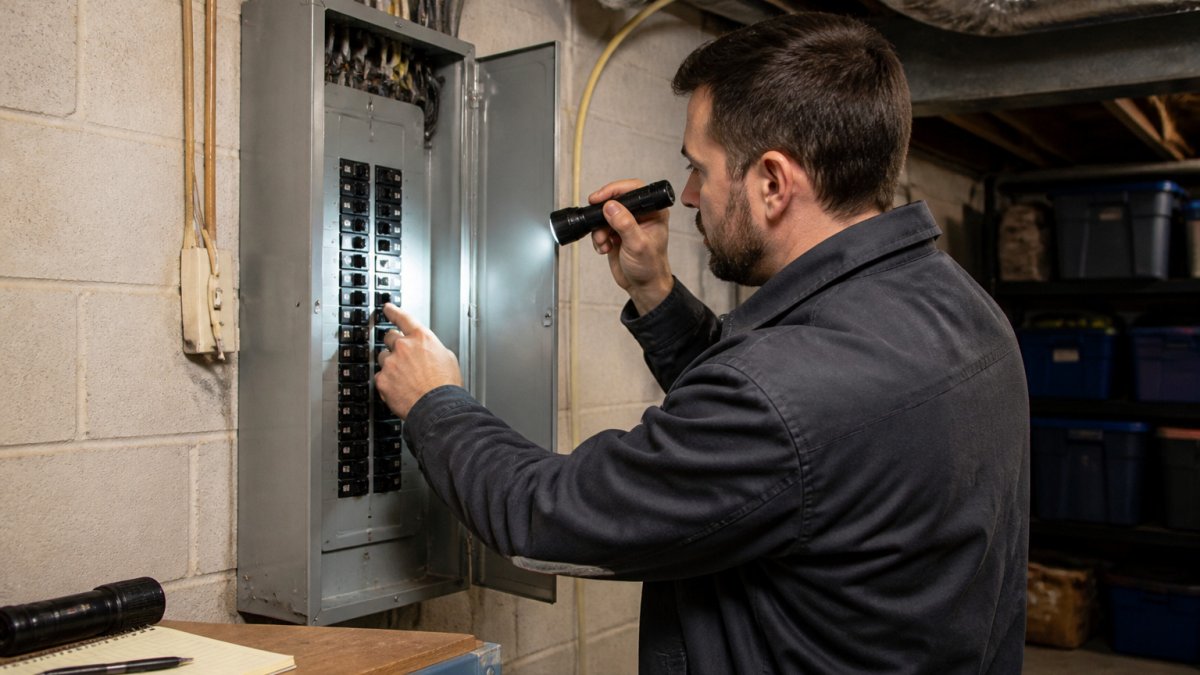
A load calculation is the reliable way to answer this: it adds up expected demand from every major appliance and compares it with the service rating, often using the approach in NEC Article 220.
Watch out: the panel may have empty slots that look like space for new breakers, even though the service itself is already near its limit.
If the calculation shows the service is undersized, a panel upgrade may be needed.
Step 2: Confirm Breaker Size and Dedicated Circuit Needs
Next, match the breaker and wire to the heat pump's nameplate: the breaker sized to the maximum overcurrent protection rating, and the conductors sized to carry the required current without overheating.
Check these points:
- Find the nameplate minimum circuit ampacity and maximum fuse or breaker size.
- Confirm the existing panel has an open two-pole slot for the breaker.
- Verify the breaker type and brand are compatible with the panel.
- Confirm the circuit will not share neutral or ground conductors with other loads.
A breaker that is too small will trip often. A breaker that is too large can let wire overheat before the breaker trips, which is a fire risk. Neither is acceptable, so the match must be exact.
Step 3: Assess Wire Gauge, Insulation, and Condition
This is where most old-home heat pump projects are won or lost. Panel capacity gets the attention, but the wire between the panel and the outdoor unit actually carries the load, and old wire fails in ways a panel label will never show you. The goal is to match three things: the heat pump nameplate, the conductor size, and the breaker rating.
Start with the nameplate, not the wire
Before anyone looks at a conductor, read the unit's nameplate. It lists two numbers that drive everything else: minimum circuit ampacity (MCA) and maximum overcurrent protection (MOCP). The MCA tells you the smallest conductor that can carry the load; the MOCP tells you the largest breaker the manufacturer allows. A common cold-climate unit might list an MCA around 20-30 amps with a 30-40 amp maximum breaker, while a unit with electric resistance backup heat can push the requirement substantially higher.
Match conductor size to the circuit
Wire gauge is inverse to capacity: lower gauge number, more current. You will typically see 10 AWG copper on a 30-amp circuit, 8 AWG on a 40-amp circuit, and 6 AWG on a 50-60 amp circuit, subject to the installation method and code edition. Undersized wire is one of the most common findings in older homes, because the original circuit may have been run for a much smaller load, a window air conditioner, a dryer, or a legacy furnace blower.
Use this as a starting checklist, then confirm against the nameplate and the National Electrical Code:
- Gauge vs. breaker: The conductor must be sized for the MCA, and the breaker must not exceed the MOCP. A breaker that is too large for the wire lets the conductor overheat before the breaker trips; a breaker that is too small trips on normal startup current.
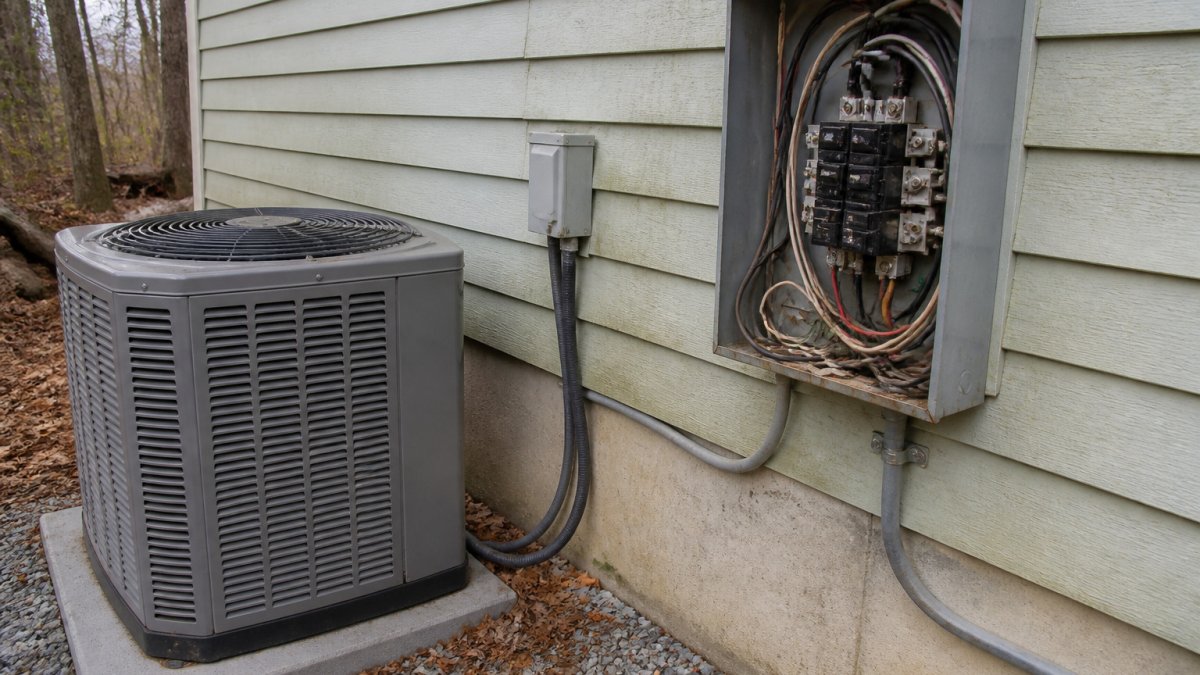
- Insulation condition: Cracked, crumbling, sticky, or heat-hardened insulation on the conductors inside the panel or at the disconnect is a replacement signal, not a cosmetic issue.
- Conductor material: Aluminum branch wiring from the 1960s and 1970s needs listed connectors rated for aluminum-to-copper transitions, or full replacement. Do not let anyone twist aluminum and copper together under a wire nut.
What a homeowner can safely check, and what they cannot
A visual walkthrough is reasonable and useful. A homeowner can note the panel brand, main breaker rating, breaker types in use, and whether the existing heat pump or air conditioner circuit is labeled, plus the outdoor disconnect, conduit, and whip condition from outside.
What a homeowner should not do: open the panel cover, remove device plates, test live circuits, or judge insulation by feel. Those steps require a licensed electrician.
The unique angle: condition, not just capacity
Most guides stop at "check your panel." The better question is whether the existing circuit can be reused at all. Three outcomes are common:
- Reuse the existing circuit, the wire gauge, insulation, and breaker already match the new nameplate. This is the cheapest path and happens most often when a prior heat pump or a similarly sized air conditioner was already on a dedicated circuit.
- Run a new dedicated circuit, the existing wire is undersized, damaged, or shared. A new run from the panel to the outdoor unit, with a correctly sized breaker and disconnect, is usually the fix.
- Upgrade the service or panel first, the wire and breaker could be right, but the service cannot carry the added load. That is a load-calculation question, covered in the panel section above.
Ask the electrician to write down which applies, with nameplate numbers and conductor size noted, that record tells you whether the quote is for a circuit, a panel, or both.
Wire size is matched to the heat pump's nameplate ratings, which typically point to these conductor and breaker sizes.
| Nameplate or wire item | Typical value | Note |
|---|---|---|
| Minimum circuit ampacity (MCA) | Around 20-30 amps | Sets the smallest conductor that can carry the load |
| Maximum overcurrent protection (MOCP) | Around 30-40 amps | Largest breaker the manufacturer allows |
| 10 AWG copper | 30-amp circuit | Subject to installation method and code edition |
| 8 AWG copper | 40-amp circuit | Subject to installation method and code edition |
| 6 AWG copper | 50-60 amp circuit | Subject to installation method and code edition |
Heat Pump Dedicated Circuit and Disconnect Requirements
A heat pump is not a plug-in appliance. It needs its own circuit from the panel to the outdoor unit, sized to the nameplate, protected by the correct breaker, and equipped with a disconnect that lets a technician kill power at the equipment. Getting this right separates a code-compliant installation from one that fails inspection or creates a hazard.
What "dedicated circuit" actually means
A dedicated circuit serves one piece of equipment and shares no neutral or ground conductors with other loads. In practice that means:
- One breaker, one load. The heat pump gets its own two-pole breaker in the panel. It is not tapped off the furnace circuit, the dryer circuit, or a general-purpose circuit.
- No shared neutral. Multiwire branch circuits and shared neutrals are a common shortcut in older homes and a common inspection failure on new heat pump work.
- Correct breaker type. The breaker must be listed for the panel brand and series. A breaker that physically fits but is not listed for the panel is a code violation and a safety issue.
Disconnects: what the code expects
The National Electrical Code requires a means to disconnect the heat pump at the equipment, and most jurisdictions enforce a disconnect within sight of the outdoor unit and readily accessible. You will see one of three arrangements:
- A non-fused pull-out disconnect, a simple, low-cost box with a pull-out handle that opens the circuit. Common on residential installs.
- A fused disconnect, includes fuses sized to the equipment, sometimes used when the manufacturer or local inspector requires it.
- A circuit breaker at the unit, a small breaker enclosure at the outdoor unit that serves as the disconnect.
The disconnect is not optional or a convenience item: it lets a service technician de-energize the equipment safely during maintenance and repair, and it is one of the first things an inspector looks for.
Grounding and bonding
The equipment grounding conductor must run with the circuit from the panel to the disconnect and the unit, and the outdoor unit must be bonded per the manufacturer's instructions and the code edition in force. Older homes sometimes have grounding issues that only surface when a new circuit is added, another reason the assessment happens before the equipment is ordered.
Permits and inspection
Electrical permits are issued locally, and requirements vary by jurisdiction. In most areas, a new heat pump circuit, a panel change, and a service upgrade each require a permit and an inspection. The permit process is also where the code edition in force gets applied, a jurisdiction may be on a recent edition while the home was wired under a much older one.
The decision path, in plain terms
When the assessment is done, the outcome usually falls into one of four buckets:
- No electrical work needed, the existing dedicated circuit, breaker, and disconnect already match the new nameplate. This happens most often on like-for-like replacements.
- New dedicated circuit, the existing circuit is undersized, shared, or damaged. A new run, breaker, and disconnect are added.
- Panel upgrade, the service or panel cannot carry the added load even with a correctly sized circuit. A load calculation drives this decision, and the panel upgrade is scoped separately.
- Service upgrade, less common, but relevant in older homes with 60-amp or small 100-amp service and multiple large electric loads.
Each path has a different scope, permit, and inspection. The written assessment should tell you which applies and why, with nameplate numbers and existing circuit details noted, the document that lets you compare quotes apples to apples and tells you whether the heat pump you are considering fits the wiring you already have.
Booking a Licensed Electrical Assessment Before Your Install
A licensed electrician can assess the system before the heat pump is ordered.
Precision Power Services is a Vermont licensed electrician with 7 years of experience and more than 500 projects completed.
Watch out: a quick visual check is not an assessment. Ask for a load calculation and a written list of what must change before installation.
Book online.
Heat pumps in older Vermont homes
A lot of homes around Rutland County still run on 100-amp service, and adding cold-climate heat pumps on top of an electric water heater, dryer, or EV charger can push that limit. A load calculation tells you whether the panel can handle it before you buy equipment. For current rebates, see Efficiency Vermont and Green Mountain Power.
Electrical work in Vermont follows the National Electrical Code as adopted in the Vermont Electrical Safety Rules (2025 edition, enforced by the Division of Fire Safety). Precision Power Services is a Vermont licensed electrician based at 450 Park Ln in Rutland, serving Rutland County and central Vermont.
Book a free estimate or call (802) 417-0587.
Frequently Asked Questions
Can old wiring handle a heat pump installation?
Sometimes. Older homes are not automatically disqualified, but the answer depends on whether the electrical service has enough capacity, whether the wiring and breakers are in sound condition, and whether a dedicated circuit can be run to the outdoor unit. A licensed electrician can assess whether the existing system supports the equipment or needs upgrading first. Do not assume compatibility from the age of the house alone.
Does a heat pump need a dedicated circuit?
Yes, in most installations the heat pump and its air handler or backup electric heat strips are served by a dedicated circuit sized to the equipment's nameplate minimum circuit ampacity and maximum overcurrent protection. The circuit runs from the panel to a disconnect box near the outdoor unit. Exact requirements come from the manufacturer's installation manual and the National Electrical Code as adopted in Vermont, so confirm them against the specific model before work begins.
Will an older electrical panel support a heat pump?
It depends on the panel's rated amperage and how much load is already connected. Many older homes have 100-amp service, which may leave too little headroom for a heat pump alongside electric range, water heater, and other large loads. If the panel is near capacity, an electrician can advise whether an upgrade is needed.
How can I tell if my home's wiring needs to be replaced?
Warning signs include cloth-insulated or ungrounded wiring, scorched or discolored outlets and switches, flickering lights when large appliances start, breakers that trip repeatedly, and panels from manufacturers with known breaker failure issues. Any of these justifies a professional inspection. A licensed electrician can assess the wiring.
Need an electrician in Rutland or central Vermont?
Precision Power Services is a licensed and insured electrical contractor serving Rutland, Killington, Brandon, Castleton, and surrounding towns. Call (802) 417-0587 or book online.
← Back to blog